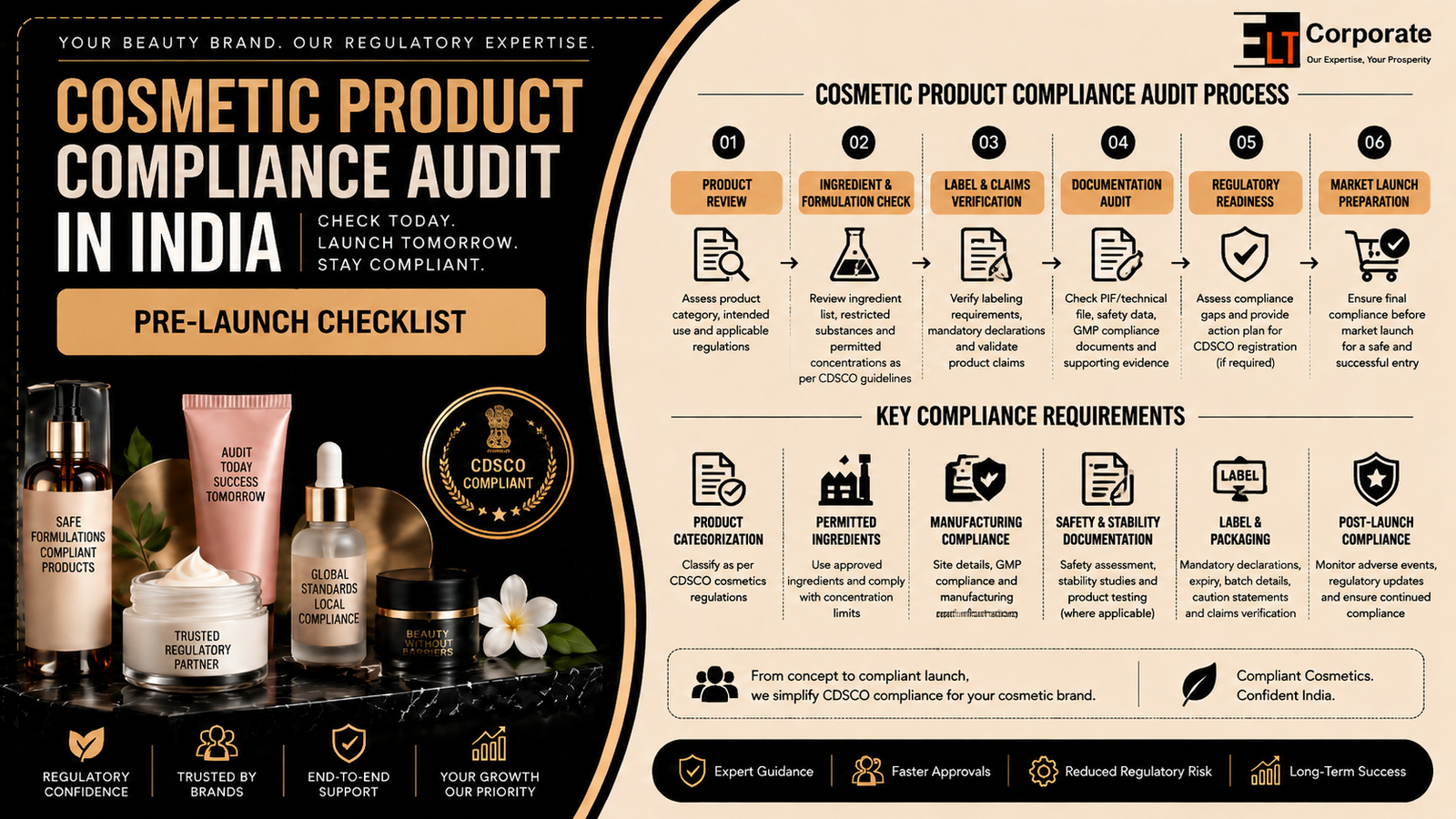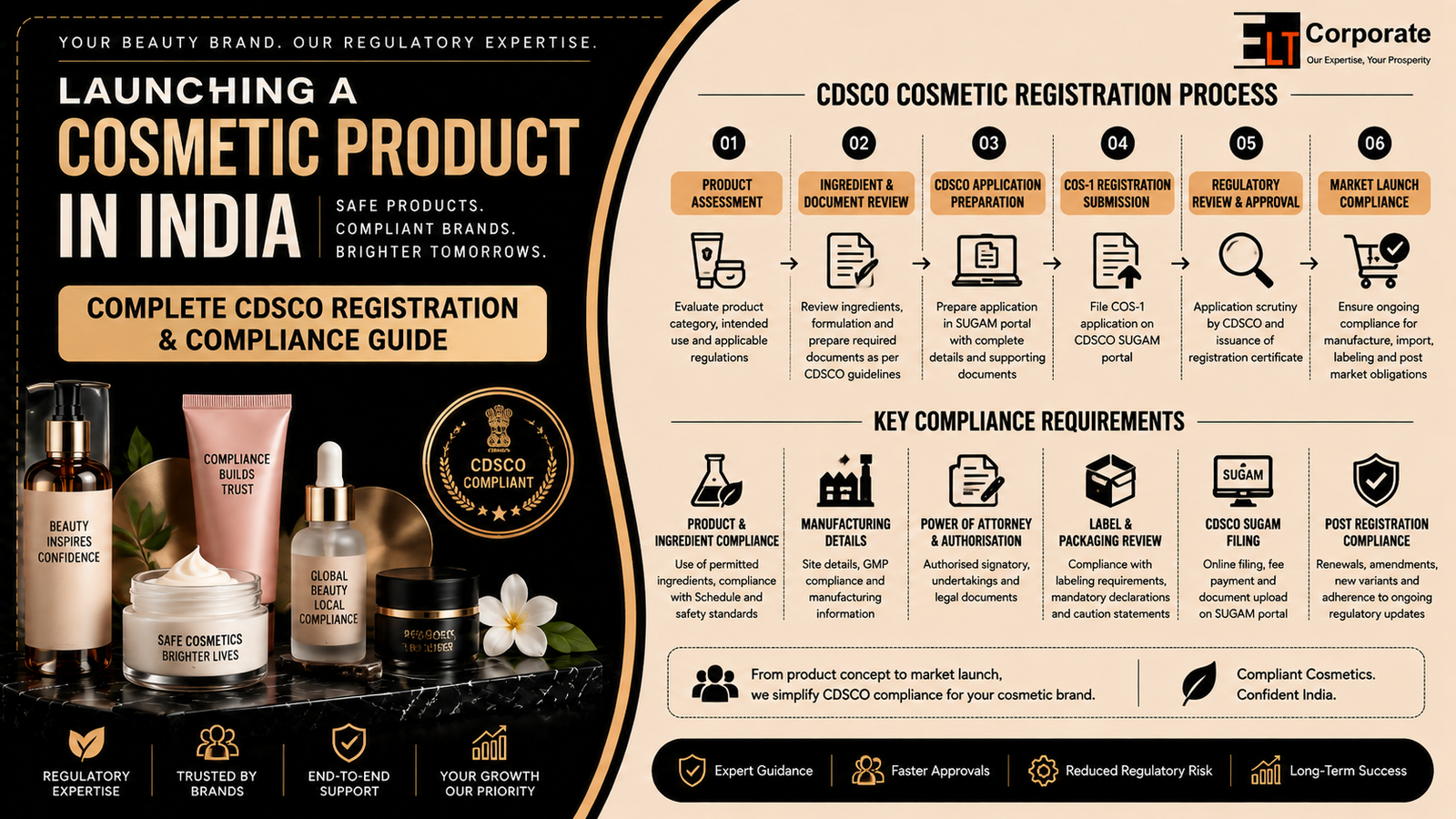


For enterprise-level beauty brands, CDSCO cosmetic registration is not just a compliance formality—it is a business-critical approval that directly affects import timelines, product launches, and brand credibility. Large beauty brands operating in Hyderabad often face unexpected delays, repeated queries, or rejections due to avoidable mistakes in Form COS-1 and the overall CDSCO cosmetic registration process.
This guide explains how enterprise beauty brands in Hyderabad can avoid common COS-1 mistakes, streamline CDSCO registration, and achieve faster approvals—written in simple language, but backed by regulatory accuracy.
What Is Form COS-1 in CDSCO Cosmetic Registration?
Form COS-1 is the official online application submitted on the CDSCO SUGAM portal to obtain permission for importing cosmetic products into India.
For enterprise beauty brands, COS-1 is used when:
- Importing multiple SKUs or product variants
- Launching premium, natural, organic, or clinical beauty products
- Expanding distribution across India
Once COS-1 is approved, CDSCO issues Form COS-2, which allows legal import and sale.
Why Enterprise Beauty Brands in Hyderabad Face More CDSCO Challenges?
Hyderabad is a major hub for:
- Pharma-linked beauty brands
- Clinical, cosmeceutical, and organic product lines
- Enterprise-scale import operations
Because enterprise beauty brands often deal with advanced formulations, clinical positioning, and large SKU volumes, CDSCO scrutiny tends to be higher for such product portfolios, irrespective of location.
- Ingredient safety
- Label claims
- Manufacturing consistency
- Documentation accuracy across multiple products
A small mistake in COS-1 can delay entire consignments, not just one product.
Most Common Mistakes in Form COS-1 (And How to Avoid Them)
1. Incorrect Ingredient Declaration (Major Red Flag)
Mistake:
Using trade names or marketing terms instead of INCI names for ingredients.
How to Avoid:
✔ Always use INCI nomenclature
✔ Cross-check against banned/restricted ingredient lists
✔ Ensure botanical extracts are correctly identified
2. Misleading or Over-Claiming Labels
Mistake:
Claims like “clinically proven,” “dermatological treatment,” “heals skin” without regulatory backing.
How to Avoid:
✔ Keep claims cosmetic, not therapeutic
✔ Align claims strictly with the Cosmetics Rules, 2020
✔ Review every label before COS-1 submission
3. Inconsistent Product Information Across Documents
Mistake:
Mismatch between:
- COS-1 form
- Label artwork
- Free Sale Certificates that are not issued by a competent regulatory authority or chamber of commerce recognised in the country of origin
- Ingredient list
How to Avoid:
✔ Maintain one master product data sheet
✔ Cross-verify all documents before upload
✔ Ensure SKU names and variants match exactly
4. Uploading Incorrect or Expired Free Sale Certificates
Mistake:
Submitting FSCs that:
- Are expired
- Do not cover all products
- Are issued by non-competent authorities
How to Avoid:
✔ FSC must be issued by a recognized authority
✔ Product names on FSC must match COS-1 exactly
✔ FSC should be valid at the time of submission
5. Selecting the Wrong Product Category in COS-1
Mistake:
Classifying cosmetics or functional beauty products incorrectly.
How to Avoid:
✔ Conduct pre-classification review
✔ Avoid borderline drug-like positioning
✔ Seek expert validation before filing
6. Poor Query Handling After Submission
Mistake:
Delayed or incomplete responses to CDSCO queries.
How to Avoid:
- Respond within timelines
- Provide point-wise, documented replies
- Never upload revised documents without explanation
Step-by-Step: Correct CDSCO Registration Process for Enterprise Brands
Step 1: Pre-Compliance Audit
Review ingredients, claims, labels, and manufacturing documents before filing COS-1.
Step 2: Centralized Documentation Control
Prepare standardized documentation for all SKUs to avoid inconsistencies.
Step 3: Accurate COS-1 Filing on SUGAM Portal
Upload verified documents with correct product classification.
Step 4: Active Query Management
Handle CDSCO queries professionally with supporting evidence.
Step 5: COS-2 Approval & Import Clearance
Once approved, proceed with customs clearance and distribution.
Why Hyderabad-Based Enterprise Brands Need Specialized Support?
Enterprise brands typically deal with:
- High SKU volumes
- Multiple manufacturers
- Frequent formulation updates
- Strict launch timelines
A minor COS-1 mistake can delay entire product lines, making expert handling essential.
Why Choose ELT Corporate for CDSCO Cosmetic Registration?
ELT Corporate works closely with enterprise beauty brands in Hyderabad, offering:
- End-to-end COS-1 & COS-2 handling
- Ingredient and claim compliance review
- Enterprise-level documentation control
- CDSCO query management
- Post-approval change and renewal support
Their approach focuses on error prevention, not damage control—saving time, cost, and brand risk.
Conclusion
For enterprise beauty brands in Hyderabad, CDSCO cosmetic registration is a strategic regulatory process, not a routine filing. Most delays happen due to preventable mistakes in Form COS-1, especially around ingredients, claims, and documentation consistency.
With proper preparation, expert review, and structured submission, enterprise brands can avoid rejections, achieve faster approvals, and scale confidently in the Indian beauty market.
Is Form COS-1 mandatory for cosmetic imports?
Yes, COS-1 is mandatory before importing cosmetics into India.
Can CDSCO reject COS-1 for labeling issues?
Yes, incorrect or misleading labels are a common rejection reason.
How long does CDSCO cosmetic registration take for enterprises?
In most practical cases, CDSCO approvals may take around 8–13 weeks for complete applications, but timelines are not fixed and may extend further depending on CDSCO workload and technical queries.
Is one COS-1 required per product?
A separate COS-1 is not always required for every individual SKU; however, every product and each variant must be clearly declared and covered under the approved COS-1/COS-2 registration in line with CDSCO submission requirements.