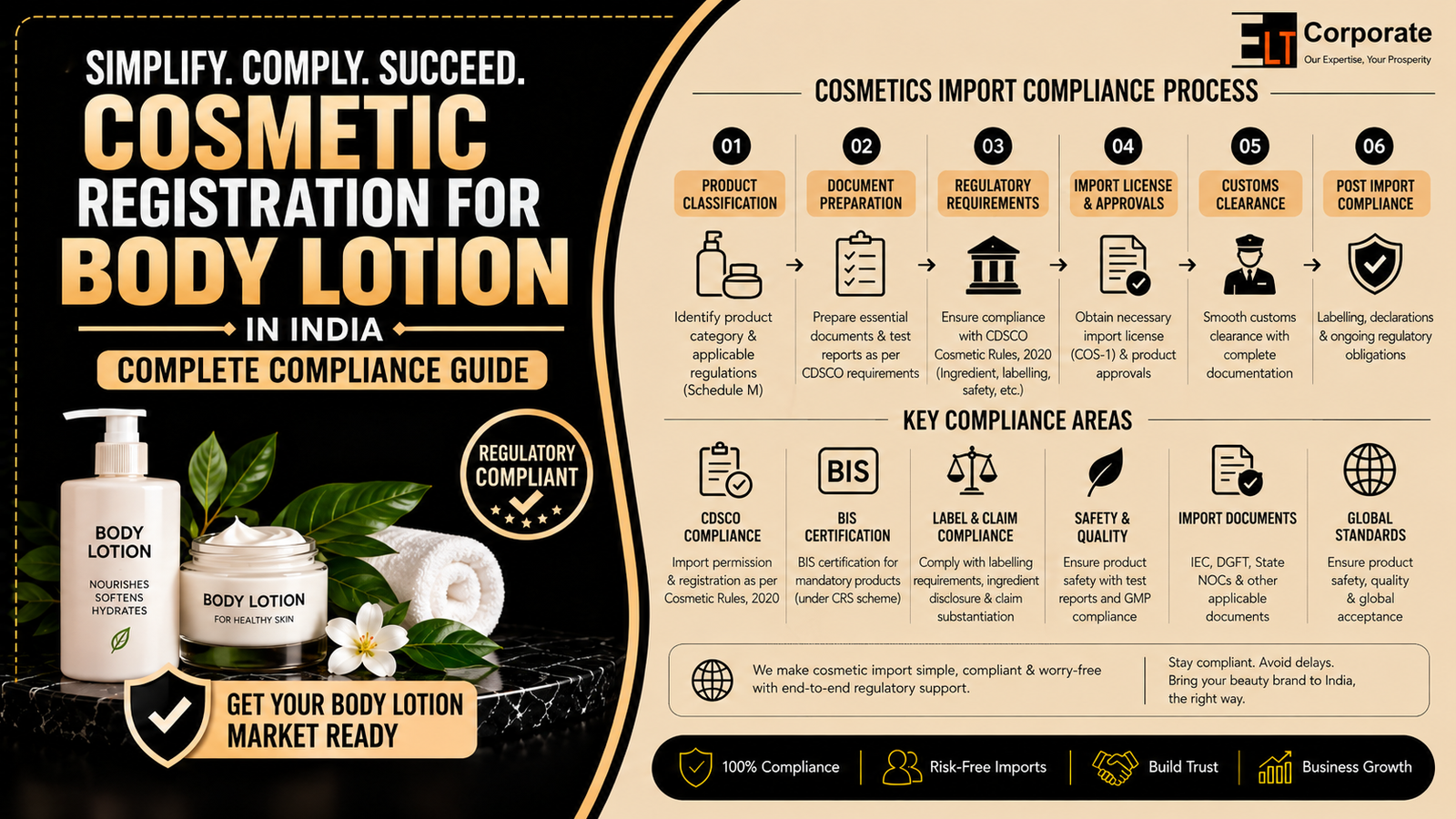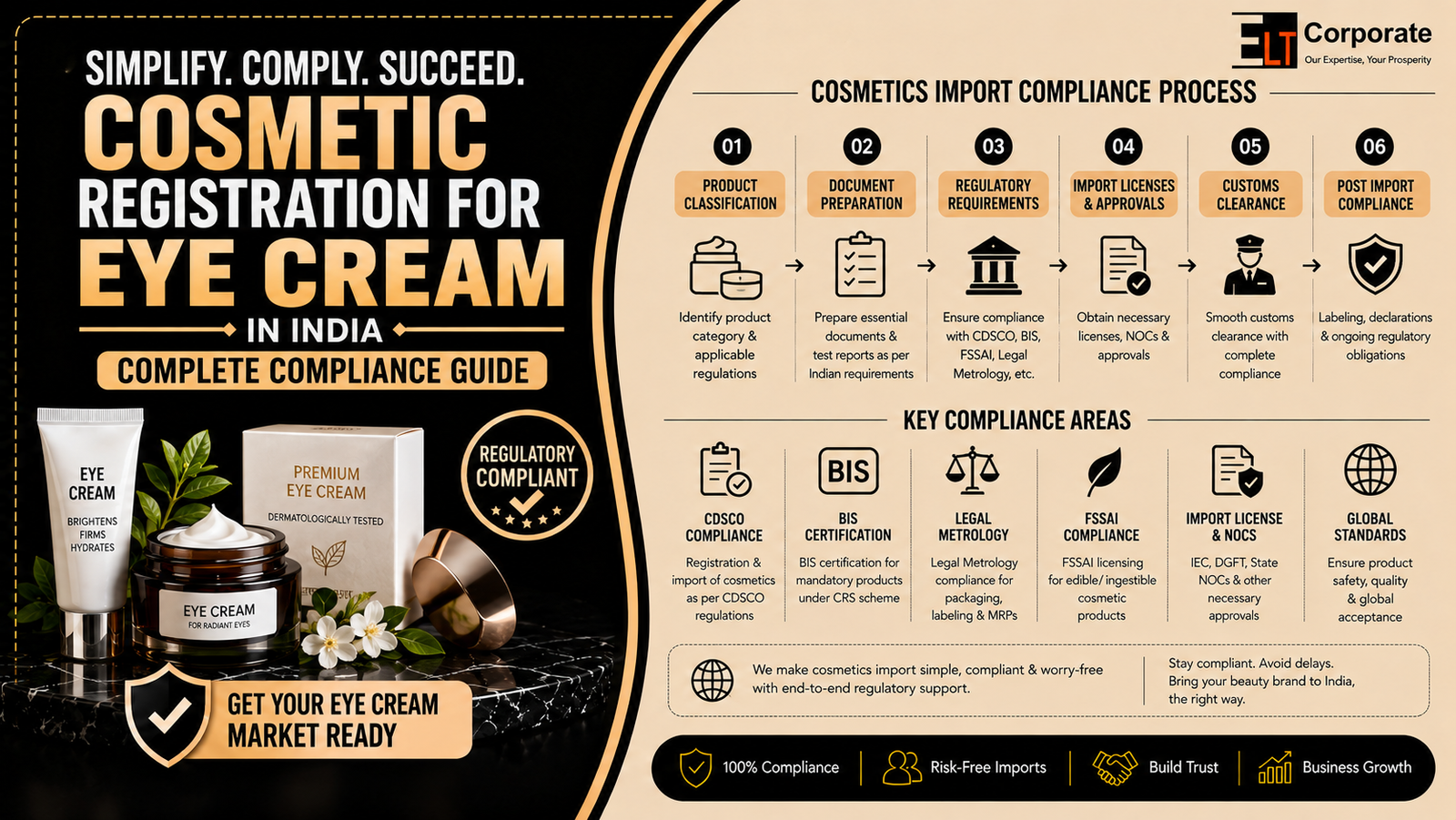

The Indian beauty market is booming, and Hyderabad is quickly becoming a hub for innovative cosmetic brands. As exciting as this growth is, it comes with strict regulatory requirements. For any beauty product to be legally sold in India, it must undergo Central Drugs Standard Control Organization (CDSCO) registration, with Form COS-1 being a crucial part of this process.
Many enterprise beauty brands, both domestic and international, find navigating CDSCO regulations complex. Minor errors can lead to significant delays, rejections, and even hefty penalties. This guide will walk you through the most common pitfalls in Form COS-1 and CDSCO registration, offering practical strategies to ensure a smooth, error-free journey for your brand in Hyderabad.
Why is CDSCO Compliance Crucial for Your Beauty Brand?
Ensuring compliance with CDSCO regulations isn’t just about following the law; it’s a strategic move for your enterprise beauty brand. Proper registration guarantees a seamless entry into the vibrant Indian market. It builds consumer trust by assuring product safety and quality.
Beyond market entry, successful CDSCO registration protects your brand from costly legal issues and product recalls. It strengthens your reputation as a responsible and legitimate player in the competitive beauty industry. Ultimately, it allows you to focus on growth and innovation, rather than regulatory headaches.
Required Documents and Prerequisites for Form COS-1
The foundation of a successful Form COS-1 application lies in having accurate and complete documentation. Missing or incorrect papers are the most frequent cause of delays. Here’s what you’ll typically need:
- Manufacturer’s Undertaking: A declaration from the manufacturer affirming compliance with quality standards.
- Power of Attorney (POA): Authorizing an Indian Agent to act on behalf of the manufacturer. This must be properly notarized and apostilled/attested by the Indian embassy.
- Free Sale Certificate (CFS): Issued by the regulatory authority of the country of origin, confirming that the product is freely sold there. Ensure it’s current and authenticated.
- Product Specifics: Detailed information including product names, variants, pack sizes, ingredients (with percentages), manufacturing process, and test methods.
- Good Manufacturing Practices (GMP) Certificate: Proof that the manufacturing facility adheres to international quality standards.
- Labeling Particulars: Proposed Indian labels, confirming compliance with local requirements.
- Copies of Manufacturing Licenses: From the country of origin.
- Test Reports: Stability data, heavy metal content, microbiological analysis, etc.
Each document must be accurate, legible, and properly authenticated as required. Pay close attention to validity periods and ensure all documents are in English or accompanied by certified translations.
Validity of Your CDSCO Registration
Once approved, the Registration Certificate (Form COS-2) is generally valid for five years, unless suspended or cancelled due to non-compliance. It’s crucial for enterprise beauty brands to track these expiry dates diligently.
Timely renewal is essential to ensure uninterrupted market presence and avoid any legal complications. The renewal process usually requires a fresh application with updated documents, ensuring ongoing compliance with the latest regulations.
Process for CDSCO Cosmetic Registration: A Simple Walkthrough
Many Hyderabad-based brands route imports via Mumbai/Chennai ports, so document accuracy is critical to avoid customs-linked CDSCO queries.
1. Appointing an Indian Authorized Agent (IAAR): For foreign manufacturers, this is the first and most critical step. The IAAR represents the foreign entity in India and submits the application.
2. Document Compilation and Verification: Gather all necessary documents, ensuring they are complete, accurate, and properly attested (e.g., notarized, apostilled). This phase requires meticulous attention to detail.
3. Online Application on SUGAM Portal: The IAAR will then apply online through the CDSCO’s SUGAM portal. All documents are uploaded here, and application fees are paid.
4. Scrutiny by CDSCO Officials: CDSCO thoroughly reviews the submitted application and documents. They may raise queries or request additional information if discrepancies are found.
5. Addressing Queries: If queries arise, the IAAR must promptly and accurately respond, providing any requested clarifications or missing documents.
6. Grant of Registration Certificate: Upon successful review and satisfaction of all requirements, CDSCO issues the registration certificate in Form COS-2.
Each step is vital, and thoroughness at every stage minimizes the chances of rejection and delays.
How to Avoid Common Mistakes in Form COS-1 & CDSCO Registration for Enterprise Beauty Brands in Hyderabad?
Many enterprise beauty brands in Hyderabad face similar challenges during their CDSCO registration journey. By understanding these common pitfalls, you can proactively avoid them.
1. Incomplete or Inaccurate Documentation
This is arguably the most frequent reason for application rejection. Mistakes here can range from missing a manufacturer’s undertaking to incorrect product specifications.
- Missing Manufacturer’s Undertaking: Always ensure this document is present, duly signed, and includes all required declarations.
- Improperly Attested Power of Attorney (POA): The POA must be notarized in the country of origin and then apostilled or authenticated by the Indian embassy. A simple notarization is often insufficient.
- Incorrect Product Specifications or Ingredient Lists: Every ingredient, including its percentage, must be accurately listed. Discrepancies between the ingredient list and the actual product formulation or label will lead to rejection.
- Certificates of Free Sale (CFS) Issues: Check the validity period of your CFS. Ensure it is issued by the correct authority in the country of origin and is properly apostilled/notarized. An expired or improperly attested CFS is a common error.
- Solution: Develop a comprehensive pre-application checklist. Have an independent expert review all documents before submission to catch any omissions or errors.
2. Product Classification Errors
Misclassifying your product can lead to significant issues, as different categories have different regulatory requirements.
- Misinterpreting “Cosmetic” vs. “Drug”: Some products might straddle the line (e.g., medicated shampoos). Incorrectly classifying a drug as a cosmetic, or vice-versa, will result in immediate rejection.
- Incorrect Product Categories on Form COS-1: CDSCO requires selection of the correct cosmetic product category as per the Cosmetic Rules 2020 (e.g., face care products, hair cleansing products, lip make-up products, etc.).
- Solution: Refer strictly to CDSCO’s definitions and guidelines for cosmetic products. If unsure, seek clarification from regulatory experts to correctly categorize your product.
3. Manufacturing Site Details Discrepancies
Consistency in information about your manufacturing facility is paramount.
- Inconsistent Information Across Documents: Ensure the manufacturer’s name, address, and license numbers are identical across the POA, CFS, GMP certificate, and Form COS-1. Even minor variations can trigger queries.
- Failure to Disclose All Manufacturing Sites for a Product: If a single product or variant is manufactured at multiple sites, all relevant sites must be declared and documented.
- Solution: Implement a robust master data management system. Cross-verify all manufacturing details across every submitted document before filing.
4. Issues with the Indian Authorized Agent (IAAR)
The IAAR is your brand’s face to CDSCO. An inexperienced agent can cause major setbacks.
- Choosing an Inexperienced or Unreliable Agent: A poorly chosen IAAR can lead to poor communication, slow processing, and incorrect advice.
- Lack of Clear Communication & Documentation Flow: Ensure there’s a clear understanding and efficient system for document exchange and query resolution between your brand and the IAAR.
- Solution: Conduct thorough due diligence when selecting an IAAR. Look for agents with a strong track record, regulatory expertise, and transparent communication practices. Establish clear service level agreements.
5. Overlooking Labeling Compliance
Indian labeling regulations are specific and must be adhered to from the outset.
- Failure to Meet Indian Labeling Regulations: This includes displaying ingredients in descending order of quantity, net content, manufacturing and expiry dates, manufacturer details, and a clear product description.
- Solution: Integrate label review early in your product development process. Design labels specifically for the Indian market to meet all CDSCO requirements.
6. Ignoring Regulatory Updates
Regulations are dynamic. Failing to keep up can render your application non-compliant.
- Missing New Cosmetic Rules (2020) or Subsequent Amendments: The regulatory landscape constantly evolves. What was compliant last year might not be today.
- Solution: Regularly monitor CDSCO notifications and gazette publications. Subscribe to regulatory bulletins or partner with a consultant who stays updated.
7. Errors in Online Application Submission (SUGAM Portal)
Even with perfectly prepared documents, technical errors during online submission can still cause issues.
- Technical Glitches & Data Entry Mistakes: Simple typos or incorrect selections on the SUGAM portal can lead to queries or rejection.
- Improper Uploading of Documents: Ensuring documents are uploaded in the correct format, size, and under the appropriate category is crucial.
- Solution: Exercise extreme caution during data entry. Review all entered information multiple times before final submission. Familiarize yourself thoroughly with the SUGAM portal’s interface.
What Happens If You Ignore It?
Ignoring the CDSCO registration requirements or making frequent mistakes can have severe consequences for your enterprise beauty brand. It’s not just about a delayed product launch; the stakes are much higher.
Your products could be deemed illegal for sale in India, leading to mandatory recalls and seizure of goods. This results in significant financial losses, including lost inventory, shipping costs, and wasted marketing efforts. Beyond the immediate financial hit, your brand’s reputation could suffer irreparable damage, eroding consumer trust. Repeated noncompliance can attract regulatory action, financial penalties, product seizure, and legal proceedings under the Drugs & Cosmetics Act. It simply isn’t worth the risk.
The Cost Involved
Understanding the financial aspects of CDSCO registration helps in budgeting and avoiding surprises. The costs generally break down into official government fees and professional service charges.
Official CDSCO fees are payable per cosmetic category, and additional fees may apply for variants. Variants typically include different shades, fragrances, or formulations under the same product category. Fees are paid on the SUGAM portal.
Beyond government fees, you will incur service charges if you engage a regulatory consultant or an Indian Authorized Agent. These charges cover their expertise in document compilation, application submission, query resolution, and overall guidance.
There might also be costs associated with document attestation (notary, apostille), local testing if required, and potential re-submission fees if errors necessitate a fresh application. Investing in expert assistance upfront often saves more in the long run by avoiding costly mistakes and delays.
How ELT Can Help You Navigate CDSCO Registration?
At ELT, we understand the complexities of CDSCO Form COS-1 and the nuances of regulatory compliance for enterprise beauty brands, especially those operating in vibrant markets like Hyderabad. Our platform and expert team are designed to simplify this intricate process for you.
We provide comprehensive support, from meticulous document compilation and review to ensuring error-free online application submissions. Our experienced regulatory consultants act as your reliable Indian Authorized Agent, offering clear communication and proactive query resolution. We keep you informed about the latest regulatory updates and help you prepare a robust application that stands up to CDSCO scrutiny. Partner with ELT to streamline your CDSCO registration, minimize delays, and confidently launch your beauty products in India.
Conclusion
Navigating Form COS-1 and CDSCO registration for your enterprise beauty brand in Hyderabad doesn’t have to be a daunting task. By understanding the common mistakes and implementing proactive strategies, you can ensure a smooth and compliant market entry. Meticulous documentation, accurate product classification, and selecting a reliable Indian Authorized Agent are key to success.
Investing in thorough preparation and expert guidance from the outset will save you time, money, and protect your brand’s reputation. Don’t let regulatory hurdles slow down your brand’s growth. Take the first step towards seamless compliance today.
FAQs
Q1: My CDSCO cosmetic import application was rejected due to ‘incomplete documentation.’ What are the exact documents I need for Form COS-1, and how can I ensure they are perfectly attested to avoid further rejections?
For Form COS-1, submit POA, Free Sale Certificate, Manufacturer’s Undertaking, GMP certificate, product details, and Indian labels.
Ensure POA and CFS are notarized and apostilled/embassy-attested. Check all details against the application to avoid rejection.
Q2: As an international beauty brand, I want to launch quickly in India. How can I guarantee a smooth and expedited CDSCO registration process, especially for Form COS-1, without facing unforeseen delays?
To expedite CDSCO registration, choose an experienced Indian Authorized Agent, ensure all documents are complete, accurate, and properly attested, and maintain quick, clear communication to address queries promptly.
Q3: We’re an enterprise brand with a large product portfolio. What are the common pitfalls specific to managing multiple product registrations under Form COS-1, and how can we streamline this efficiently?
Multiple COS-1 applications for cosmetic import registration risk inconsistent or outdated documents. Use centralized templates and a regulatory expert to ensure consistency and streamline submissions.
Q4: I’m looking for a reliable Indian Authorized Agent (IAAR) for my foreign-made cosmetics in Hyderabad. What crucial questions should I ask, and what red flags should I look out for to ensure they are competent and trustworthy?
When choosing an IAAR, check their cosmetic registration experience, knowledge of New Cosmetic Rules 2020, and CDSCO query handling.
Avoid those with unrealistic promises, unclear fees, or poor communication; trust a transparent, experienced agent.
Q5: With the new cosmetic rules, I’m concerned about hidden compliance costs. Beyond the application fee, what are the potential financial implications of mistakes during Form COS-1 submission, and how can I budget to avoid them?
Mistakes in Form COS-1 can cause delays, lost revenue, and extra costs for resubmissions or document rework.
Budget for application fees, IAAR services, and a contingency, and use expert review upfront to avoid costly errors.