
Starting a cosmetic brand in India sounds exciting — but most people believe you need a factory, a chemistry lab, and crores of investment just to get started. The truth? You don’t.
India’s beauty and personal care market is projected to reach USD 9.71 billion by 2028. And thousands of successful brands — including many you see on Nykaa every day — were built without owning a single manufacturing unit.
In this blog, we break down exactly how you can launch your own cosmetic brand in India legally, affordably, and without manufacturing.
Is It Legal to Launch a Cosmetic Brand Without Manufacturing?
Yes — absolutely. Indian law under the Drugs & Cosmetics Act, 1940 and Cosmetics Rules, 2020 does not require you to own a manufacturing facility to sell cosmetics under your brand name.
What matters is that the products you sell are manufactured in a State-licensed, GMP-compliant facility under the Cosmetics Rules, 2020 — not necessarily owned by you. You can legally own the brand, the label, and the business while outsourcing production entirely.
Important: What IS illegal is manufacturing cosmetics at home in a non-licensed facility and selling them commercially. CDSCO does not issue licenses for homemade cosmetics.
3 Legal Models to Launch Without Your Own Factory
Model 1: Third-Party / Contract Manufacturing (Most Popular)
This is the most widely used route for new cosmetic brands in India.
You partner with a GMP-compliant manufacturer who already holds a COS-8 manufacturing license. They produce the products under your brand name. You handle everything else — branding, marketing, sales, and distribution.
What you get:
• Custom formulations with your preferred ingredients and textures
• Packaging and labeling designed to match your brand identity
• GMP-certified production — fully compliant with Indian law
• Low Minimum Order Quantities (MOQ) — typically 500 to 1,000 units per product
• End-to-end manufacturing support from concept to delivery
Model 2: Loan License (Form COS-6 / COS-9)
A Loan License allows you to manufacture your products in someone else’s licensed facility — but the license is issued in your name.
You hold full regulatory responsibility for quality and compliance, while the actual manufacturing happens at a third-party facility. You apply using Form COS-6, and the license is granted in Form COS-9 by the State Licensing Authority.
This is ideal for brands that want their own license identity but are not yet ready to set up their own facility.
Model 3: Import + Resell (Cosmetic Import License Model)
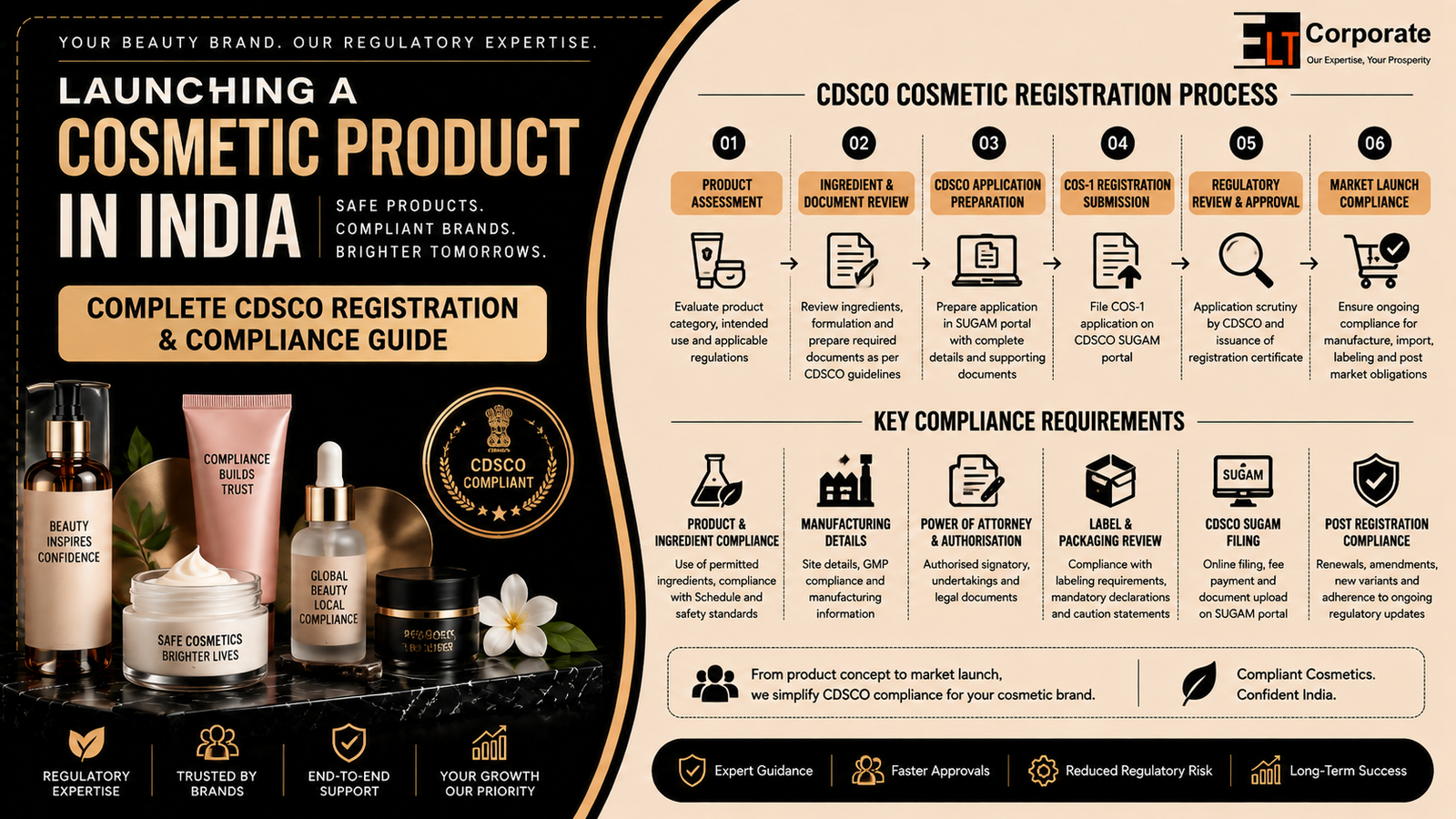
If you want to bring an international cosmetic brand or foreign-made products to India, you can do so under a cosmetic import registration (Form COS-1 application and COS-2 registration certificate).
Under this model, products are manufactured abroad, and you import and sell them in India under your importer entity. No Indian manufacturing is required at all.
This model is commonly used by:
• Entrepreneurs importing Korean, European, or US beauty products into India
• Indian distributors representing foreign cosmetic brands
• D2C brands sourcing formulations from overseas manufacturers
Cost to Start a Cosmetic Brand in India
One of the biggest myths is that launching a cosmetic brand requires crores of investment. Here is what realistic numbers look like for a third-party manufacturing launch:
| Cost Head | Estimated Range |
| Product formulation & samples | Covered by manufacturer (often free for initial samples) |
| Initial production — 2-3 products, ~1,000 units each | Rs. 1.5 – 3 lakhs |
| Branding, logo & packaging design | Rs. 50,000 – 1.5 lakhs |
| Regulatory compliance & label review | Rs. 20,000 – 50,000 |
| Website & digital marketing setup | Rs. 50,000 – 1 lakh |
| Miscellaneous (storage, logistics, etc.) | Rs. 50,000 – 1 lakh |
| Total Estimated Investment | Rs. 7 – 10 lakhs |
Note: Costs may vary depending on product type, manufacturer, and compliance requirements.
What Licenses and Documents Do You Actually Need?
When you use third-party manufacturing, your manufacturer holds the COS-8 production license. Your responsibilities as a brand owner are:
• Business registration – Private Limited, LLP, or Proprietorship
• GST registration
• Brand trademark registration (strongly recommended)
• Product labels fully compliant with Cosmetics Rules, 2020
• If importing from abroad: COS-1 / COS-2 Import License from CDSCO
• If opting for a loan license: COS-6 application to the State Licensing Authority
You do NOT need your own manufacturing license (COS-5 / COS-8) if you are working with a third-party manufacturer or under a loan license arrangement.
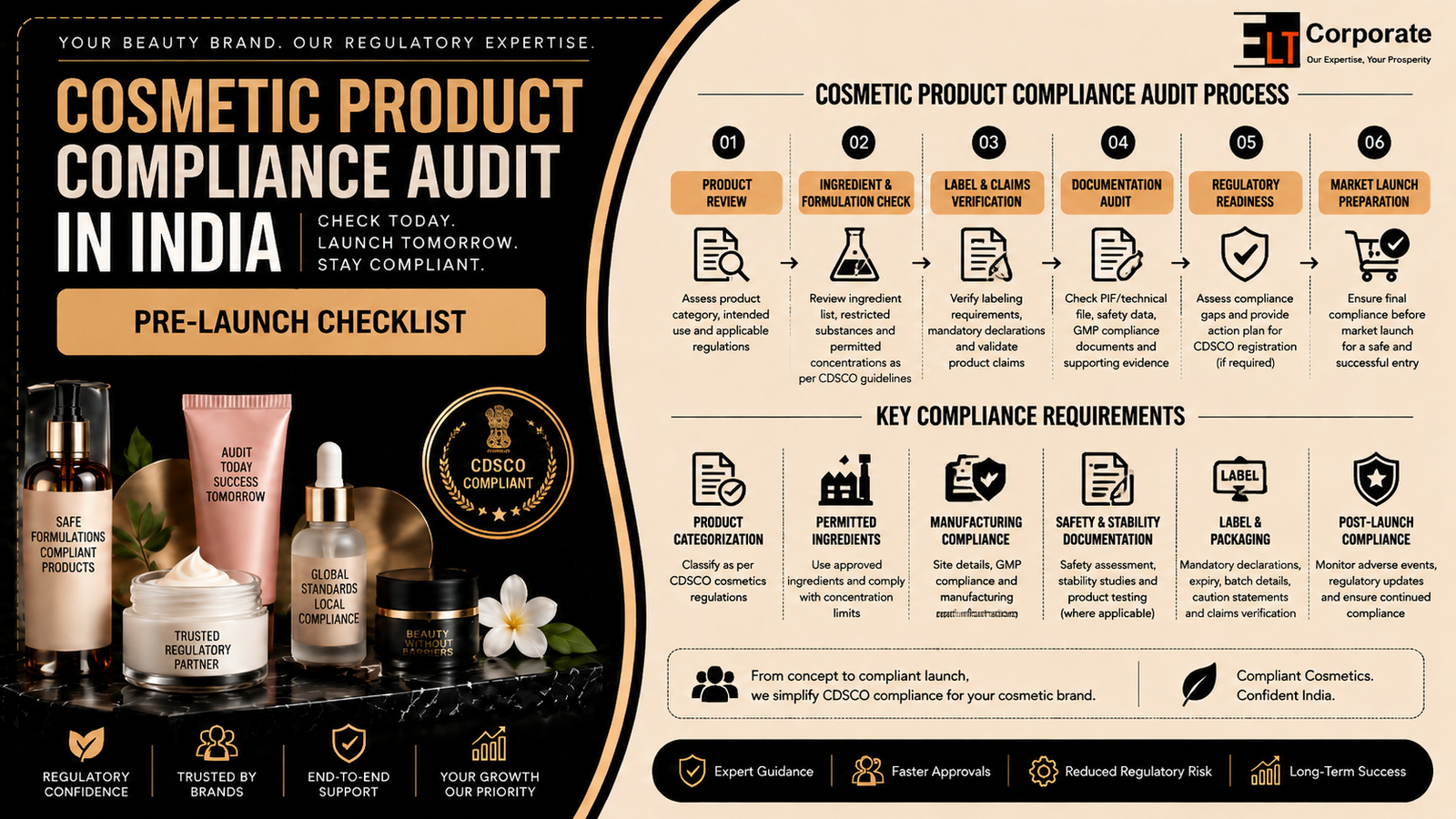
Step-by-Step: How to Launch Your Cosmetic Brand
Step 1: Define Your Niche and Product Range
Choose a focused category — skincare, haircare, personal care, or colour cosmetics. Start with 2 to 3 hero products. A tight, well-chosen range is far easier to launch, market, and scale than a broad catalogue.
Step 2: Find a GMP-Compliant Manufacturer
Search for third-party cosmetic manufacturers in your product category. Verify their COS-8 license and GMP certification. Request product samples and evaluate quality, texture, fragrance, and stability before committing.
Step 3: Build Your Brand Identity
Create your brand name, logo, packaging design, and brand story. This is what differentiates you in a crowded market. Invest in professional design — it directly influences purchase decisions and perceived value.
Step 4: Ensure Label Compliance
Your product labels must comply with Cosmetics Rules, 2020 — including the full INCI ingredient list, batch number, manufacturing date, net quantity, and manufacturer details. Work with a regulatory consultant to avoid rejections.
Step 5: Place Your First Production Order
Start with a small batch — 500 to 1,000 units per product. Test the market before scaling. Most third-party manufacturers offer flexible MOQs specifically for startups and first-time brand owners.
Step 6: Launch and Market Your Brand
Build your D2C website, list on platforms like Nykaa or Amazon India, and grow your social media presence. Focus on a specific customer segment and solve a specific problem — that is what builds a loyal, returning customer base.
Why 2025-2026 Is the Right Time to Launch in India
India’s cosmetics market is at a genuine inflection point. Here is why this is the best window to enter:
• The Indian beauty market is growing at 25% annually – one of the fastest growth rates in the world
• Over 400 homegrown brands are now selling on app20 alone, and the number grows every month
• Consumers are actively seeking Indian brands with authentic stories and targeted solutions for Indian skin
• D2C models allow you to build direct customer relationships without expensive retail partnerships
• Global names like Fenty Beauty, Rare Beauty, and Armani Beauty entered India in 2024-25, validating premium market demand
The Indian consumer is no longer automatically loyal to international names. They want products that understand their skin, their climate, and their culture. That is your opportunity as an Indian brand founder.
Common Mistakes First-Time Brand Founders Make
• Launching too many products at once – start with 2 to 3 and scale based on data
• Skipping label compliance – non-compliant labels can result in product seizure and penalties
• Not verifying manufacturer credentials – always check GMP certification and COS-8 license validity
• Ignoring trademark registration – protect your brand name before someone else does
• Underestimating marketing costs – great products still need visibility and consistent promotion to sell
• Choosing price over quality in manufacturing – your product quality is your brand reputation
Need Help With Compliance or Import Licensing?
At ELT Corporate, we help entrepreneurs and brands navigate every step of cosmetic regulatory compliance in India — from COS-1 import licenses to label compliance guidance and CDSCO registration.
Whether you are launching a new brand, importing cosmetics from abroad, or need annual COS-4A filing support, our team of CDSCO experts handles everything end-to-end — so you can focus on building your brand.