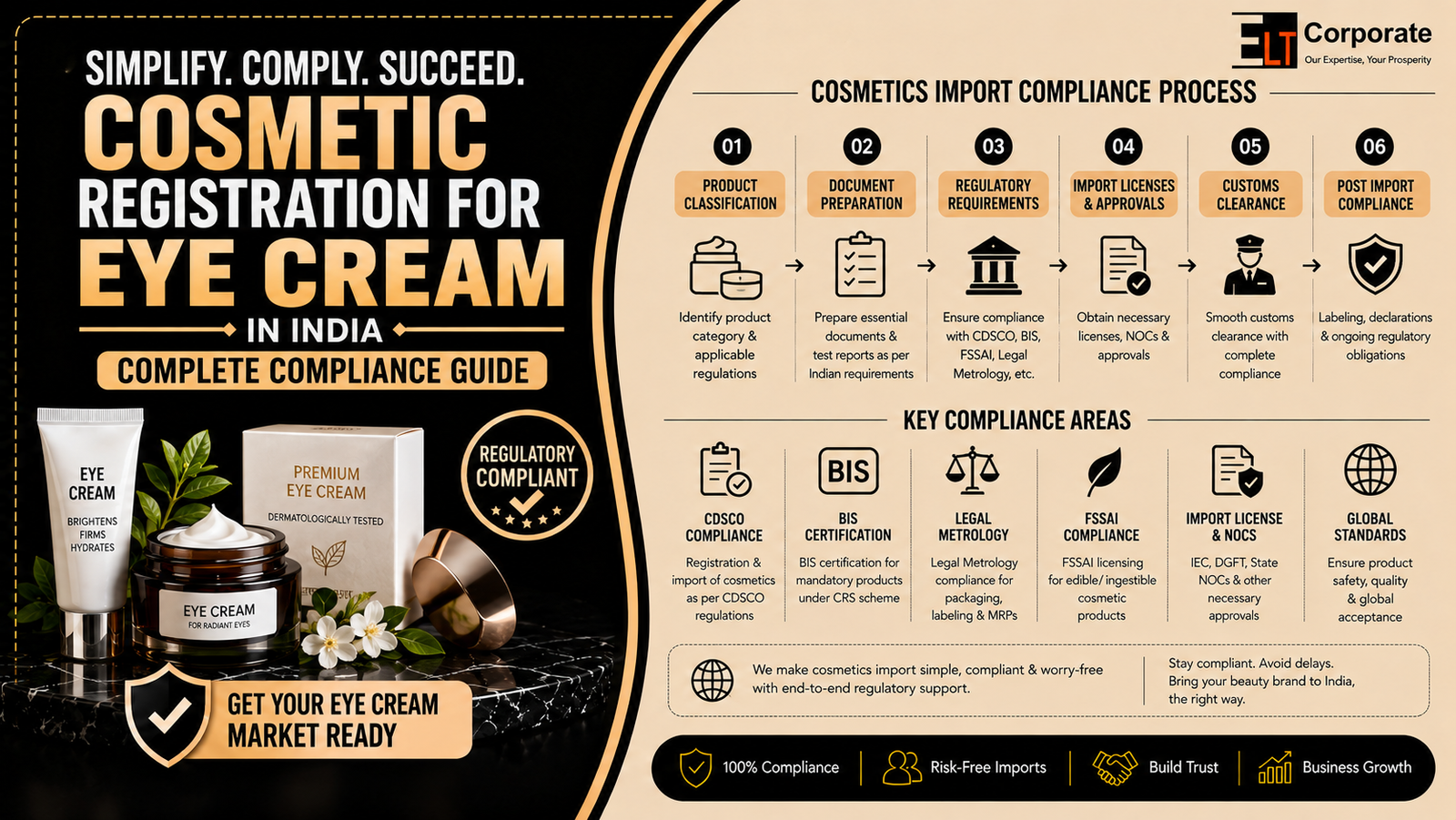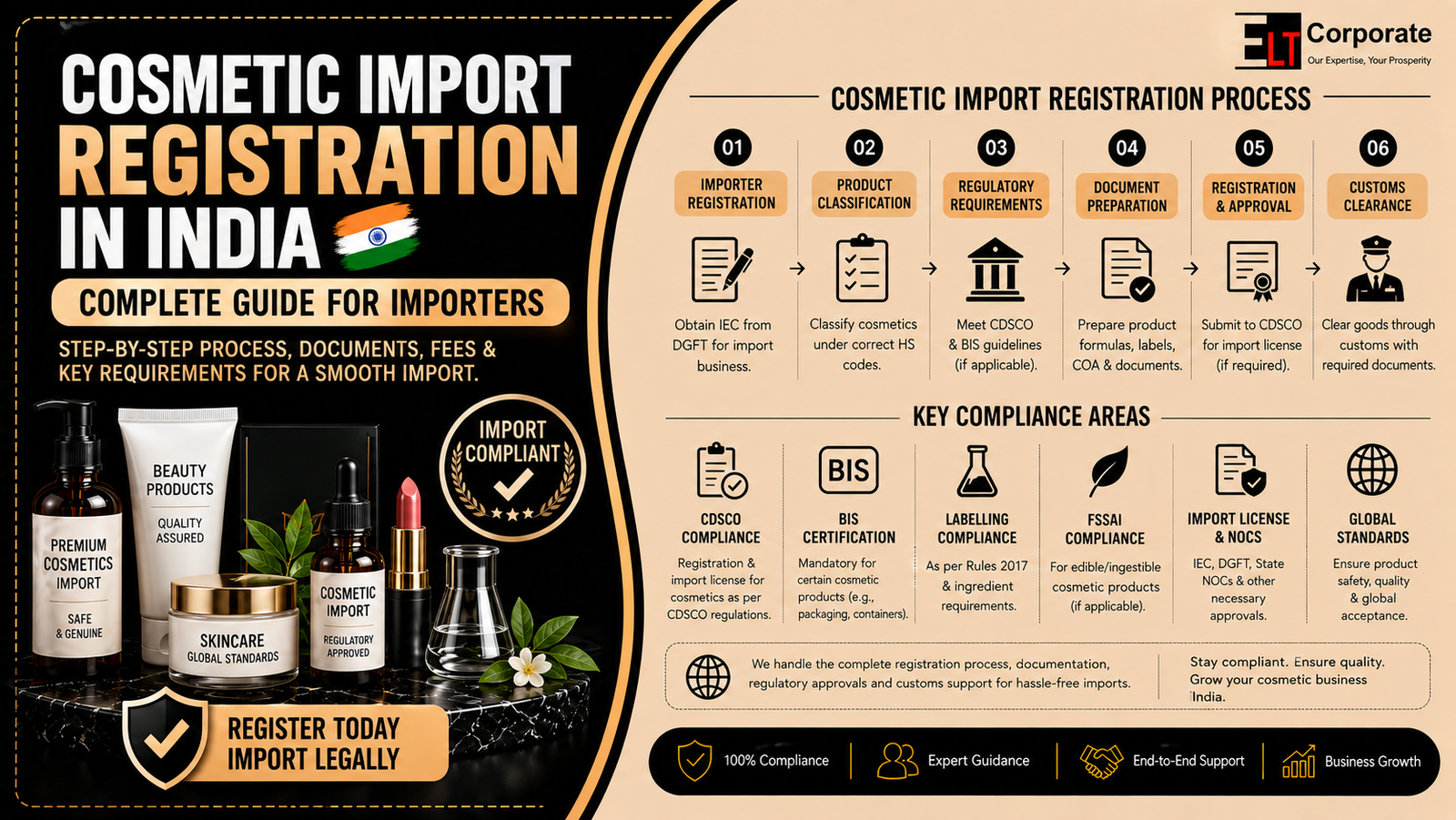
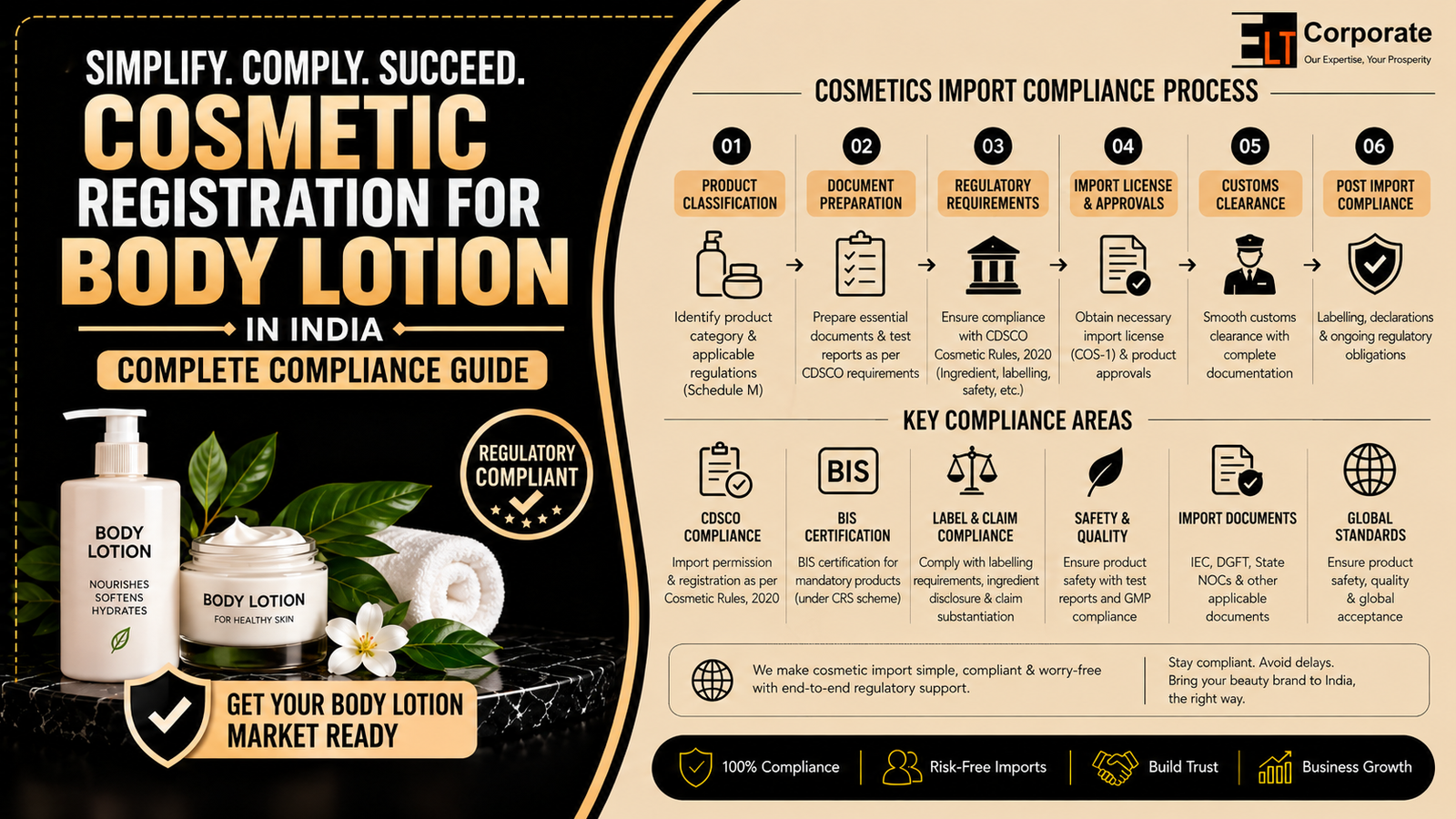

Planning to launch a body lotion brand in India? Whether you want to manufacture moisturizing lotion, start a private-label skincare business, or import an international beauty product, understanding the applicable cosmetic regulations is essential before launching your product.
Cosmetic Registration for Body Lotion in India involves identifying the correct regulatory route, preparing product documents, reviewing ingredients and labels, and complying with applicable manufacturing or import requirements. The process depends on how the body lotion is manufactured and whether it is produced domestically or imported.
Cosmetics Regulatory helps businesses understand cosmetic licensing, documentation, and product compliance requirements. With the right preparation, brands can identify potential documentation gaps before investing in production or commercial distribution.
Launching Your Body Lotion Brand?
Get professional guidance on licensing, product documents, label compliance, and the applicable registration process.
Get Free Expert ConsultationHave questions? WhatsApp Our Regulatory Team
What Is Cosmetic Registration for Body Lotion in India?
Cosmetic Registration for Body Lotion in India refers to the applicable regulatory requirements for introducing a body lotion into the Indian market. Body lotions intended to moisturize, soften, or improve the appearance of the skin generally fall within the cosmetic category when their intended use and claims are cosmetic in nature.
The Drugs and Cosmetics Act, 1940, and the Cosmetics Rules, 2020, establish requirements concerning cosmetic quality, safety, manufacturing, import, and labelling.
For domestic manufacturing, the relevant State Licensing Authority generally handles manufacturing licence applications. Imported cosmetics are subject to the applicable registration process administered by the Central Licensing Authority through CDSCO.
Before selecting a route, businesses should review their product formulation, intended claims, manufacturing arrangements, and distribution plans.
For more information, read our guide to documents required for cosmetic registration in India.
Who Needs Body Lotion Registration in India?
Cosmetic Registration for Body Lotion in India is a relevant consideration for several types of businesses, although the exact requirements differ according to their activities.
- New skincare brands: Entrepreneurs launching their own moisturizing lotion or body-care range.
- Domestic manufacturers: Companies producing body lotions at their own manufacturing premises.
- Private-label brands: Businesses outsourcing production to a third-party manufacturer.
- Importers: Businesses bringing finished body lotion products from overseas manufacturers.
- International brands: Foreign companies planning to enter the Indian skincare market.
- Distributors: Businesses checking whether the products they intend to sell meet applicable regulatory requirements.
For example, a business using an Indian contract manufacturer should verify the manufacturer’s applicable licence and determine its own responsibilities for branding, packaging, claims, and distribution.
Which Authority Regulates Body Lotion in India?
The applicable authority depends on the business model and the regulatory activity being undertaken.
| Activity | Applicable route |
|---|---|
| Manufacturing in India | Relevant State Licensing Authority |
| Importing finished body lotion | CDSCO import registration process |
| Manufacturing through a third party | Applicable manufacturing or loan-licence arrangement |
| Products involving a new cosmetic | Assessment of applicable prior-permission requirements |
Businesses should confirm the correct route against the Cosmetics Rules, 2020, and the details of their proposed product.
Documents Required for Body Lotion Registration
Preparing accurate documents is an important part of Cosmetic Registration for Body Lotion in India. The exact checklist varies according to the application, manufacturing arrangement, and product category.
Documents for Domestic Manufacturing
- Company or applicant identification and address details.
- Manufacturing premises information and applicable facility documents.
- Relevant manufacturing licence application and supporting forms.
- Product formulation and ingredient specifications.
- Manufacturing process and quality-control information.
- Applicable testing reports and product specifications.
- Information concerning technical personnel and manufacturing equipment, where required.
- Proposed labels, packaging details, and product claims.
- Other documents required by the relevant State Licensing Authority.
Documents for Imported Body Lotion
- Foreign manufacturer’s name and manufacturing site details.
- Product, brand, variant, and pack-size information.
- Ingredient list with applicable composition details.
- Free Sale Certificate or other applicable supporting documentation.
- Manufacturer authorisation and undertaking, as required.
- Product specifications and testing methods.
- Proposed product labels and packaging information.
- Applicable declarations, application details, and fee receipts.
For a detailed checklist, read our article on documents required for cosmetic registration.
For imported products, CDSCO provides guidance and checklists through its official Cosmetics section.
Body Lotion Manufacturing License in India
Businesses planning to manufacture body lotion domestically must identify the applicable manufacturing licence before starting regulated manufacturing activities.
Under the Cosmetics Rules, 2020, the relevant forms include:
- Form COS-5: Application for a licence to manufacture cosmetics for sale or distribution.
- Form COS-6: Application for a loan licence to manufacture cosmetics for sale or distribution.
- Form COS-8: Licence to manufacture cosmetics for sale or distribution.
- Form COS-9: Loan licence to manufacture cosmetics for sale or distribution.
The appropriate route depends on the proposed manufacturing arrangement. A company registration certificate or a brand name alone does not replace a required cosmetic manufacturing licence.
Applicants should prepare the applicable documents, review their premises and quality-control arrangements, and follow the relevant State Licensing Authority’s process.
Cosmetic License for Body Lotion in India: Private-Label Manufacturing
Private-label manufacturing allows entrepreneurs to launch their own body lotion brand without necessarily establishing a manufacturing facility. A third-party manufacturer produces the product under an agreed commercial arrangement.
However, outsourcing production does not eliminate the need to verify applicable compliance requirements.
Before choosing a manufacturer, check:
- Whether the manufacturer holds the relevant manufacturing licence.
- Whether the proposed manufacturing activity and product are appropriately covered.
- Whether product specifications and quality-control records are maintained.
- Whether the formulation and ingredients meet applicable requirements.
- Whether the packaging correctly identifies the manufacturer and marketer.
- Whether product claims are appropriate and supported by evidence.
Cosmetics Regulatory can help businesses understand documentation requirements and identify questions to resolve before entering a private-label manufacturing agreement.
Body Lotion Import Registration in India
Businesses importing finished body lotions from other countries must comply with the applicable Indian import-registration requirements before importing the products.
Under Rule 12 of the Cosmetics Rules, 2020, an application for an import registration certificate is made in Form COS-1. If the application meets the applicable requirements, the registration certificate may be granted in Form COS-2 under Rule 13.
The process can involve details of the foreign manufacturer, manufacturing premises, product category, brand, variants, pack sizes, ingredient composition, authorisation documents, and proposed labels.
Businesses should also assess whether the formulation falls within the definition of a new cosmetic and whether prior permission requirements apply.
Read our detailed guide to CDSCO cosmetic registration and Form COS-1 for further information about the import process.
Official guidance is available on the CDSCO Cosmetics website.
Cosmetic Registration for Body Lotion in India: Step-by-Step Process
Step 1: Identify the Correct Regulatory Route
Determine whether the product will be manufactured in India, produced through a third-party arrangement, or imported as a finished cosmetic.
Step 2: Review the Formulation
Prepare the ingredient list, product specifications, intended use, and available safety and quality information. Check applicable ingredient restrictions and standards.
Step 3: Prepare the Documents
Collect the company, manufacturer, product, facility, authorisation, and supporting documents relevant to the selected route.
Step 4: Review Labels and Claims
Check proposed labels against applicable cosmetic labelling requirements. Confirm that the ingredient declaration, manufacturer details, batch information, and other required particulars are addressed.
Step 5: Submit the Applicable Application
Follow the relevant State Licensing Authority’s process for domestic manufacturing or the CDSCO process for import registration.
Step 6: Address Regulatory Queries
Respond to requests for clarification with accurate and consistent information. Missing or contradictory documents can complicate the review.
Step 7: Verify Compliance Before Launch
Confirm the status of the applicable licence or registration and address relevant product, packaging, and marketing requirements before commercial distribution.
Cosmetic Compliance for Body Lotion in India
Compliance does not end when an application is submitted. Businesses must also consider product quality, safety, packaging, and advertising.
Ingredient and Quality Requirements
Review the formulation against applicable ingredient restrictions and quality standards. Maintain appropriate product specifications, testing records, and manufacturing documentation.
Labelling and Packaging
Check the applicable provisions of the Cosmetics Rules, 2020, alongside other relevant packaging laws. Requirements may include ingredient declarations, batch details, net quantity, manufacturer information, and other mandatory particulars.
Advertising and Product Claims
Claims such as “helps moisturise dry skin” or “leaves skin feeling soft” should be suitable for the product and supported by appropriate evidence.
Avoid unsupported guarantees or claims suggesting that a cosmetic treats medical conditions. Rule 36 of the Cosmetics Rules, 2020, addresses false or misleading cosmetic claims.
Cost of Cosmetic Registration for Body Lotion in India
The cost of Cosmetic Registration for Body Lotion in India varies according to the application route, product category, number of variants, manufacturing arrangements, testing needs, and documentation requirements.
Domestic manufacturing expenses may include application fees, facility preparation, testing, and compliance documentation. Import-related costs may include applicable CDSCO registration fees, documentation preparation, and professional assistance.
There is no single total cost that applies to every business. Confirm the current official fee schedule and obtain a clear quotation identifying the services and expenses included.
Common Mistakes to Avoid
- Starting manufacturing without confirming the applicable licensing requirements.
- Assuming foreign approval automatically permits import into India.
- Submitting inconsistent product or manufacturer information.
- Overlooking variants and pack-size requirements for imported products.
- Using incomplete or inaccurate labels.
- Making unsupported skincare or therapeutic claims.
- Failing to maintain appropriate quality and batch records.
- Using outdated forms or fee schedules.
Addressing these issues early can help businesses plan their launch and reduce avoidable documentation deficiencies.
Why Choose Cosmetics Regulatory?
Cosmetics Regulatory supports businesses that need to understand cosmetic licensing, documentation, and compliance requirements for their proposed products.
Depending on the project scope, assistance may include:
- Initial review of the product and business model.
- Guidance on manufacturing and import-registration routes.
- Review of applicable document checklists.
- Identification of potential formulation and labelling gaps.
- Guidance on private-label manufacturing documentation.
- Support in understanding the applicable application process.
Timelines, fees, deliverables, and the scope of assistance should be agreed upon before engagement. Approval remains subject to the relevant authority’s assessment.
Need Help With Your Body Lotion Project?
Get your documentation, licensing route, and product compliance requirements reviewed before launch.
Request Free Expert ConsultationConclusion
Cosmetic Registration for Body Lotion in India requires businesses to identify the appropriate regulatory route, prepare accurate documentation, review product quality and safety, and address applicable labelling and advertising requirements.
Whether you are launching a new skincare brand, working with a third-party manufacturer, or importing an international body lotion, early compliance planning can help you understand the requirements before making major commercial investments.
Cosmetics Regulatory can help you understand the applicable steps and identify documentation gaps for your proposed project. Contact our team to discuss your product and request professional guidance.
Frequently Asked Questions
Q1. Is Cosmetic Registration for Body Lotion in India mandatory?
The applicable requirements depend on the business activity. Domestic manufacturing generally requires the relevant manufacturing licence, while imported cosmetics must meet the applicable CDSCO import-registration requirements.
Q2. Which licence is required to manufacture body lotion?
The relevant cosmetic manufacturing licence is generally issued by the State Licensing Authority. The applicable form depends on the manufacturing arrangement.
Q3. Can I launch a body lotion brand without owning a factory?
A business can explore third-party manufacturing through an appropriately licensed manufacturer, subject to the applicable licensing, contractual, labelling, and product compliance requirements.
Q4. What are COS-1 and COS-2?
Form COS-1 is the application for an import registration certificate for cosmetics. Form COS-2 is the certificate that may be granted following a satisfactory application review.
Q5. How much does registration cost?
The cost depends on the applicable route, product category, variants, manufacturing arrangements, and supporting documentation. Verify the current fee schedule before budgeting.
Q6. Is testing required for body lotion?
Applicable quality and safety standards must be met. Testing and supporting evidence depend on the product formulation, category, relevant standards, and regulatory requirements.
Q7. Can I import a body lotion already sold abroad?
Foreign market availability does not replace Indian regulatory requirements. The importer must establish and complete the applicable registration process before import.
Q8. Where can I get assistance?
Contact Cosmetics Regulatory through our contact page or submit the free consultation form to discuss your product.