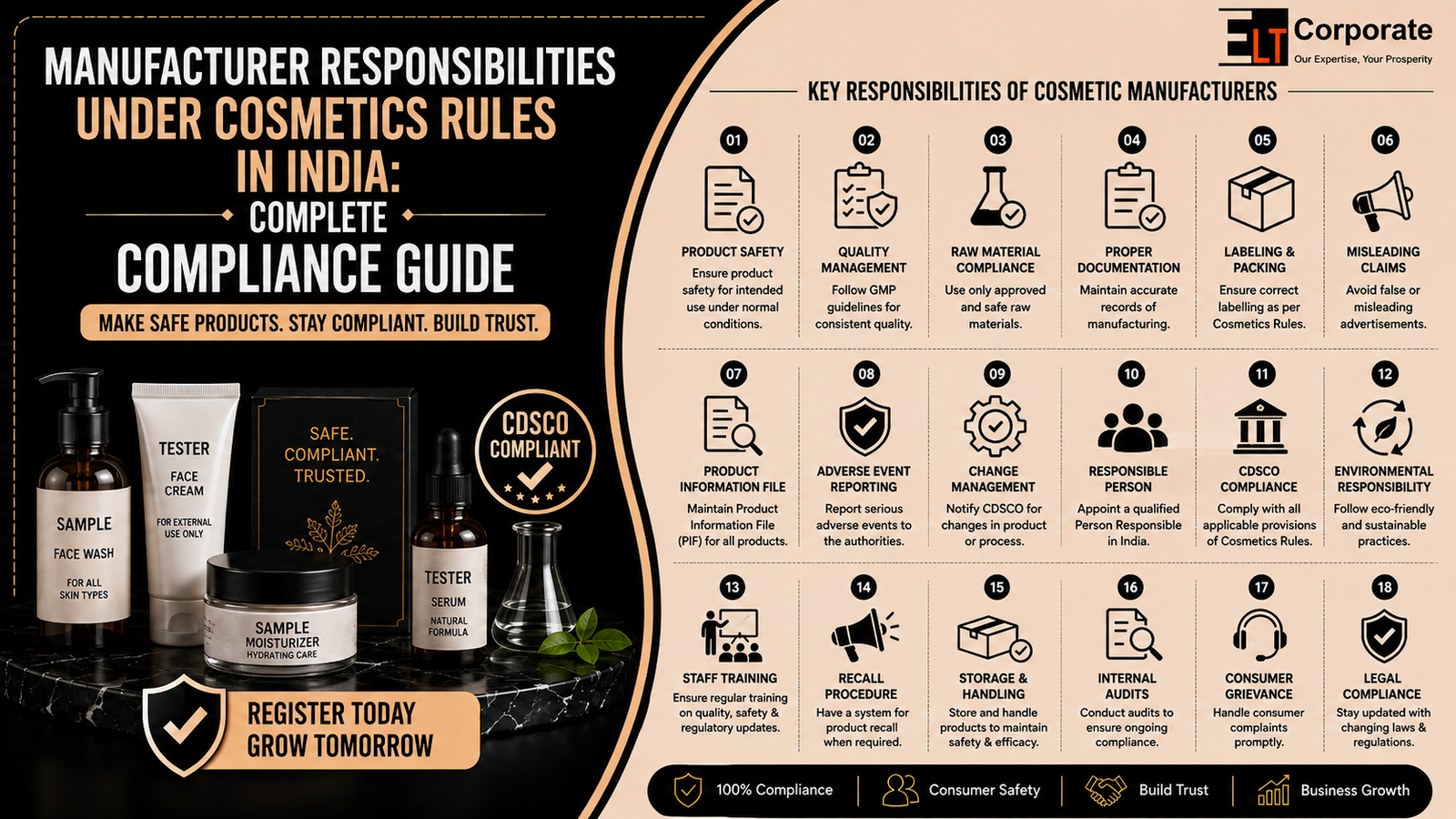

The Indian cosmetics industry is growing quickly, and there is a growing demand for haircare, skincare, makeup, skincare, and items for the personal grooming market. But making cosmetics isn’t only about making high-quality products. It also requires strict adherence to the guidelines of the Cosmetics Rules, 2020, in accordance with the Drugs and Cosmetics Act, 1940. These regulations outline the obligations of cosmetic companies to ensure safety for consumers as well as product quality and legal conformity.
No matter if you’re a new startup or contract manufacturer, private label company, or an established cosmetics company, knowing your obligations is vital for avoiding penalties recalls of products or even the loss or revocation of the manufacturing licence.
In this article we’ll provide the main manufacturers’ responsibilities in the Cosmetics Rules, 2020, and the best way to ensure the compliance of your business activities.
Why Manufacturer Responsibilities Matter
The Cosmetics Rules, 2020, was enacted to ensure only safe, high-quality, and properly labeled cosmetics get to the consumers.
Every licensed manufacturer is accountable for:
- The production of safe cosmetics
- Following Good Manufacturing Practices (GMP)
- Maintaining product quality
- Utilizing approved ingredients
- Proper product labeling
- Maintaining records of manufacturing
- Cooperating during inspections
Failure to adhere could cause licensing suspension, confiscation of product, and financial penalties. legal actions.
1. Obtain a Valid Cosmetic Manufacturing License
Before manufacturing any cosmetic item in India, the manufacturer must obtain the required manufacture licenses from the State Licensing Authority.
The license affirms:
- Manufacturing facilities meet the requirements of the regulatory authorities
- Technical staff with the required qualifications are hired.
- The equipment you require is readily available
- Quality control systems are in place
Manufacturing without an approved license is illegal in the Cosmetics Rules, 2020.
2. Follow Good Manufacturing Practices (GMP)
One of the most important responsibilities of a cosmetics company is to follow Good Manufacturing Practices.
GMP helps ensure:
- Consistent product quality
- Manufacturing environment that is clean and safe for manufacturing
- Controlled manufacturing methods
- Reduction of the risk of contamination
- Proper documentation
Manufacturers should ensure that:
- Production areas with clean production
- Sanitized equipment
- Pest control techniques
- Personnel who are trained
- Standard Operating Procedures (SOPs)
- Quality assurance procedures
Regular internal audits assist in maintaining the compliance.
3. Use Safe and Permitted Ingredients
Manufacturers must make sure that their cosmetic formulations meet limitations on ingredients in the Cosmetics Rules.
Responsibilities include:
- Avoiding prohibited substances
- Utilizing colorants and preservatives that are permitted
- Maintaining ingredient specifications
- Verifying the quality of raw materials
- Ensuring supplier compliance
Each ingredient must be accompanied by technical documentation as well as certifications of quality whenever applicable.
4. Maintain Product Quality Standards
Each batch of production must undergo tests of quality before it is released to the market.
Manufacturers must confirm:
- Appearance
- Color consistency
- Odour
- pH value
- Stability
- Microbiological quality
- Integrity of packaging
A strong Quality Control (QC) system minimizes the risk of regulatory complaints and reduces regulatory risk.
5. Ensure Proper Cosmetic Labelling
Incorrect labelling is among the most frequent compliance problems.
Manufacturers are accountable for ensuring that the labels are filled with mandatory information, for example.
Name of the product
- Name and address of the manufacturer
- Manufacturing license number
- Batch number
- Manufacturing date
- Expiry or Best Before Date
- Net quantity
- Ingredient list
- Directions for use
- Notifications are required
Imported cosmetics require information about the importer and the countries of origin if applicable.
6. Maintain Manufacturing Records
The proper documentation is essential.
Manufacturers should keep track of their records, which include:
- Purchase records for raw materials
- Batch Manufacturing Records (BMR)
- Batch Packaging Records
- Quality Control Reports
- Maintenance logs for equipment
- Cleaning records
- Records of staff training
- Records of complaints about products
The documents should be easily accessible during inspections for compliance.
7. Appoint Qualified Technical Personnel
The Cosmetics Rules require competent technical supervision during the process of manufacturing.
Qualified personnel oversee:
- Production activities
- Quality assurance
- Validation of processes
- Batch release
- Review of documentation
- Compliance with the regulations
Training for staff members is also crucial.
8. Conduct Stability and Safety Assessments
Manufacturers must assess the stability of their product prior to commercial distribution.
Common assessments include:
- Shelf-life studies
- Packaging compatibility
- Stability of temperature
- Preservative effectiveness
- Product performance
This ensures that the product remains secure throughout its shelf life.
9. Handle Consumer Complaints Effectively
Manufacturers should establish procedures to:
- Receiving complaints
- Investigating issues with products
- Retention of complaint records
- Implementing corrective measures
- Product recalls if necessary
A complaint management system shows the commitment to the safety of consumers.
10. Cooperate During Regulatory Inspections
State drug inspectors may inspect manufacturing facilities to verify compliance.
During inspections, manufacturers should provide:
- Manufacturing license
- Batch records
- Testing reports
- SOPs
- Employee records
- Equipment maintenance logs
- Quality documentation
Transparent cooperation helps avoid regulatory complications.
10. Cooperate During Regulatory Inspections
State drug inspectors can inspect manufacturing facilities in order to confirm the compliance.
In the course of inspections, producers must offer:
- Manufacturing license
- Batch records
- Test reports
- SOPs
- Records of employees
- Logs of maintenance for equipment
- High-quality documentation
Transparency in cooperation can help reduce regulatory issues.
11. Ensure Proper Storage and Distribution
Quality of the appearance is important to maintain after manufacture.
Manufacturers should make sure:
- Storage conditions that are controlled
- Protection against contamination
- Management of inventory
- Batch tracking
- Proper transportation
Good storage practices prevent product deterioration.
12. Monitor Regulatory Updates
The rules for cosmetics continue to change.
Manufacturers must be vigilant about:
- CDSCO Notifications from CDSCO
- Cosmetics Rules amendments
- Ingredient restrictions
- BIS standards
- Safety and security tips for the product
Maintaining a current status helps to ensure long-term adherence.
Common Compliance Mistakes
Many manufacturers face compliance issues due to:
- Incomplete labels
- Poor documentation
- Inadequate GMP implementation
- Staff who are not trained
- Improper ingredient verification
- Record of missing batch
- Inability to renew licenses
- Quality testing is not done in a sufficient manner
The prevention of these errors significantly minimizes risks to the regulatory system.
Benefits of Compliance
The obligation of the manufacturer is a source of benefits:
- Legal operation
- Consumer confidence
- Better product quality
- Simpler inspections
- Reduction of regulatory penalties
- Brand reputation is stronger
- Opportunities for market expansion
- Long-term sustainability of business
Need Help With Cosmetic Manufacturing Compliance?
Get professional assistance with licensing, GMP and regulatory compliance.
Contact Us 📞 Call Now 💬 WhatsAppConclusion
Understanding the responsibilities of cosmetics manufacturers under rules is vital for every cosmetics company that operates in India. Compliance goes beyond getting a manufacturing license. It also is about maintaining product quality by applying GMP as well as ensuring proper labeling and keeping accurate records and always meeting the requirements of regulatory authorities.
The proactive approach to compliance is not only going to save you from legal trouble but also increase customer confidence and facilitate your business growth. Those businesses who concentrate on compliance with regulations will be better placed to compete in the fast-growing cosmetics market.
Frequently Asked Questions (FAQs)
Q1. What are the main responsibilities of the cosmetic manufacturers under the Cosmetics Rules?
The cosmetic manufacturers should have valid licenses, follow the GMP principles, assure product quality, and only use authorized ingredients. Assure proper labeling and record keeping and cooperate during the inspections.
Q2. Are the Good Manufacturing Practices mandatory?
Yes, it is a must.
Q3. What kind of records should cosmetic companies keep?
Batch records quality control reports, documents on raw materials maintenance logs, complaint reports, and documents for employee training.
Q4. Do cosmetics manufacturers have to use any ingredient?
No. Only those ingredients that are permitted in accordance with applicable regulations must be used. Moreover, banned or restricted substances must be kept out.
Q5. What happens when a manufacturer does not comply with rules regarding cosmetics?
Failure to comply could result in inspections, sanctions, license removal or suspension, recalls of product, or other legal action.