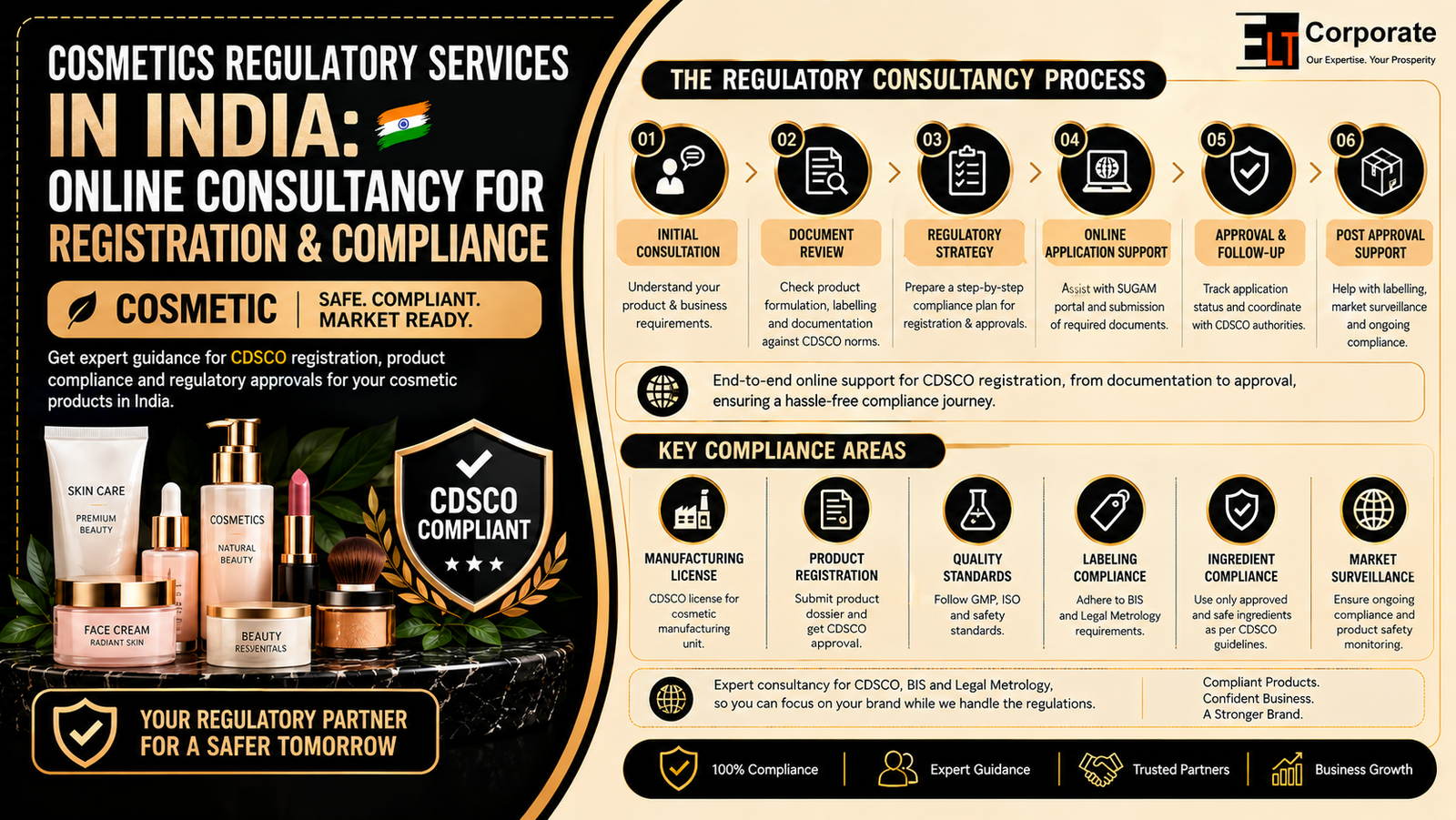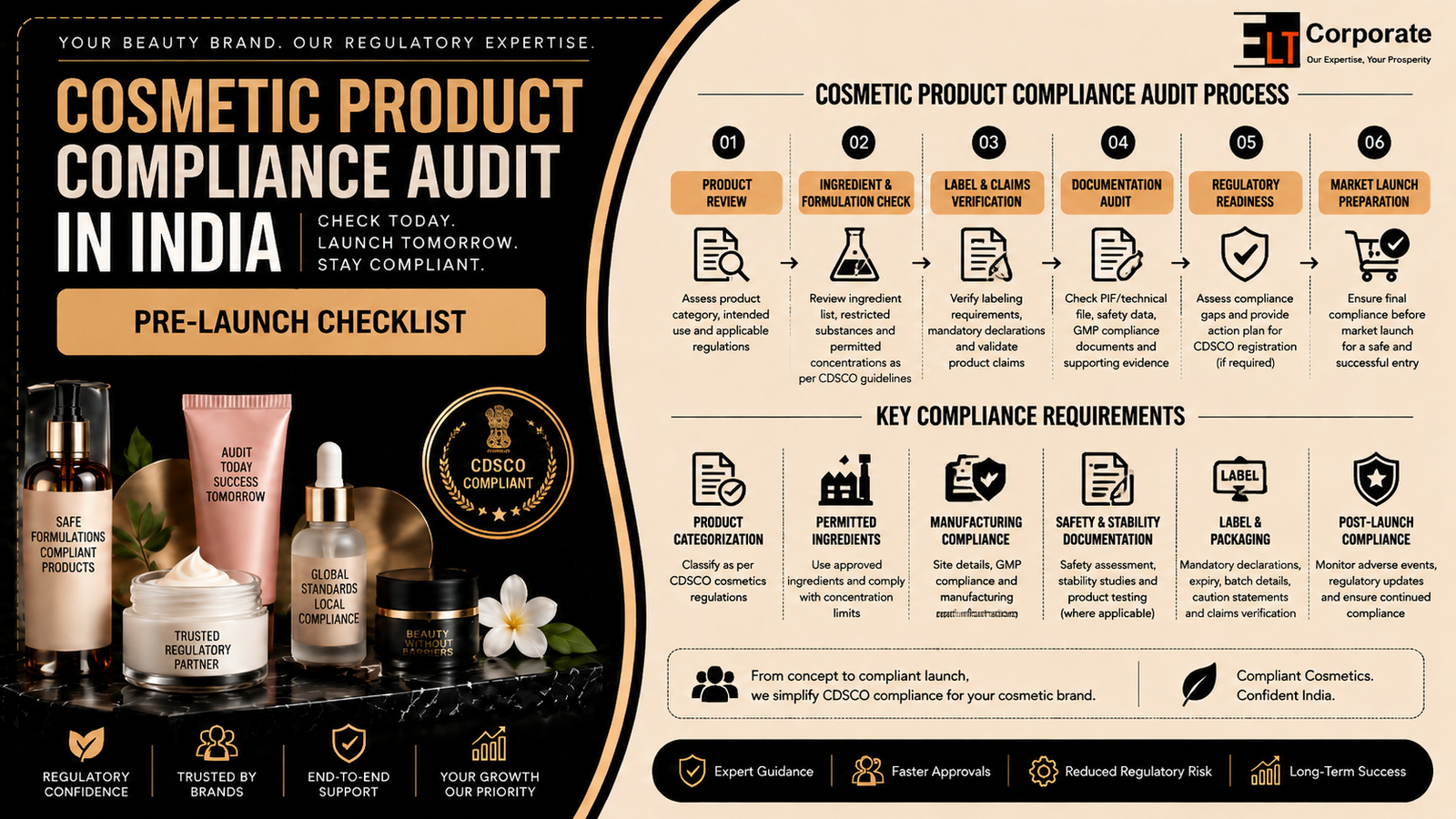
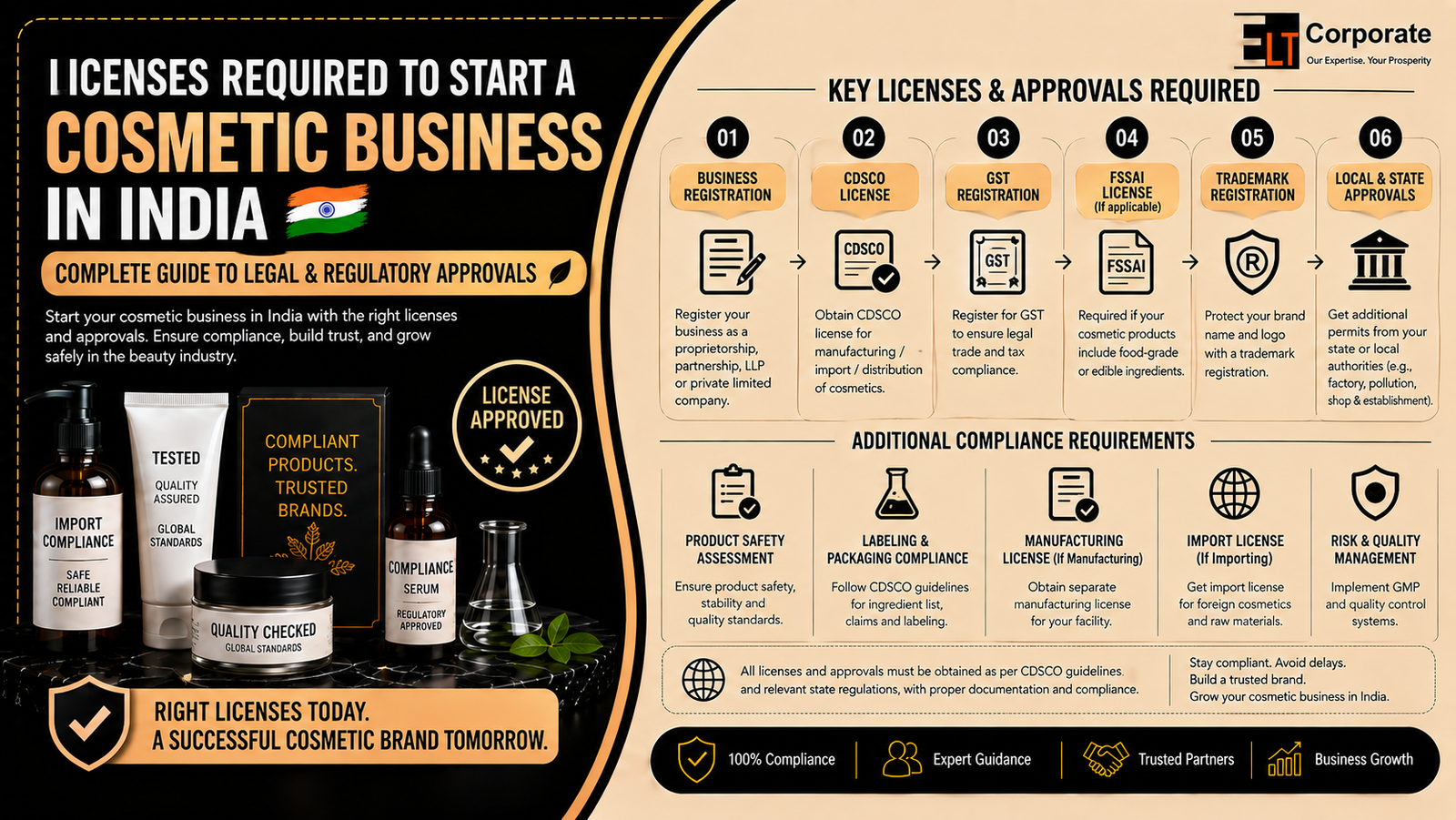

Starting a cosmetic business in India can be a profitable opportunity, but launching products involves more than choosing a brand name, developing a formula, and designing attractive packaging. Depending on your business model, you may need cosmetic manufacturing licenses, import registration, product approvals, business registrations, and other regulatory compliances before selling your products in India.
The applicable requirements depend on whether you are manufacturing cosmetics yourself, using a third-party manufacturer, importing finished cosmetics, operating a private-label brand, or selling products through an online channel.
🚀 Starting a Cosmetic Business in India?
Not sure which cosmetic licence or registration your business needs? Get free expert regulatory assistance before you launch.
📋 Get Free Expert ConsultationThe Cosmetics Rules, 2020, along with the Drugs and Cosmetics Act, 1940, provide the regulatory framework for cosmetics in India. Manufacturing of cosmetics is regulated through state licensing authorities, while import of cosmetics is regulated through the Central Licensing Authority/CDSCO.
If you are planning to start a skincare, haircare, makeup, personal-care, or beauty product business, understanding the applicable licenses before launch can help you avoid compliance problems later.
What Licenses Are Required to Start a Cosmetic Business in India?
There is no single license that applies to every cosmetic business. The requirements depend on your business activity.
Common regulatory requirements may include:
- Cosmetic manufacturing license
- Cosmetic loan license
- Import registration for cosmetics
- Product registration/approval requirements where applicable
- Business registrations such as GST and entity registration
- Import Export Code (IEC) for import/export activities
- Compliant product labeling
- Product testing and safety documentation
- Documentation related to the manufacturer and products
The important point is that not every cosmetic business needs every license.
For example, an Indian brand using an already licensed third-party manufacturer may have a different compliance route from a company operating its own cosmetic manufacturing facility.
1. Cosmetic Manufacturing License in India
If you plan to manufacture cosmetics in your own facility in India, obtaining the applicable cosmetic manufacturing license is one of the most important requirements.
Under the Cosmetics Rules, 2020, an applicant seeking a license to manufacture cosmetics in India applies to the concerned State Licensing Authority. CDSCO’s FAQ states that applications for a manufacturing license are made in Form COS-5, while an application for a loan license is made in Form COS-6. Licences are subsequently issued in Form COS-8 or Form COS-9, respectively.
A manufacturing facility may need to demonstrate compliance relating to:
- Manufacturing premises
- Qualified technical staff
- Equipment and machinery
- Manufacturing processes
- Testing arrangements
- Product specifications
- Raw materials
- Finished products
- Documentation and records
- Labelling and packaging
- Quality and safety requirements
If you want to manufacture cosmetics yourself, review the requirements through a professional cosmetic manufacturing license service before investing in the facility.
Get expert assistance with licensing, documentation and compliance requirements.
💼 Apply Online for Expert ConsultancyWho needs a cosmetic manufacturing license?
This route may apply to businesses that intend to:
- Manufacture skincare products
- Manufacture haircare products
- Manufacture makeup products
- Manufacture personal-care cosmetics
- Manufacture beauty products
- Produce cosmetics under their own brand
- Manufacture products for other brands
The exact requirements can vary depending on the products and manufacturing arrangement.
2. Cosmetic Loan License for Third-Party Manufacturing
If you want to launch a cosmetic brand but do not have your own manufacturing facility, you may consider a third-party or loan license manufacturing arrangement.
A license loan license allows an applicant to manufacture cosmetics using the manufacturing facilities of another licensed manufacturer, subject to the applicable regulatory requirements.
The Cosmetics Rules, 2020, provide for applications in Form COS-6 and issuance in Form COS-9 for loan licenses.
This model can be useful for:
- Private-label cosmetic brands
- Startups
- D2C beauty brands
- E-commerce cosmetic businesses
- Skincare startups
- Haircare brands
- Makeup brands
However, simply signing an agreement with a third-party manufacturer does not automatically mean that all regulatory responsibilities are completed.
Before launch, the brand should review:
- Manufacturer license
- Product category
- Formula
- Ingredients
- Product specifications
- Testing requirements
- Label artwork
- Claims
- Manufacturing agreement
- Product documentation
Businesses using third-party manufacturing should therefore determine the correct licensing and compliance structure before commercial production.
3. Cosmetic Import Registration for Imported Products
If you plan to import finished cosmetic products into India, the compliance route is different from domestic manufacturing. CDSCO states that cosmetics imported into India must be registered before import. The product, variants, pack sizes, and manufacturing premises are covered under the applicable registration framework.
The application for import registration is made through Form COS-1, with the registration certificate issued in Form COS-2 under the Cosmetics Rules, 2020.
This route may apply to:
- Foreign cosmetic brands
- Indian importers
- Distributors importing finished cosmetics
- Korean cosmetic brands
- European cosmetic brands
- US cosmetic brands
- International private-label brands
For an imported cosmetic business, the documentation may include information relating to the foreign manufacturer, products, ingredients, manufacturing premises, product specifications, and supporting regulatory documents.
You can review the cosmetic import registration service before planning your import activity.
🌍 Planning to Import Cosmetics into India?
Get expert guidance on CDSCO cosmetic import registration, documentation and compliance.
📋 Get Free Import Compliance Assistance4. Business Registration and GST
Apart from cosmetics-specific regulatory requirements, a business also needs to consider its general commercial registrations.
Depending on the business structure, this may include:
- Proprietorship registration
- Partnership or LLP registration
- Private Limited Company registration
- GST registration, where applicable
- PAN
- TAN, where applicable
- Business bank account
- Import Export Code (IEC), where applicable
These registrations are separate from the cosmetic manufacturing or import requirements.
For example, having GST registration does not by itself mean that a company is authorized to manufacture cosmetics.
Similarly, having a cosmetic manufacturing license does not replace other tax or business registrations that may apply to the business.
5. Import Export Code for Cosmetic Importers
If your business intends to import cosmetic products into India, an Import Export Code (IEC) may be required for import/export activities under the applicable trade regulations.
However, an IEC should not be confused with cosmetic import registration.
For imported cosmetics, CDSCO separately regulates the cosmetic product registration process. CDSCO explains that cosmetics intended for import into India must be registered under the Cosmetics Rules, 2020.
Therefore, an importer should evaluate both:
Commercial import requirements + cosmetic regulatory requirements before bringing products into India.
6. Cosmetic Product Testing and Safety Compliance
A license or registration is only one part of cosmetic compliance. Cosmetic businesses should also evaluate applicable quality, safety, and testing requirements for their products.
Under Rule 39 of the Cosmetics Rules, 2020, cosmetics must comply with applicable specifications and standards, including those prescribed under the Ninth Schedule where applicable.
Depending on the product, businesses may need to review:
- Product specifications
- Ingredient specifications
- Microbiological requirements
- Stability considerations
- Safety assessment
- Finished product testing
- Raw material testing
- Packaging compatibility
- Product quality documentation
Testing requirements can differ according to the product category and formulation.
7. Cosmetic Labelling Compliance
A cosmetic business also needs to ensure that its packaging and labels comply with applicable requirements.
CDSCO’s FAQ specifically states that cosmetic labels manufactured in India or imported into India must comply with Rule 34 of the Cosmetics Rules, 2020.
Depending on the product and packaging, businesses should carefully review information such as
- Product name
- Manufacturer details
- Manufacturing details
- Net contents
- Batch information
- Manufacturing license details where applicable
- Expiry/use-before information
- Ingredient information
- Warning statements where applicable
- Directions for use
- Imported product information, where applicable
Before printing thousands of labels, it is better to have the artwork reviewed for regulatory compliance.
You can use a professional cosmetics labelling consultancy service to review your label and packaging requirements.
8. Cosmetic Claims Compliance
Marketing claims are another important area for a new cosmetic business.
Cosmetic brands commonly use claims such as
- Hydrates skin
- Brightens skin
- Improves skin appearance
- Reduces the appearance of fine lines
- Strengthens hair
- Provides smooth-looking skin
- Controls excess oil
However, businesses should ensure that their claims are appropriate for the cosmetic category and are not false or misleading.
Rule 36 of the Cosmetics Rules, 2020, states that a cosmetic must not purport or claim to convey an idea that is false or misleading to the intended user.
Therefore, claims should be reviewed across:
- Product packaging
- Website
- Amazon/marketplace listings
- Social media
- Advertisements
- Influencer content
- Brochures
- Product descriptions
A cosmetic claim that crosses into therapeutic territory may create additional regulatory concerns.
9. Registration or Approval for New Cosmetics
Some products may fall under the category of new cosmetics.
CDSCO’s FAQ explains that a new cosmetic containing a novel ingredient not previously used or recognized for cosmetic use in relevant national or international literature requires prior permission before import or manufacture. The FAQ identifies Form COS-3 and an application in Form COS-12 for this process.
Therefore, businesses developing innovative formulations should determine whether the product could be treated as a new cosmetic before commercial launch. This is particularly important for products containing novel ingredients or formulations that do not have an established cosmetic-use history.
10. Do Private-Label Cosmetic Brands Need a license?
🚀 Ready to Start Your Cosmetic Business?
Get expert guidance on cosmetic licensing, registration, documentation, labelling, testing and compliance before launching your product in India.
📋 Get Free Expert Consultation 💬 Talk to an Expert on WhatsApp📞 Call: +91 85859 19582 | 💬 WhatsApp: +91 93553 31921
Private-label brands are becoming increasingly common in India.
A private-label business may purchase products from a third-party manufacturer and sell them under its own brand name.
The compliance requirements depend on the actual manufacturing and business arrangement.
Before launching a private-label cosmetic, review:
- Who is the actual manufacturer?
- Does the manufacturer hold the applicable license?
- What products are covered?
- Is the brand owner correctly identified?
- Is the manufacturing agreement complete?
- Are the labels compliant?
- Are the claims appropriate?
- Are product specifications available?
- Are testing documents available?
- Is the applicable registration/licensing route completed?
Do not assume that using a licensed manufacturer automatically makes every aspect of the private-label product compliant.
11. What Documents Should You Prepare?
The exact documentation depends on the license or regulatory route, but a cosmetic business may need documents such as
- Business/entity documents
- Manufacturer details
- Manufacturing license
- Product list
- Product formulation
- Ingredient details
- Product specifications
- Test reports
- Label artwork
- Packaging details
- Manufacturing agreement
- Free Sale Certificate, where applicable for imports
- Power of Attorney/authorization documents, where applicable
- Product photographs or artwork
- Supporting regulatory documents
For imported cosmetics, CDSCO provides specific guidance and documentation requirements for registration applications.
🚀 Ready to Start Your Cosmetic Business?
Get expert guidance on cosmetic licensing, registration, documentation, labelling, testing and compliance before launching your product in India.
📋 Get Free Expert Consultation 💬 Talk to an Expert on WhatsApp📞 Call: +91 85859 19582 | 💬 WhatsApp: +91 93553 31921
Licenses Required Based on Your Cosmetic Business Model
| Cosmetic Business Model | Main Regulatory Requirement to Evaluate |
| Own manufacturing facility | Cosmetic manufacturing license |
| Third-party manufacturing | Manufacturer license + applicable manufacturing/loan-licence arrangement |
| Private-label brand | Manufacturing arrangement + product and label compliance |
| Importing finished cosmetics | CDSCO cosmetic import registration |
| Foreign cosmetic brand entering India | Import registration and authorized Indian representative/importer requirements |
| New cosmetic with novel ingredient | Prior permission and applicable registration/manufacturing route |
| Online cosmetic brand | Applicable manufacturing/import requirements and product, label, and claims compliance |
The exact requirements should be determined based on the product, manufacturer, business model, and source of supply rather than using a one-size-fits-all checklist.
Common Mistakes When Starting a Cosmetic Business
New cosmetic businesses often focus heavily on branding and marketing while leaving regulatory compliance until the end.
Some common mistakes include:
1. Printing packaging before checking the label
Incorrect or incomplete label information can result in costly packaging changes.
2. Assuming GST is enough
GST registration is a tax requirement. It does not replace cosmetic-specific licensing or registration.
3. Starting imports before cosmetic registration
Imported cosmetics must follow the applicable CDSCO registration requirements before import.
4. Using unsupported claims
Marketing claims should be reviewed before publication across packaging, websites, and advertisements.
5. Choosing a manufacturer without checking its license
A third-party manufacturer should be evaluated for the applicable license, facility, and product coverage.
6. Launching before regulatory review
A pre-launch review can identify documentation, labeling, testing, and claims issues before commercial production.
How to Start a Cosmetic Business Legally in India
A practical approach is to follow these steps:
Step 1: Decide your business model—manufacturing, importing, private label, or third-party manufacturing.
Step 2: Identify the product category and formulation.
Step 3: Determine the applicable cosmetic license or registration route.
Step 4: Check ingredients and product specifications.
Step 5: Prepare the required documentation.
Step 6: Complete applicable testing and safety documentation.
Step 7: Review label and packaging artwork.
Step 8: Review cosmetic claims and marketing material.
Step 9: Apply for the applicable license or registration.
Step 10: Complete the final compliance review before commercial launch.
This approach can reduce the risk of having to change your formulation, packaging, or marketing material after launch.
Why Get Professional Cosmetic Regulatory Consultancy?
Cosmetic regulations can involve multiple areas, including licensing, registration, documentation, testing, labelling, claims, and manufacturing compliance.
For a startup, understanding which requirements actually apply to the business can save time and prevent unnecessary compliance work.
Professional regulatory support can help with:
- License identification
- Cosmetic registration
- Manufacturing license support
- Import registration
- Documentation
- Label review
- Claims review
- Product compliance
- Third-party manufacturing compliance
- Pre-launch regulatory audits
If you are unsure which license your cosmetic business requires, getting the business model reviewed before launch can help you identify the correct regulatory route.
Frequently Asked Questions
Q1. Do I need a license to start a cosmetic business in India?
It depends on your business model. Manufacturing cosmetics, importing finished cosmetics, and using third-party manufacturing arrangements can have different regulatory requirements.
Q2. Is GST registration enough to sell cosmetics?
No. GST is a tax registration and does not replace applicable cosmetic manufacturing, import, or other regulatory requirements.
Q3. Do imported cosmetics require registration?
Yes. CDSCO states that cosmetics intended for import into India must be registered under the Cosmetics Rules, 2020, before import.
Q4. Do I need a manufacturing license if I use a third-party manufacturer?
The exact arrangement needs to be evaluated based on the manufacturing and licensing structure. The third-party manufacturer’s license and the applicable loan/manufacturing arrangement should be reviewed before production.
Q5. What is the manufacturing license form for cosmetics in India?
Under the Cosmetics Rules, 2020, applications for a manufacturing license are made in Form COS-5, and licenses are issued in Form COS-8. Loan licence applications use Form COS-6, and licences are issued in Form COS-9.
Q6. Can I launch a cosmetic product before checking the label?
It is advisable to review the label before final printing and commercial launch because cosmetic labels must comply with applicable requirements under the Cosmetics Rules, 2020.
🚀 Ready to Start Your Cosmetic Business?
Get expert guidance on cosmetic licensing, registration, documentation, labelling, testing and compliance before launching your product in India.
📋 Get Free Expert Consultation 💬 Talk to an Expert on WhatsApp📞 Call: +91 85859 19582 | 💬 WhatsApp: +91 93553 31921
- Licenses Required to Start a Cosmetic Business in India
- Cosmetics Regulatory Services in India: Online Consultancy for Registration & Compliance
- Cosmetic Product Compliance Audit in India: Pre-Launch Checklist
- Launching a Cosmetic Product in India: Complete CDSCO Registration & Compliance Guide
- Cosmetic License Cost in India: Complete Fee Guide