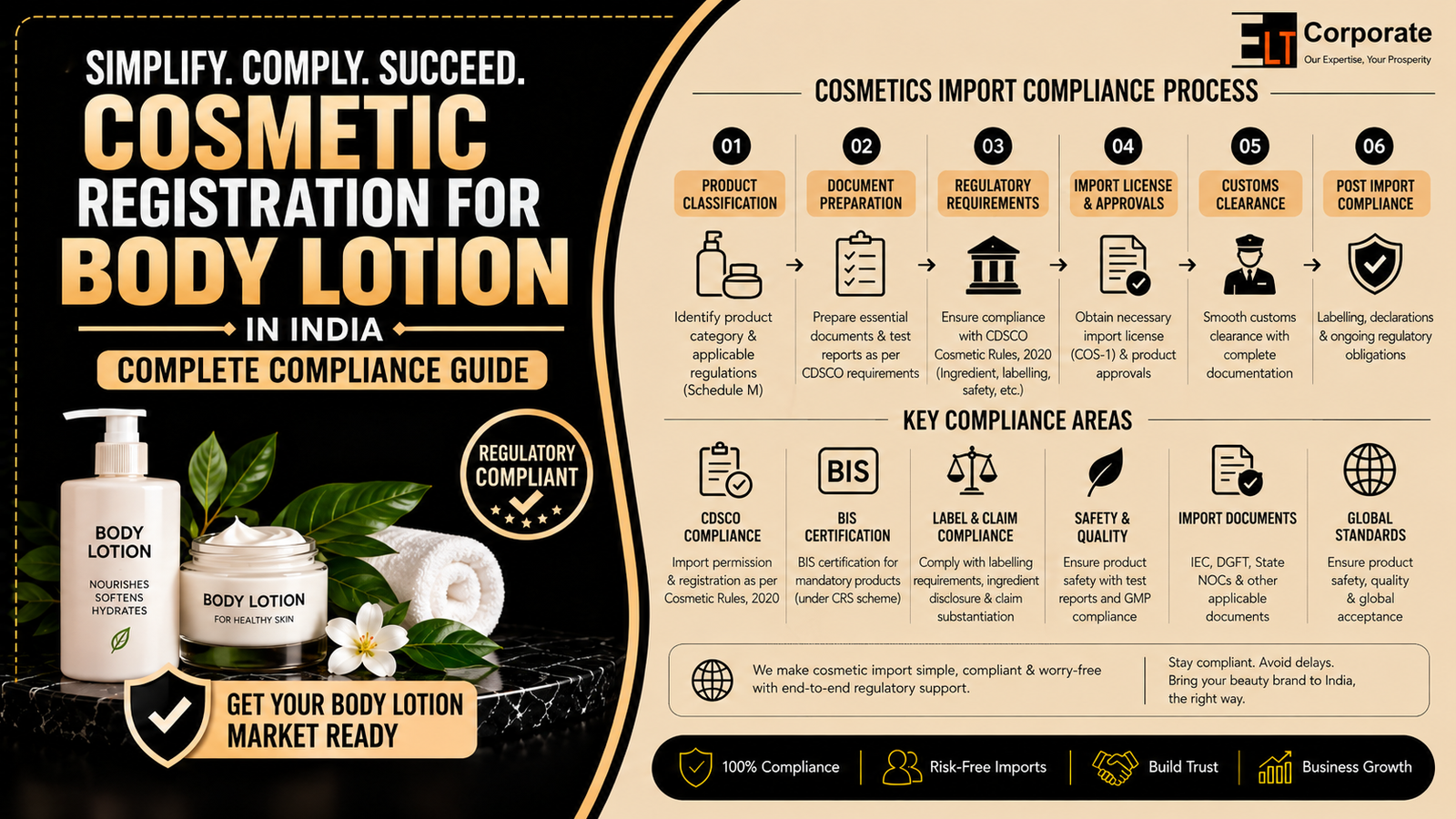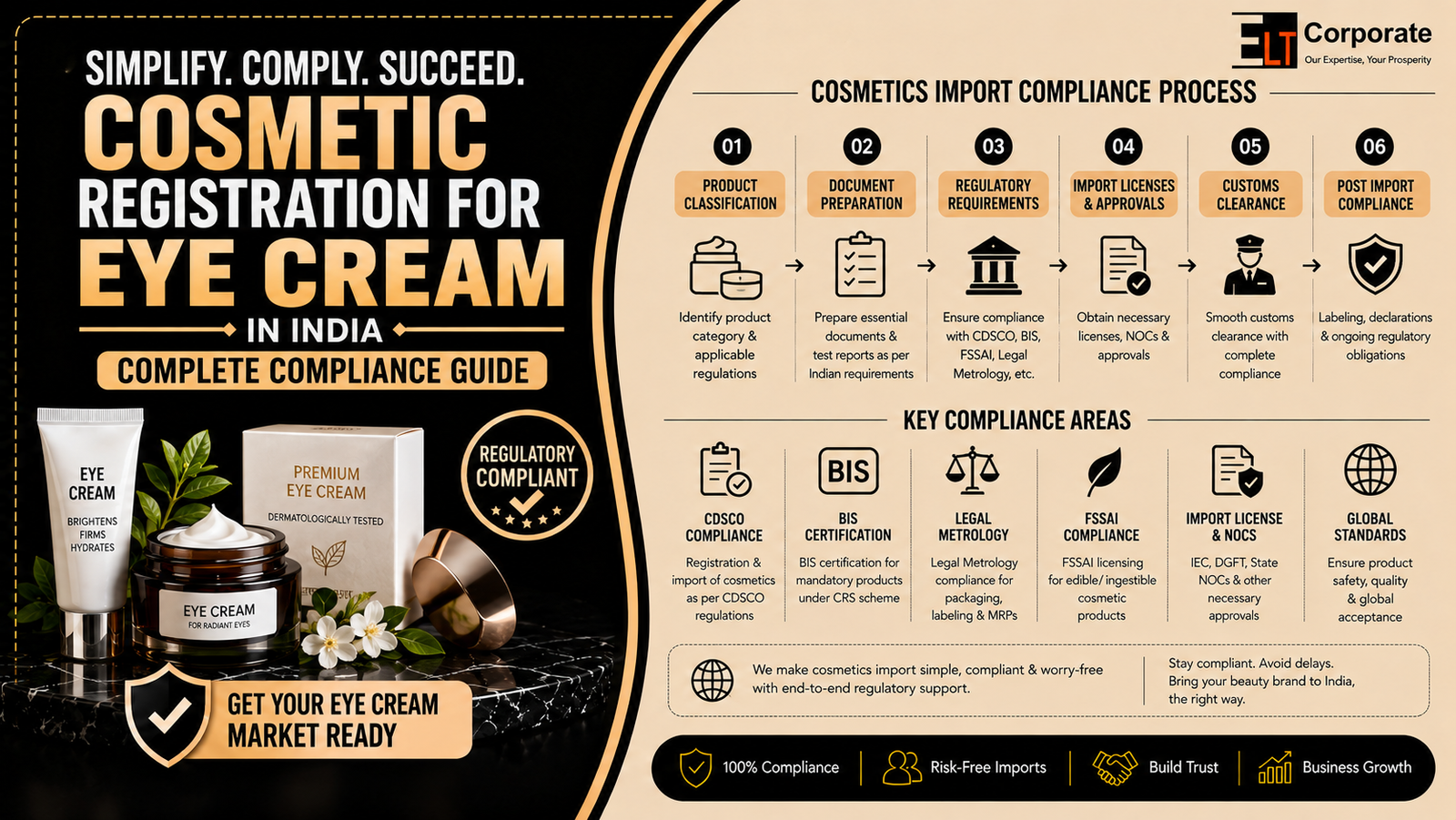
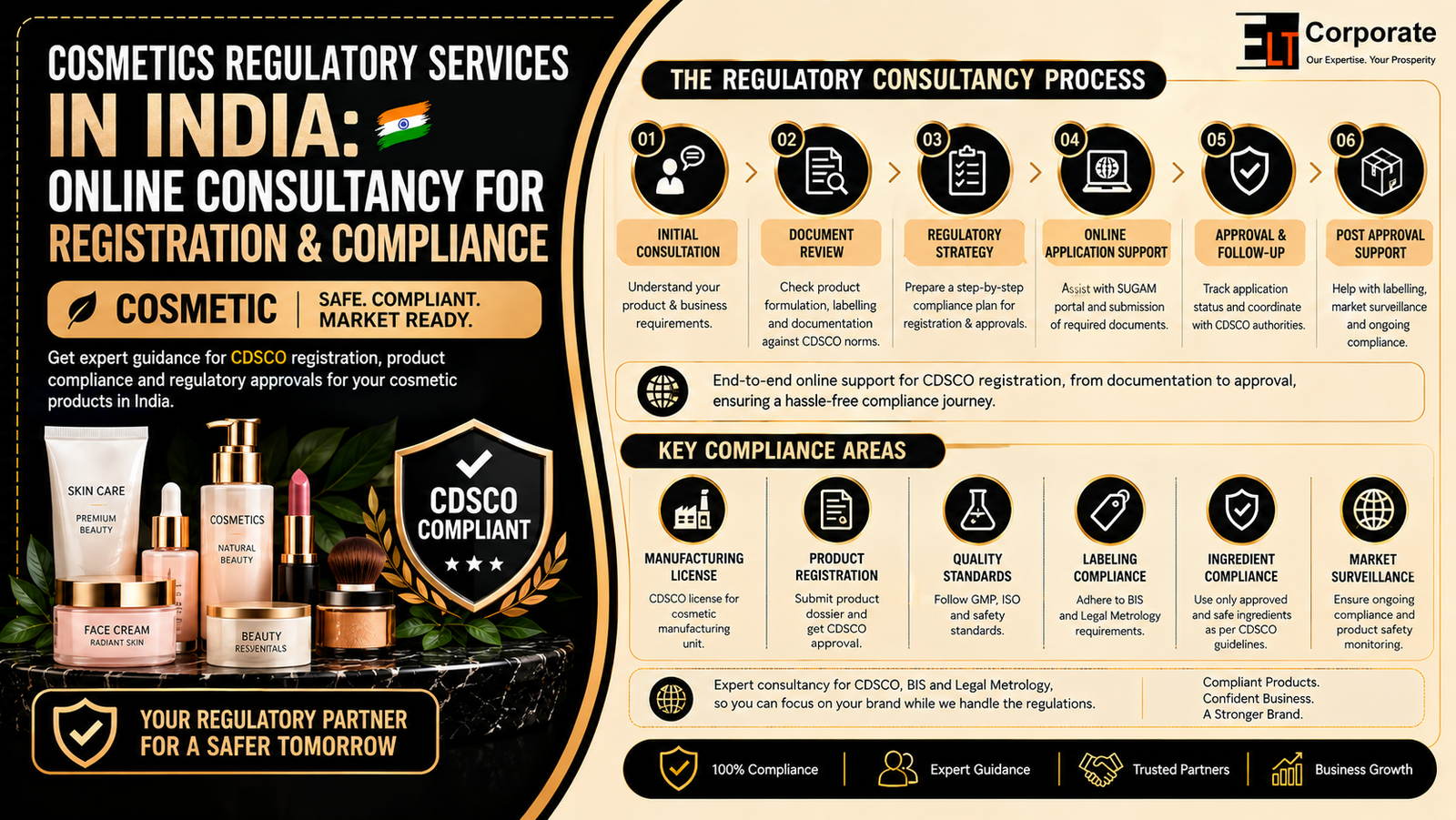

Launching, importing, manufacturing, or selling a cosmetic product in India involves more than creating a good formulation and attractive packaging. Businesses must understand the applicable cosmetic registration, licensing, documentation, testing, labeling, claims, and compliance requirements before bringing a product to market.
This is where cosmetics regulatory services in India can help businesses understand the applicable regulatory pathway and prepare their products and documentation for compliance.
Whether you are planning to launch a skincare, haircare, makeup, personal-care, private-label, or imported cosmetic product, professional regulatory consultancy can help you identify the requirements applicable to your product before you invest in manufacturing, packaging, or marketing.
🚀 Planning to Launch a Cosmetic Product in India?
Get expert guidance on cosmetic registration, licensing, documentation, labelling, testing and claims compliance before you launch.
📋 Get Free Expert ConsultationWhat Are Cosmetics Regulatory Services in India?
Cosmetics regulatory services in India refer to professional assistance provided to businesses for understanding and managing regulatory requirements applicable to cosmetic products.
Depending on the business model and product, regulatory consultancy may cover areas such as
- Cosmetic product registration
- Cosmetic manufacturing licensing
- Import-related compliance
- Product documentation
- Formulation review
- Ingredient compliance
- Cosmetic testing requirements
- Product labeling
- Packaging compliance
- Cosmetic claims review
- Regulatory documentation
- Private-label compliance
- Third-party manufacturing compliance
- Pre-launch compliance audits
The exact requirements depend on factors such as the product category, formulation, intended use, manufacturing location, import status, claims, and business model.
Why Do You Need Cosmetic Regulatory Consultancy?
One of the biggest mistakes a new cosmetic business can make is starting manufacturing or printing packaging before understanding the regulatory requirements.
A product may require specific documentation, testing, labeling information, manufacturing permissions, or import-related approvals.
Getting regulatory guidance at the planning stage can help a business identify potential compliance requirements before commercial launch.
Professional consultancy can be useful when you are:
- Starting a new cosmetic brand
- Launching a new cosmetic product
- Importing cosmetics into India
- Manufacturing cosmetics in India
- Using third-party manufacturing
- Starting a private-label cosmetic business
- Preparing cosmetic product labels
- Reviewing cosmetic claims
- Expanding into new product categories
- Unsure about applicable registration or licensing
Who Can Use Cosmetics Regulatory Services?
Cosmetic regulatory consultancy can be useful for different types of businesses.
Cosmetic Startups
New brands may need assistance understanding product documentation, manufacturing arrangements, labeling, and applicable regulatory requirements.
Skincare and Haircare Brands
Businesses launching serums, creams, lotions, shampoos, conditioners, hair masks, and similar products may require product-specific compliance review.
Private-Label Brands
Private-label businesses should understand their responsibilities even when manufacturing is outsourced to another facility.
Importers
Businesses importing finished cosmetics from countries such as Korea, the USA, Europe, Japan, or other markets may need to understand the applicable Indian import compliance pathway.
Third-Party Manufacturing Businesses
Brands outsourcing production should verify the manufacturer’s applicable permissions and ensure that their own product, packaging, and claims are properly reviewed.
Existing Cosmetic Businesses
Established businesses may also need regulatory support when launching new products, changing formulations, updating labels, or reviewing marketing claims.
What Do Cosmetics Regulatory Consultants Help With?
The scope of consultancy depends on the project. However, professional cosmetics regulatory services may include the following.
1. Cosmetic Registration & Licensing
A regulatory consultant can help identify the applicable registration or licensing route based on the product and business activity.
For businesses manufacturing cosmetics in India, the applicable requirements under the Cosmetics Rules, 2020, should be reviewed before production.
For imported cosmetics, the applicable import registration requirements should be assessed before commercial importation.
You can also explore our Cosmetic Registration Services for professional regulatory assistance.
2. Cosmetic Manufacturing License Support
Businesses planning to manufacture cosmetics in India need to understand the applicable manufacturing licensing requirements.
Regulatory support may include assistance with:
- Manufacturing license requirements
- Application documentation
- Product information
- Manufacturing premises requirements
- Technical staff documentation
- Testing arrangements
- Regulatory submissions
- Compliance documentation
For more information, see our Cosmetic Manufacturing License Services.
3. Imported Cosmetic Compliance
If you are importing finished cosmetic products into India, regulatory requirements should be reviewed before shipment and commercial sale.
A consultant can help assess:
- Product details
- Manufacturer information
- Product documentation
- Ingredient information
- Label requirements
- Import-related registration requirements
- Supporting documents
This is particularly important for international brands entering the Indian market.
4. Cosmetic Product Documentation
Documentation is an important part of cosmetic compliance.
Depending on the product and regulatory route, documentation may include:
- Product formula
- Ingredient details
- Product specifications
- Certificate of Analysis
- Testing reports
- Manufacturer information
- Packaging details
- Label artwork
- Claims information
- Manufacturing documents
- Free Sale Certificate or equivalent documents, where applicable
- Other regulatory supporting documents
A documentation review can help identify missing or inconsistent information before submission or launch.
For a detailed checklist, see our guide on Documents Required for Cosmetic Registration in India.
5. Cosmetic Formulation & Ingredient Compliance
The formulation should be reviewed before commercial manufacturing.
A regulatory review may consider:
- Ingredient identity
- Ingredient concentration
- Restricted ingredients
- Prohibited ingredients
- Preservatives
- Colouring agents
- Product category
- Applicable standards
- Intended cosmetic function
This review is particularly important for products containing active or specialty ingredients.
6. Cosmetic Testing Requirements
Testing requirements can vary depending on the product and applicable standards.
Regulatory consultancy can help businesses understand what testing and quality documentation may be relevant before production.
Depending on the product, considerations may include:
- Microbiological testing
- Physical and chemical parameters
- Stability-related testing
- Raw-material testing
- Finished-product testing
- Product specifications
- Safety-related documentation
- Packaging compatibility
Testing should ideally be planned before bulk manufacturing rather than after the product has already been produced.
7. Cosmetic Labelling & Packaging Compliance
A cosmetic product label communicates important regulatory and consumer information. Before printing final packaging, businesses should review the artwork for applicable requirements.
Depending on the product and packaging, this may include:
- Product name
- Net contents
- Ingredient declaration
- Batch number
- Manufacturing information
- Manufacturing license information
- Date-related declarations
- Directions for use
- Warnings and precautions
- Manufacturer or responsible-party information
- MRP and other applicable declarations
Packaging may also need to be reviewed under other applicable laws, including legal metrology requirements.
8. Cosmetic Claims Compliance
Marketing claims can create compliance concerns if they are inaccurate, misleading, unsupported, or inconsistent with the nature of a cosmetic product.
Claims should therefore be reviewed before they appear on:
- Product packaging
- Websites
- E-commerce listings
- Amazon or other marketplaces
- Social media
- Advertisements
- Brochures
- Influencer campaigns
For example, businesses should carefully evaluate claims suggesting that a cosmetic product can treat, cure, or prevent a disease or provide an unsupported therapeutic effect.
You can learn more through our guide on cosmetic claims compliance in India.
📋 Not Sure About Your Cosmetic Product Compliance?
Get your formula, documentation, label, claims and applicable regulatory requirements reviewed before launch.
📋 Apply Online for Expert ConsultancyCosmetic Regulatory Services for Private-Label Brands
Private-label cosmetic businesses often outsource manufacturing to an established manufacturer.
However, outsourcing production does not automatically eliminate the need to review the brand’s regulatory responsibilities.
Before launching a private-label product, businesses should consider:
- Product formulation
- Manufacturer credentials
- Applicable manufacturing route
- Product documentation
- Testing
- Label artwork
- Ingredient declaration
- Claims
- Packaging
- Marketing material
A regulatory consultant can help identify areas that should be reviewed before the product goes into production.
Cosmetic Regulatory Services for Third-Party Manufacturing
Third-party manufacturing is commonly used by startups and growing cosmetic brands that do not want to establish their own manufacturing facility.
Before selecting a manufacturer, businesses should review:
- Applicable manufacturing license
- Product categories covered
- Manufacturing infrastructure
- Technical staff
- Testing arrangements
- Product specifications
- Quality-control systems
- Documentation
- Manufacturing agreement
You can also read our detailed guide on third-party cosmetic manufacturing in India.
Cosmetic Compliance Audit Before Product Launch
A pre-launch compliance audit can help identify potential issues before manufacturing and packaging expenses are incurred.
A typical review may cover:
Formula → Ingredients → Product Category → Documentation → Testing → Label → Packaging → Claims → Manufacturing Route → Launch Compliance
This approach can be especially useful for startups that are preparing their first cosmetic product.
A compliance review can help businesses identify questions that should be resolved before placing a bulk manufacturing order.
How to Apply Online for Cosmetic Regulatory Consultancy
If you need professional regulatory assistance, the consultation process can begin online.
Step 1: Share Your Product Details
Provide basic information such as
- Product name
- Product category
- Intended use
- Manufacturing country
- Import or manufacturing plan
- Product formulation, if available
- Packaging or label artwork, if available
Step 2: Regulatory Requirement Review
The regulatory team can review the information provided and identify the key compliance areas that may apply to the product.
Step 3: Identify Required Documentation
Based on the project, the consultant can help identify documents that may be required for the applicable regulatory process.
Step 4: Compliance & Label Review
Where required, the product formula, label, packaging, and claims can be reviewed for applicable compliance considerations.
Step 5: Regulatory Assistance
Depending on the engagement, professional assistance can be provided for applicable registration, licensing, documentation, and compliance activities.
🚀 Need Help With Your Cosmetic Product?
Don’t wait until manufacturing or packaging is complete. Get professional guidance on your cosmetic registration, licensing, documentation, labelling, testing and claims compliance.
📋 Get Free Expert Consultation 💬 WhatsApp an Expert📞 +91 85859 19582
Documents You Should Keep Ready for Consultancy
Before approaching a regulatory consultant, having basic product information ready can make the initial assessment more efficient.
Depending on your project, you may be asked for:
- Product name
- Product category
- Product formulation
- Ingredient list
- Manufacturer details
- Country of manufacture
- Product specifications
- Existing test reports
- Label artwork
- Packaging details
- Product claims
- Business details
- Existing regulatory documents
Not every project will require every document. The applicable requirements depend on the nature of the product and the regulatory service required.
Why Take Regulatory Advice Before Launch?
Taking regulatory advice at the planning stage can help businesses address compliance questions before major expenses are incurred.
For example, a business may finalize a product formula and print packaging only to discover that:
- The label requires changes.
- A claim needs modification.
- Additional documentation is required.
- Testing needs to be planned.
- The manufacturing arrangement needs clarification.
- Product information is incomplete.
Addressing these questions before production can help reduce avoidable rework.
Common Cosmetic Compliance Mistakes
Businesses should avoid the following common mistakes:
Starting Manufacturing Without Regulatory Review
Do not assume that a manufacturer’s existing license automatically covers every aspect of your brand’s compliance.
Printing Packaging Too Early
Final artwork should ideally be reviewed before large-scale printing.
Using Unsupported Claims
Marketing claims should be evaluated before they are published.
Ignoring Ingredient Compliance
A formulation should be reviewed before commercial production.
Treating Documentation as an Afterthought
Regulatory documentation should be planned during product development.
Choosing a Manufacturer Only on Price
Cost and MOQ are important commercial factors, but regulatory and quality considerations should also be reviewed.
Assuming Imported Products Follow the Same Route as Domestic Products
Manufacturing and import compliance can involve different regulatory requirements.
When Should You Contact a Cosmetic Regulatory Consultant?
The best time to seek regulatory guidance is before commercial manufacturing, importing, packaging, or launch.
You should consider consultancy if you are:
- Developing a new cosmetic formulation
- Starting a cosmetic brand
- Planning to import cosmetics
- Looking for third-party manufacturing
- Starting a private-label business
- Preparing product labels
- Developing cosmetic claims
- Expanding your product range
- Unsure about cosmetic registration
- Unsure about manufacturing licensing
- Preparing regulatory documentation
Early consultation allows regulatory requirements to be considered during product planning rather than after the product is ready for market.
Frequently Asked Questions
Q1. What are cosmetics regulatory services?
Cosmetics regulatory services provide professional assistance with areas such as cosmetic registration, licensing, documentation, testing, labelling, claims, and regulatory compliance.
Q2. Do startups need cosmetic regulatory consultancy?
Startups can benefit from regulatory consultancy when they are unfamiliar with cosmetic registration, manufacturing, product documentation, labelling, testing, or claims requirements.
Q3. Can I apply online for cosmetic regulatory consultancy?
Yes. Businesses can submit their product and business details online to request an initial consultation and understand the regulatory assistance that may be applicable.
Q4. Does every cosmetic product require the same compliance process?
No. Requirements can vary depending on factors such as product category, formulation, manufacturing location, import status, claims, and business model.
Q5. Can a consultant help with cosmetic labeling?
Yes. Regulatory consultants can review applicable label requirements and identify areas that may need attention before final packaging is printed.
Q6. Can regulatory consultants help with cosmetic claims?
Yes. Claims can be reviewed for consistency with applicable cosmetic requirements and supporting product information.
Q7. Do imported cosmetics require separate regulatory consideration?
Yes. Imported cosmetic products can be subject to requirements that differ from products manufactured domestically, so the applicable import route should be assessed before commercial importation.
Q8. Can I get help with third-party cosmetic manufacturing?
Yes. Regulatory consultancy can help businesses understand manufacturing arrangements, documentation, product compliance, labelling, and other applicable requirements.
Final Cosmetic Product Launch Checklist
Before you manufacture, import or launch your cosmetic product, make sure these important regulatory and compliance areas have been reviewed.
🚀 Not Sure If Your Product Is Compliance-Ready?
Get your product, formulation, documentation, labelling, testing and claims reviewed by a regulatory expert before you invest in manufacturing or packaging.
📞 +91 85859 19582 | 💬 +91 93553 31921
Get Expert Cosmetics Regulatory Services in India
Launching a cosmetic product involves multiple compliance considerations, and the applicable requirements can depend on the product, formulation, manufacturing or import model, documentation, labelling and claims.
Getting professional guidance before production or launch can help you understand the regulatory requirements relevant to your specific product.
If you are planning cosmetic registration, manufacturing, import, private-label production, third-party manufacturing, product testing, labelling, or claims review, you can submit your details online for expert assistance.
📞 Ready to Launch Your Cosmetic Product?
Get professional assistance with cosmetic registration, licensing, documentation, labelling, testing, formulation and claims compliance.
📋 Get Free Expert Consultation 💬 WhatsApp an Expert 🤝 Contact Our Regulatory Team📞 +91 85859 19582 | 💬 +91 93553 31921
Get a Free Cosmetic Compliance Consultation Today.