

INCI Full Form?
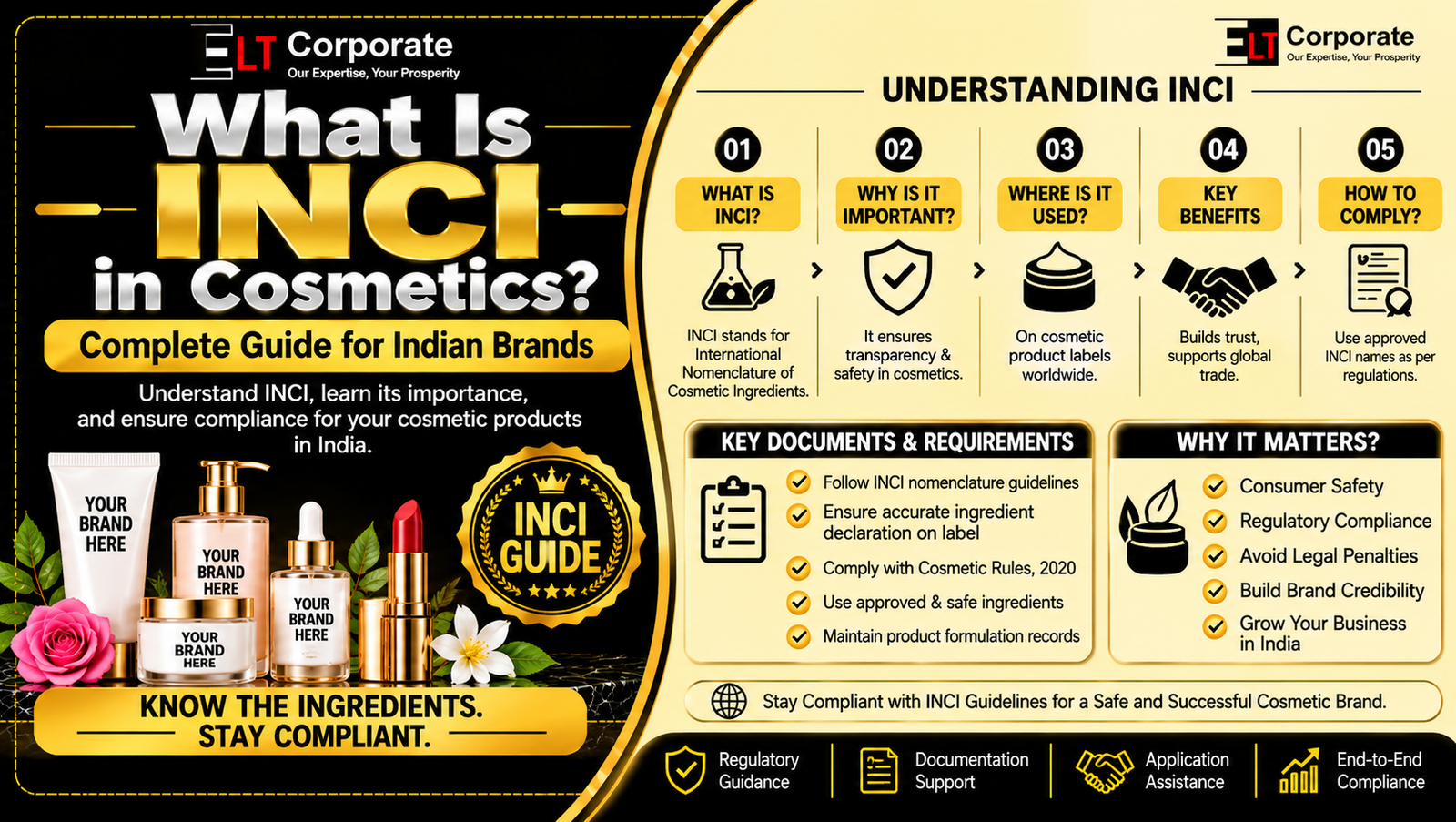
INCI stands for International Nomenclature of Cosmetic Ingredients.
The cosmetic industry uses thousands of ingredients to develop skincare, haircare, makeup, and personal care products. Customers increasingly check product labels before purchasing cosmetics because they want to understand what ingredients are present in the products they use. For cosmetic manufacturers, importers, and private-label brands, ingredient identification and accurate labelling are important parts of product compliance.
INCI in Cosmetics refers to the International Nomenclature of Cosmetic Ingredients, a globally recognized system used to identify cosmetic ingredients through standardized names. It helps manufacturers, brands, suppliers, and consumers understand ingredient declarations across different markets.
In India, businesses must also consider the applicable provisions of the Cosmetics Rules, 2020, and relevant Indian standards while preparing product labels. Cosmetics Regulatory helps businesses understand cosmetic documentation, ingredient declarations, registration requirements, and regulatory compliance.
Need Help with Cosmetic Ingredient Labelling?
Get expert assistance with cosmetic ingredient declarations, product labels and regulatory compliance requirements in India. Connect with our regulatory team before launching your cosmetic products.
Get Free Consultation Contact Us WhatsApp an ExpertWhat Is INCI in Cosmetics?
INCI in cosmetics means using standardized ingredient names to identify substances included in cosmetic formulations. INCI stands for International Nomenclature of Cosmetic Ingredients. It provides a common naming approach for ingredients used in skincare, haircare, makeup, fragrances, and other personal care products.
For example, Aqua is commonly used as the INCI name for water, while Glycerin identifies glycerin in cosmetic ingredient declarations. Similarly, tocopherol is the INCI name commonly associated with vitamin E.
These names help reduce confusion caused by different regional, commercial, or supplier names for the same ingredient. A cosmetic ingredient may have several trade names, but its standardized nomenclature makes identification easier.
For Indian cosmetic brands, understanding INCI in cosmetics is useful when preparing ingredient lists, reviewing supplier documents, developing packaging artwork, and checking product information before launching products in the market.
Why Is INCI Important for Cosmetic Brands?
Ingredient identification is an important part of cosmetic product development. A clear and consistent ingredient declaration helps businesses maintain product information and communicate with customers.
The importance of INCI in cosmetics can be understood through the following points:
1. Consistent ingredient identification
Standardized names help identify ingredients across different manufacturers and markets. This becomes useful when a business purchases raw materials from multiple suppliers.
2. Better label preparation
Cosmetic brands need accurate ingredient information while preparing packaging and product labels. Standardized nomenclature helps reduce confusion between trade names and ingredient names.
3. Improved consumer understanding
Customers often check ingredient lists before buying skincare and personal care products. Recognisable ingredient names help them identify the substances included in a formulation.
4. Support for international business
Brands importing or exporting cosmetics may need to prepare product information for different markets. Consistent ingredient naming supports communication between international suppliers, manufacturers, and distributors.
5. Better documentation management
Using standardized names in formulation records, specifications, and product information makes it easier to review ingredient details during compliance checks.
Get Your Cosmetic Compliance Reviewed
Not sure whether your cosmetic ingredient list and product label meet Indian requirements? Speak with our regulatory experts.
How Does the INCI Naming System Work?
The INCI naming system assigns standardized names to cosmetic ingredients. These names are used to identify substances in product formulations and ingredient declarations.
However, an INCI name is not necessarily the same as a chemical name, brand name, or supplier trade name.
For example:
| Ingredient | Common INCI name |
| Water | Aqua |
| Glycerin | Glycerin |
| Vitamin E | Tocopherol |
| Shea Butter | Butyrospermum parkii butter |
| Aloe Vera | Aloe Barbadensis Leaf Juice |
| Hyaluronic Acid | Sodium Hyaluronate (for this commonly used salt form) |
The correct name depends on the actual substance used in the formulation. Businesses should not select ingredient names only because they appear similar to a supplier’s product description.
Before finalizing an ingredient declaration, manufacturers should verify the raw material identity, composition, and relevant supplier documentation.
INCI List Requirements for Cosmetic Products in India
Indian cosmetic businesses must pay attention to ingredient declarations under the applicable labeling provisions.
Rule 34 of the Cosmetics Rules, 2020, addresses the manner of labelling. It requires the ingredient list, where applicable, to be declared under the prescribed conditions.
Under the rule, ingredients present in concentrations exceeding one percent are listed in descending order of weight or volume at the time they are added. Ingredients present at concentrations of one percent or less may be listed in any order after those ingredients.
The ingredient declaration is preceded by the word “INGREDIENTS.”
The rule also provides an exemption for certain small packages, including liquid packs of 60 ml or less and solid or semi-solid packs of 30 grams or less, subject to the stated provision.
Therefore, businesses preparing INCI in cosmetics labels should review the applicable Indian requirements instead of assuming that an international label format automatically satisfies Indian regulations.
Other applicable labelling particulars must also be checked before the product is released for sale.
Difference Between INCI Names and Common Ingredient Names
A common ingredient name is the name generally used by consumers, retailers, or suppliers. An INCI name is a standardized designation used in cosmetic ingredient identification.
For example, a supplier may market a raw material using a commercial name, while the actual ingredient declaration may require its recognized nomenclature.
Understanding this difference is important for businesses working with multiple raw material suppliers.
| Common name | INCI name |
| Water | Aqua |
| Aloe Vera | Aloe Barbadensis Leaf Juice |
| Shea Butter | Butyrospermum parkii butter |
| Vitamin E | Tocopherol |
These examples are illustrative. The final declaration must reflect the actual ingredient, its form, and the formulation details.
Documents Required to Prepare an Accurate INCI List
Before preparing a cosmetic ingredient declaration, businesses should collect and review relevant product and raw material documents.
Important documents may include:
- Complete product formulation with ingredient quantities.
- Raw material specifications from suppliers.
- Safety Data Sheets (SDS), where applicable.
- Technical Data Sheets (TDS).
- Certificates of Analysis (COA).
- Raw material composition and identification details.
- Product manufacturing records.
- Supporting documents for colors, fragrances, and specialized ingredients.
These documents help businesses verify the identity and composition of ingredients before preparing INCI in cosmetics declarations.
A supplier’s commercial product name alone may not provide sufficient information to prepare an accurate ingredient list.
Get Your Cosmetic Compliance Reviewed
Not sure whether your cosmetic ingredient list and product label meet Indian requirements? Speak with our regulatory experts.
Common Mistakes in Cosmetic Ingredient Labelling
Incorrect ingredient information can create confusion and lead to labeling corrections. Cosmetic businesses should avoid the following mistakes:
1. Using trade names instead of ingredient names: A commercial raw material name should not automatically be treated as the correct ingredient declaration.
2. Incorrect ingredient order: Businesses should follow the applicable concentration-based ordering requirements under Indian cosmetic labeling rules.
3. Missing formulation details: Preparing a label without checking the complete formulation can result in missing or inaccurate ingredient information.
4. Copying international labels without review: A label prepared for another country may not automatically meet Indian requirements. Local cosmetic labeling provisions must be checked separately.
5. Ignoring restricted ingredients: Ingredient naming alone does not establish that an ingredient is permitted for every cosmetic application. Businesses must review applicable restrictions, conditions, and standards.
How Can Cosmetic Brands Ensure Ingredient Compliance in India?
Businesses should establish a proper review process before printing labels or launching cosmetic products.
The following steps can help:
- Obtain the complete formulation from the manufacturer.
- Verify the identity of every raw material.
- Collect relevant technical and safety documents from suppliers.
- Check the correct ingredient nomenclature.
- Review ingredient concentrations and declaration order.
- Verify applicable restrictions and Indian standards.
- Check the complete product label against applicable Indian requirements.
- Maintain updated formulation and labeling records.
For businesses importing products, additional attention should be given to Indian-specific labeling and cosmetic import registration requirements.
Cosmetics Regulatory can help brands understand these regulatory considerations and identify documentation or labeling issues that should be reviewed before market entry.
How Cosmetics Regulation Can Help Your Business
Preparing a cosmetic ingredient declaration involves more than copying ingredient names onto packaging. Businesses need to verify formulation details, supplier information, applicable ingredient restrictions, and Indian labeling requirements.
Cosmetics Regulatory provides regulatory guidance to cosmetic manufacturers, importers, startups, and private-label businesses.
Our assistance can cover:
- Cosmetic ingredient declaration review.
- Product label compliance assessment.
- Cosmetic registration guidance.
- Import documentation support.
- Manufacturing licence consultancy.
- Regulatory documentation review.
- Guidance on applicable Indian cosmetic standards.
Whether you are launching a new skincare brand or importing an existing international product, Cosmetics Regulatory can help you understand the applicable compliance requirements.
Conclusion
Accurate ingredient identification is an important part of cosmetic product development and labeling. Understanding INCI in cosmetics helps manufacturers, importers, and private-label brands maintain consistent ingredient information and prepare better product labels.
However, standardized ingredient names alone do not guarantee regulatory compliance. Businesses must also review formulation details, applicable ingredient restrictions, labeling provisions, and relevant Indian standards before selling their products.
Cosmetics Regulatory can assist businesses with cosmetic labelling, documentation, registration guidance, and regulatory compliance. Getting professional guidance before printing packaging or launching a product can help reduce avoidable corrections and compliance issues.
Get Your Cosmetic Compliance Reviewed
Not sure whether your cosmetic ingredient list and product label meet Indian requirements? Speak with our regulatory experts.
Frequently Asked Questions
Q1. What does INCI stand for in cosmetics?
INCI stands for International Nomenclature of Cosmetic Ingredients. It is a standardized naming system used to identify ingredients in cosmetic products.
Q2. Is an INCI list mandatory for cosmetics in India?
Indian cosmetic labelling requirements under Rule 34 of the Cosmetics Rules, 2020, provide for ingredient declarations subject to the prescribed conditions and exemptions. Businesses should review the applicable requirements for their product.
Q3. Is an INCI name the same as a chemical name?
No. An INCI name is a standardised cosmetic ingredient designation. It may differ from the chemical name, common name, or commercial name.
Q4. Can I use supplier trade names on cosmetic labels?
A supplier’s trade name should not automatically replace the correct ingredient declaration. The actual raw material identity and applicable naming requirements should be verified.
Q5. Who can help with cosmetic ingredient labelling in India?
Cosmetic regulatory consultants can assist with ingredient declaration reviews, label assessments, documentation, and applicable regulatory requirements.