
Japanese beauty products have built a strong reputation worldwide for their minimalist formulations, advanced skincare technology, premium quality ingredients, and consumer trust. From cleansing oils and sunscreens to sheet masks, anti-aging serums, and haircare products, J-Beauty brands are increasingly gaining popularity in the Indian cosmetics market.
However, before Japanese cosmetics can be legally imported and sold in India, they must comply with Indian cosmetic regulations administered by the Central Drugs Standard Control Organization (CDSCO).
For Japanese manufacturers, distributors, and Indian importers, understanding CDSCO cosmetic registration requirements is essential to avoid customs delays, product detention, or regulatory rejection.
Why Japanese Cosmetics Are Growing Rapidly in India
Indian consumers are increasingly attracted to Japanese cosmetics because of:
- Advanced skincare formulations
- Lightweight textures suitable for Asian skin
- Strong focus on skin barrier health
- Minimalist ingredient philosophy
- Innovative sunscreen technology
- High-quality manufacturing standards
Categories seeing strong demand include:
- Sunscreens
- Cleansing oils
- Anti-aging serums
- Facial masks
- Moisturizers
- Hair repair products
- Sensitive skin formulations
As demand increases, more Japanese cosmetic companies are exploring official entry into the Indian market through distributors, e-commerce channels, and retail partnerships.
Is CDSCO Registration Mandatory for Japanese Cosmetics?
Yes. Under India’s Drugs and Cosmetics Act, 1940 and Cosmetic Rules, 2020, imported cosmetic products must be registered with CDSCO before import and sale in India.
This applies to:
- Skincare products
- Makeup products
- Haircare products
- Fragrances
- Personal care cosmetics
- Beauty devices classified as cosmetics
Without CDSCO registration:
- Customs clearance may be blocked
- Shipments may be detained
- Products may be rejected at Indian ports
- Importers may face regulatory penalties
What Is CDSCO Cosmetic Import Registration?
CDSCO cosmetic registration is the official approval process allowing foreign cosmetic brands to import products into India legally.
The registration is issued by the Central Licensing Authority under CDSCO.
The registration covers:
- Product variants
- Manufacturing sites
- Brand categories
- Pack sizes
- Labels
- Ingredients
Every imported cosmetic must comply with Indian cosmetic regulations before entering the market.
Who Can Apply for Japanese Cosmetic Registration in India?
The following entities can apply:
- Japanese manufacturer with Indian office
- Authorized Indian agent
- Indian importer
- Indian subsidiary of the manufacturer
Most Japanese brands appoint an Indian authorized agent or importer to handle CDSCO registration and regulatory coordination.
Documents Required for J-Beauty CDSCO Registration
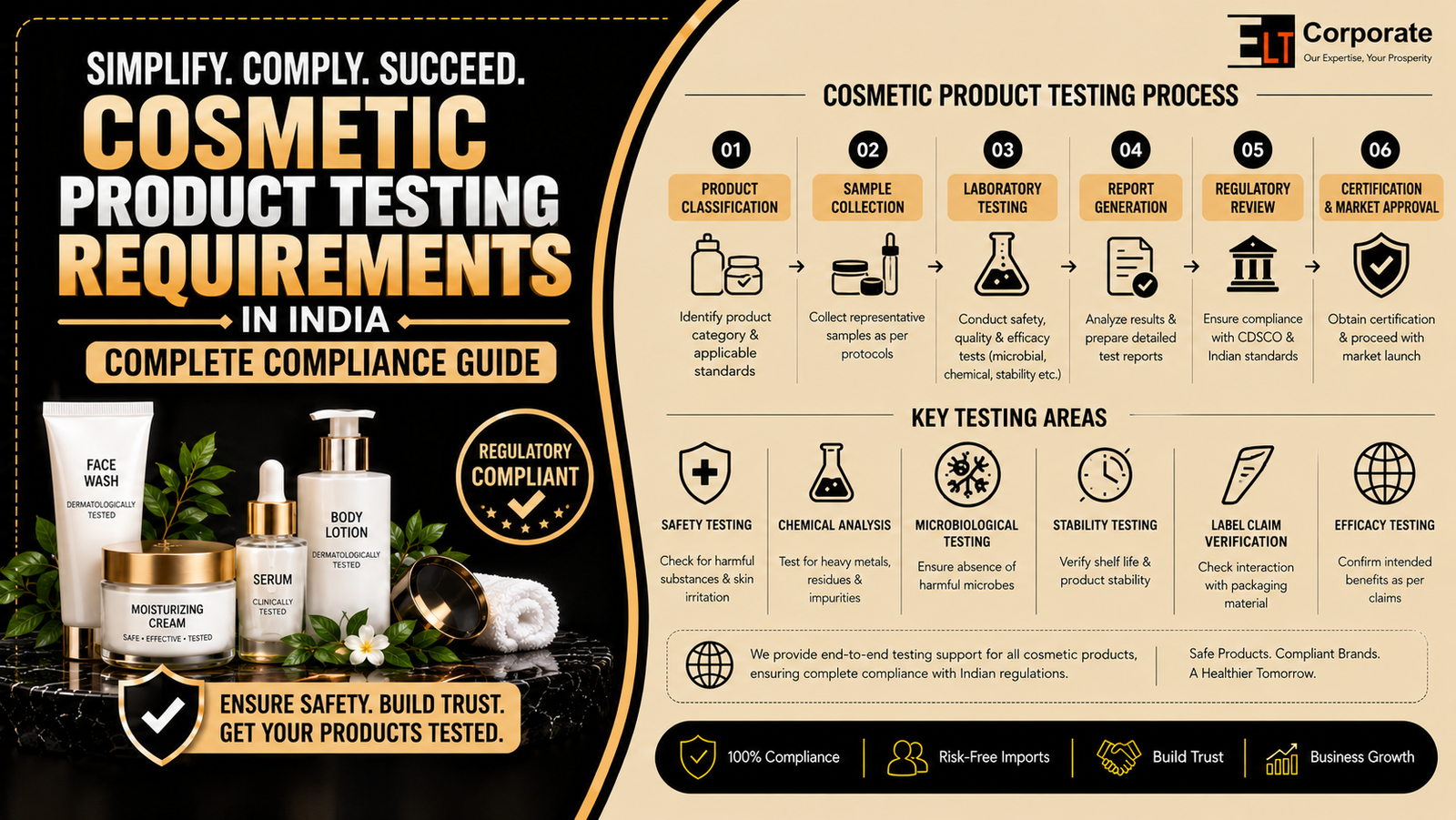
CDSCO requires detailed technical and legal documentation for imported cosmetics.
Commonly required documents include:
Manufacturer Documents
- Manufacturing license
- GMP certificate
- Free Sale Certificate from Japan
- Power of Attorney
- Company authorization letter
Product Documents
- Complete ingredient list
- Product labels and artwork
- Product specifications
- Testing methods
- Product claims details
- Pack size and variant information
Indian Importer Documents
- IEC certificate
- GST registration
- Authorized agent details
- Covering letter
Additional Declarations
- Heavy metal declaration
- Animal testing declaration
- Safety compliance declarations
Incomplete or inconsistent documentation is one of the most common reasons for CDSCO queries and approval delays.
Key Compliance Challenges for Japanese Cosmetics
Although Japanese cosmetics are generally manufactured to high international standards, some products still face compliance challenges in India.
Ingredient Restrictions
Certain ingredients permitted in Japan may have concentration restrictions or labeling requirements under Indian regulations.
Product Claims
Claims such as:
- “Medical-grade”
- “Whitening”
- “Therapeutic”
- “Clinically proven”
may trigger additional scrutiny from CDSCO if not properly supported.
Labeling Compliance
Indian cosmetic labeling rules require:
- Importer name and address
- Country of origin
- Batch number
- Manufacturing date
- Expiry details
- Net quantity
- Registration number after approval
Labels may require modification before import approval.
Multiple Variants
Japanese beauty brands often launch products in multiple shades, variants, and pack sizes. CDSCO registration must correctly capture each variant to avoid customs issues later.
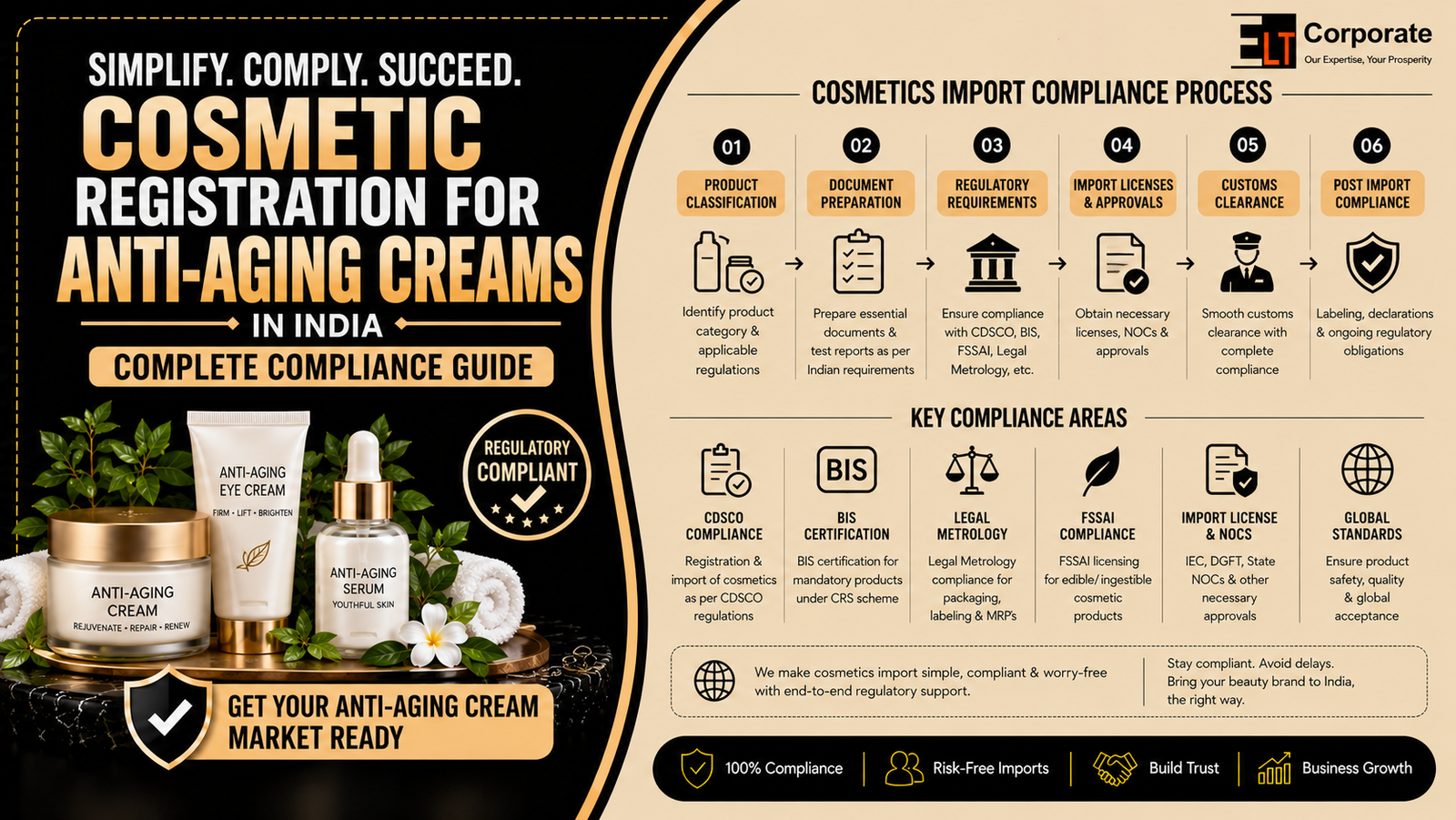
CDSCO Registration Process for Japanese Cosmetics
Step 1: Product Classification
The first step is identifying whether the product falls under the cosmetic category under Indian law.
Step 2: Document Collection
Technical, legal, manufacturing, and labeling documents are gathered from the Japanese manufacturer.
Step 3: Preparation of Application
The registration dossier is prepared as per CDSCO requirements.
Step 4: Online Submission
Applications are filed through the CDSCO SUGAM portal.
Step 5: CDSCO Review
CDSCO reviews:
- Ingredients
- Labels
- Product claims
- Manufacturer details
- Supporting documents
Queries may be raised during technical review.
Step 6: Registration Approval
Once approved, CDSCO issues the cosmetic registration certificate allowing legal import into India.
Typical Timeline for Japanese Cosmetic Registration
The timeline depends on:
- Product complexity
- Number of variants
- Documentation quality
- CDSCO query response speed
In many cases, the process may take several weeks to a few months.
Proper documentation preparation significantly reduces delays.
Why Professional Regulatory Support Is Important
Many Japanese cosmetic brands face difficulties because of:
- Incorrect ingredient documentation
- Improper label formatting
- Missing declarations
- Incomplete Power of Attorney
- Product claim issues
- Variant mismatches
Professional CDSCO consultants help:
- Review formulations
- Prepare compliant dossiers
- Coordinate with Japanese manufacturers
- Handle CDSCO responses
- Reduce approval delays
- Support customs clearance
This becomes especially important for brands launching multiple SKUs in India.
Market Opportunity for J-Beauty Brands in India
India’s beauty and skincare market is growing rapidly, especially in:
- Premium skincare
- Korean and Japanese beauty
- Sensitive skin products
- Dermatology-inspired cosmetics
- Anti-aging products
Consumers are increasingly willing to pay premium prices for trusted international brands with proven quality and safety.
Japanese cosmetic brands entering India early can build strong long-term market positioning.
Common Mistakes Japanese Brands Should Avoid
Launching Before Registration
Selling imported cosmetics without CDSCO approval can lead to customs seizure and regulatory action.
Using Non-Compliant Claims
Marketing claims must align with Indian cosmetic regulations.
Ignoring Label Compliance
Even globally recognized brands must comply with Indian labeling rules.
Underestimating Variant Complexity
Every shade, fragrance, or pack variation may require proper declaration during registration.
Final Thoughts
India offers significant growth opportunities for Japanese beauty and skincare brands. However, successful market entry requires careful regulatory planning and full CDSCO compliance.
From ingredient review and labeling compliance to registration filing and customs clearance, every stage of the import process must be handled properly to avoid delays and regulatory risks.
For Japanese cosmetic manufacturers and Indian importers, working with experienced CDSCO regulatory consultants can simplify the process, accelerate approvals, and ensure