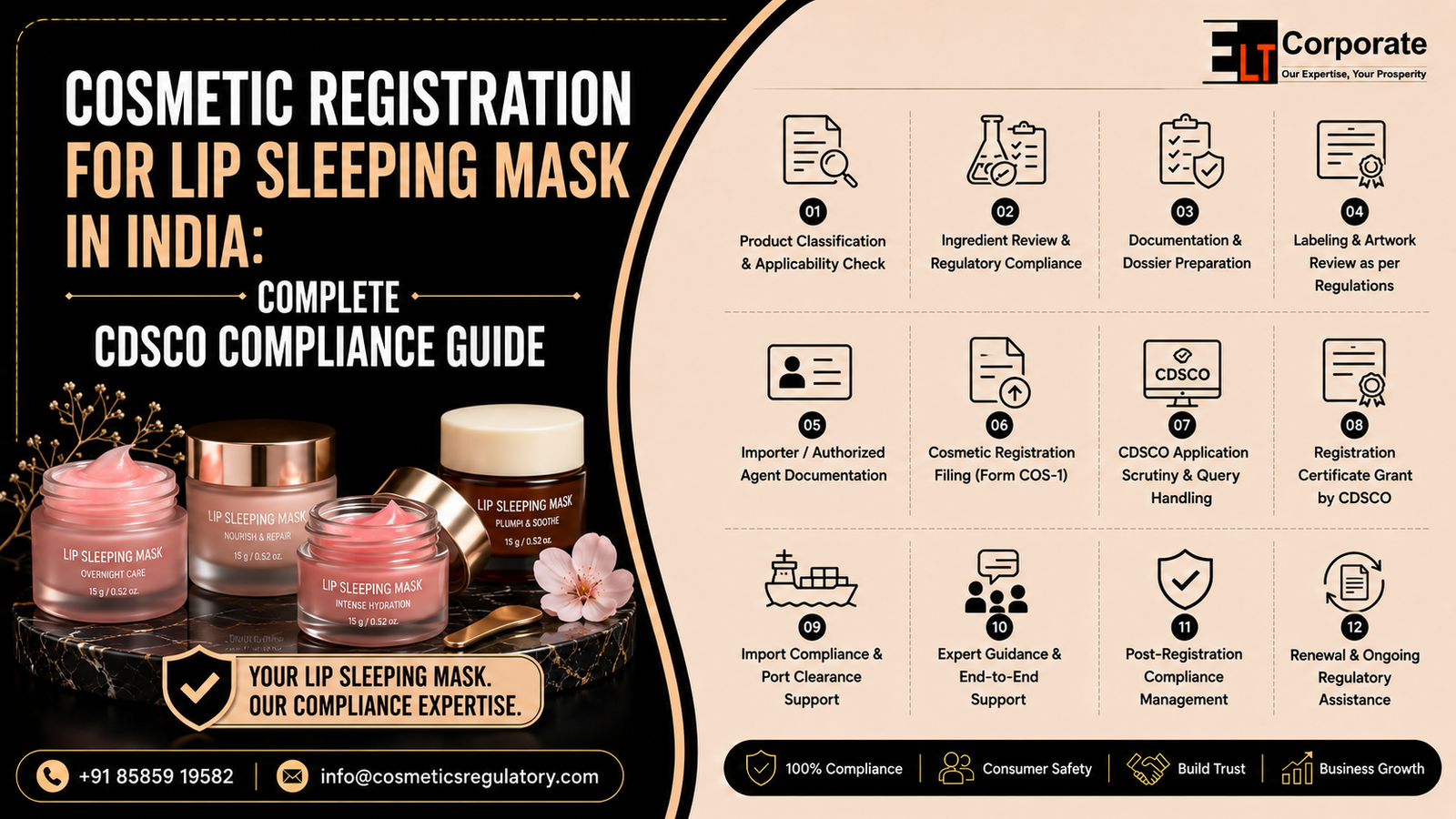

Lip sleeping masks have emerged as one of the fastest-growing segments in the world of skincare and beauty. The trend is embraced by Korean cosmetics brands and being used by cosmetic companies from around the world The products for the nighttime use of lips are specifically designed to moisturize, nourish, and enhance the appearance of the lips while the users are asleep.
But, before a lip sleeping mask is legally produced and distributed, imported, or offered for sale in India, companies must comply with the Drugs and Cosmetics Act, 1940, and the Cosmetics Rules, 2020. Based on whether the product is produced in India or imported, various rules and regulations will be in place.
This guide will explain the legal requirements for the registration of cosmetics, the licensing processes, the documents, and the compliance requirements for sleeping masks for the lips in India.
What Is a Lip Sleeping Mask?
A lip sleep mask is a cosmetic product that is designed to provide a high level of moisture and nourishment for the lips. They typically have ingredients like the following:
- Shea Butter
- Hyaluronic Acid
- Vitamin E
- Coconut Oil
- Jojoba Oil
- Fruit Extracts
- Ceramides
- Antioxidants
Lip sleeping masks are made to moisturize as well as beautify and enhance the appearance of lips without making any medical or therapeutic claim; they’re usually classified as cosmetics in Indian laws.
Regulatory Classification of Lip Sleeping Masks
As per the Drugs and Cosmetics Act, “cosmetics” refers to any product designed to be applied on the body in order to beautify, cleanse the appearance, or modify the appearance.
Lip sleep masks make up a part of the category of cosmetics and lip care because their main purpose is to improve the look and hydration of lips. The products designed to soften, moisten, or improve the look of the lips can be classified under cosmetics and not medications.
If a product claims to treat medical problems such as cracks that are very severe or infections or other diseases that affect mouths, regulators may determine it in a different manner that could result in additional approval requirements.
Is Cosmetic Registration Mandatory for Lip Sleeping Masks?
Yes. The approval of the regulatory authorities is required prior to commercial sales in India.
The relevant approval is based on the origin for the item:
For Imported Lip Sleeping Masks
Imported lip sleep masks require a cosmetic import registration/import license issued by the Central Drugs Standard Control Organisation (CDSCO) before they are able to be introduced to the Indian market. Customs authorities are able to hold or refuse products that don’t have the necessary approval.
For Indian-Manufactured Lip Sleeping Masks
Lip sleeping masks manufactured by manufacturers within India need to obtain a cosmetic manufacturing license from the relevant state licensing authority before commencing production and sales.
Who Needs Cosmetic Registration?
The following entities might require approval from the regulatory authorities:
- Cosmetic importers
- Brand owners import final products
- Authorized Indian agents for foreign manufacturers
- Contract manufacturers
- Cosmetic manufacturers in the United States
- Private label cosmetic brands
Anyone who plans to sell lip sleeping masks for sale in the Indian market must be sure that a valid license or registration has been acquired prior to commercialization.
Documents Required for Lip Sleeping Mask Registration
The exact requirements for documentation can differ according to the type of application. Commonly, the documents required are:
For Imported Products
- Manufacturer authorization letter
- Power of Attorney
- Product ingredient list
- Specifications of the product
- Free Sale Certificate
- A manufacturing license is given in the state of the country of
- Labels for products and artwork
- The declaration on the compliance of animal testing
- Product pack size details
For Domestic Manufacturing
- Manufacturing site details
- GMP compliance documents
- Product formulation details
- List of technical personnel
- Lease or ownership documents for the premises
- Product label samples
- Quality Control Procedures
Complete and accurate documentation greatly lowers the risk of delays or regulatory questions.
Labeling Requirements for Lip Sleeping Masks
Every lip sleep mask that is sold in India must meet the specifications for the cosmetic labeling of products as per the Cosmetics Rules, 2020.
The label should typically include:
- Name of the product
- Net quantity
- Manufacturing date
- Use-before date or expiry date
- Batch number
- Manufacturer or importer details
- Origin country (for imports of products)
- Ingredient declaration
- Directions for use
- Essential warnings and safety precautions
Incorrect labeling is one of the main causes of delays in customs procedures and regulatory issues.
Ingredient Compliance Requirements
Lip sleeping masks cannot contain prohibited substances and must be in compliance with the current safety standards.
The business should take the time to review the following:
- Restricted substances lists
- Permitted colorants
- Heavy metal limits
- Preservative restriction
- Fragrance ingredient requirements
Regulators can request additional safety information about ingredients that are used for the preparation. Therefore, keeping a complete Product Information File (PIF) is highly advised.
Common Regulatory Challenges
Many cosmetic companies face avoidable delays due to:
- Untrue product classification
- Incomplete documentation
- Non-compliant labels
- Missing authorization documents
- Concerns related to ingredients
- Inconsistent product information across documents
Conducting a regulatory review prior to making a submission will help you avoid costly delays and corrections.
Benefits of Obtaining Proper Cosmetic Registration
The benefits of a regulatory compliance program are numerous:
- Access to market legally in India
- Speedier customs clearance
- A boost in confidence among consumers
- Risk of enforcement reduced
- Expanding retail is easier through E-commerce channels
- Brand reputation is stronger
For international cosmetics brands, getting the required approvals is often the initial step towards a successful entrance into the Indian makeup market.
Conclusion
Lip sleep masks are classified as cosmetic items in India in the event that they are designed to nourish, moisturize, and improve the appearance of the lips. No matter if the product is made in India or is imported from abroad, the obtaining of the correct cosmetic license or registration is necessary prior to the commercial sale.
Companies must ensure that they are in compliance with CDSCO regulations and standards for ingredients, labels, requirements for labeling, and the requirements for documentation in The Cosmetics Rules, 2020. A well-planned and implemented regulatory plan not only avoids legal problems but also speeds up the entry into markets and increases confidence in the consumer. If you have completed the registration procedure correctly, companies can successfully launch their lip sleeping masks in the rapidly expanding cosmetics and personal care industries.
Frequently Asked Questions (FAQs)
Q1. Are lip sleep masks considered a cosmetic in India?
Lip sleep masks that are intended to nourish, moisten, or beautify lips are usually considered cosmetics in Indian laws.
Q2. Does an imported lip sleeping mask need CDSCO approval?
Yes. Lip sleep masks that are imported must be accompanied by CDSCO cosmetic import approval before they can be sold legally in India.
Q3. Can I make lip sleeping masks in India without a license?
No. An active cosmetics manufacturing license issued by the State Licensing Authority is required before launching commercial production.
Q4. What are the documents required to register your Lip Sleep Mask?
The most common documents are typical documents that include a power of attorney, free sale certificate, ingredient list and manufacturer authorization for products, labels for the product, and manufacturing license details.
Q5. What is the time it takes for cosmetic registration to be required in India?
The length of time for approval varies according to the kind of application, the quality of the documentation, and the regulatory review process. A well-documented application can greatly decrease the time it takes to approve.