
The industry of skincare in India is expanding rapidly, and serum products are now an extremely coveted category of cosmetics among the consumers. They range from vitamin C serums and hyaluronic acid serums to retinol or niacinamide formulations; these items are extensively used to treat particular skin issues like anti-aging, pigmentation, hydration, and acne management. Since the need for skin care products increases, the manufacturers and importers need to make sure they comply with regulations prior to introducing their products on the market.
Registration of cosmetics to sell serum-based products is a vital procedure for companies looking to produce, import, or distribute product lines containing serums in India. A proper registration not only guarantees legal compliance but will also establish trust with consumers and ensure a smooth entry into the market.
What are Serum Products?
Serums are lightweight formulas of skincare made of active ingredients that are especially designed to get into the skin and provide targeted benefits. Contrary to conventional creams and lotions, these are formulated with smaller molecules, which allow the active ingredient to penetrate more effectively through the skin.
The most popular serums on the market are the following:
- Vitamin C Serums
- Hyaluronic Acid Serums
- Retinol Serums
- Niacinamide Serums
- Anti-Aging Serums
- Brightening Serums
- Acne Control Serums
- Hydrating Serums
Because they are applied directly to the skin, they are considered cosmetics and must meet regulations in force.
Why is Cosmetic Registration Important for Serum Products?
The registration of cosmetics for serums is crucial for a variety of reasons.
Regulatory Compliance
Cosmetic registration is a way to ensure that products for use in the cosmetic industry meet the guidelines set forth in the Drugs and Cosmetics Act and Cosmetics Rules. Conformity reduces the risk of market restrictions.
Consumer Safety
The registration process involves the evaluation of ingredients and formulations for product manufacturing standards, as well as labeling information, in order to guarantee the safety of consumers.
Legal Market Access
For imports, CDSCO cosmetic registration is typically required prior to products being able to be legally sold or distributed within India.
Brand Reputation
People are more likely to believe in products for skincare that meet the requirements of the regulatory authorities and show an interest in safety and quality.
Regulatory Framework for Serum Products in India
Cosmetic products sold in India are regulated by:
- Drugs and Cosmetics Act, 1940
- Cosmetics Rules, 2020
- CDSCO (Central Drugs Standard Control Organization) Guidelines
- Legal Metrology Requirements
- Environmental Compliance Regulations
Importers and manufacturers must make sure that their serum products are in compliance with all applicable regulations prior to entering the market.
CDSCO Cosmetic Registration for Imported Serum Products
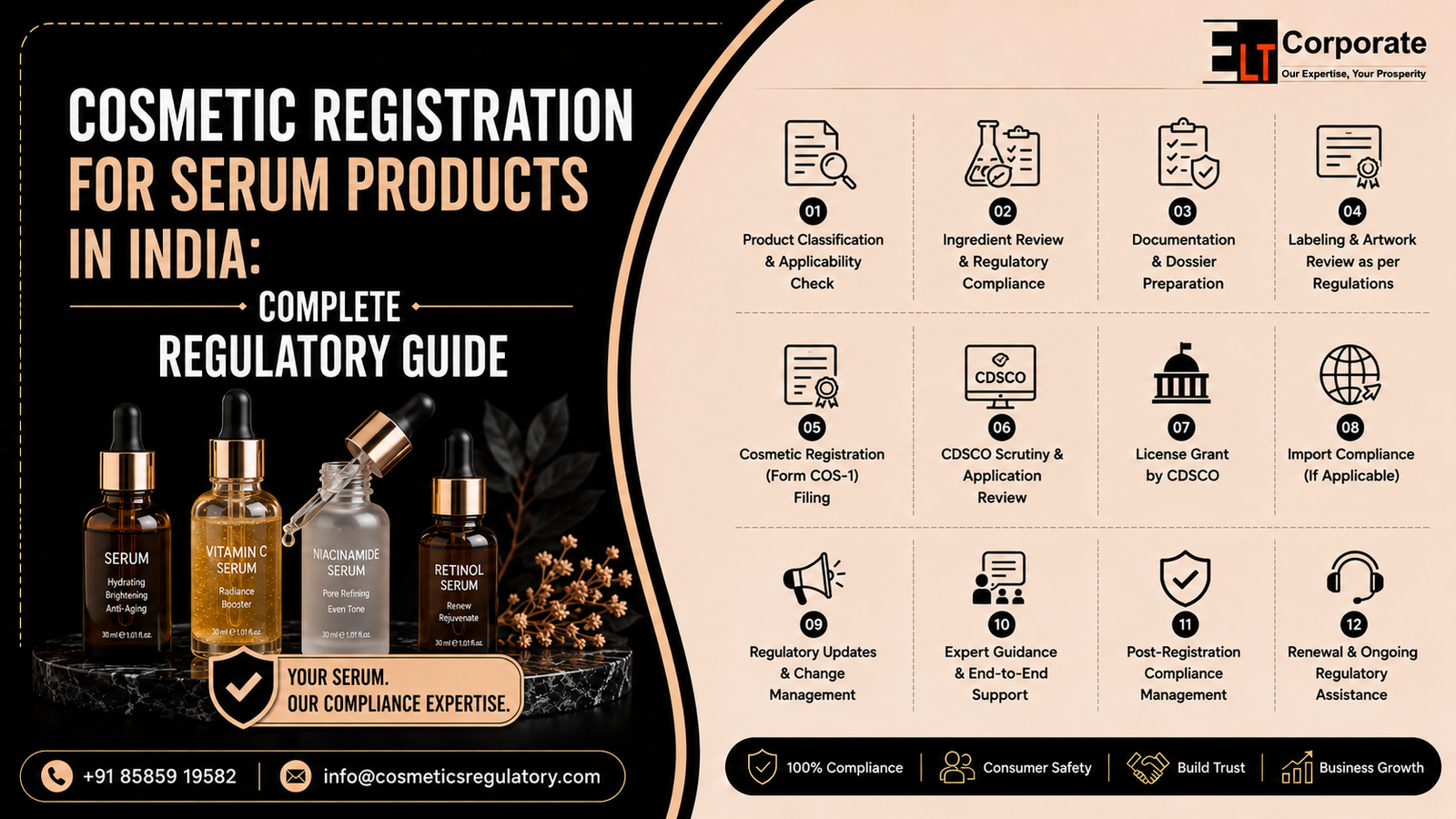
Imported serum products must be registered with CDSCO cosmetic approval before they are advertised in India. The registration process entails providing information about the product, including information about manufacturing and ingredient specifications as well as other documentation to the regulatory body.
Businesses that import skincare products need to make sure that all documentation is correct and complete in order to avoid delays that could be unnecessary during an approval procedure.
Key Requirements for Serum Product Registration
Ingredient Compliance
The ingredients in serum formulations have to be in compliance with the applicable regulations for cosmetics. Any ingredients that are prohibited or restricted can result in complaints or rejection in the registration procedure.
Product Safety Assessment
Manufacturers should keep documentation proving how safe the solution is for intended usage. Evaluations of safety could comprise:
- Stability tests
- Tests for microbiological contamination
- Review of toxicological aspects
- Assessments of the safety of ingredients
- Studies on product compatibility
Good Manufacturing Practices (GMP)
Serum products must be produced in facilities that adhere to established Good Manufacturing Practices (GMP) to ensure consistency in the product and quality.
Documents Required for Cosmetic Registration
The documentation required to register serum products in India can differ based on the type of product and the regulatory specifications. The most commonly required documents are:
- Product formulation details
- Ingredient specifications
- Artwork and labels for the product
- Manufacturing license
- GMP Certificate
- Free Sale Certificate
- Reports on product testing
- A letter of authorization from the manufacture
- Importer details
- Information about the manufacturing site
Making sure that the documentation is accurate can dramatically increase the efficiency of the registration process.
Serum Labeling Requirements
Compliance with the requirements for serum labeling is an essential aspect for cosmetics registration. Labels should include all necessary information required by Indian regulations.
Usually, labels should include:
- Name of the product
- Brand name
- Net quantity
- Batch number
- Manufacturer details
- Importer details (for imported products)
- Ingredient declaration
- Directions for use
- Safety and warnings
Incorrect or incorrect labeling could lead to regulatory issues and delays in the approval of products.
Additional Compliance Requirements
In addition to CDSCO Cosmetic registrations, companies might need to meet additional requirements of the regulatory system based on their activities.
This could include:
- Cosmetic Import Registration
- Manufacture Registration
- FDA/CDSCO Registration
- Legal Metrology Compliance
- EPR Registration for Cosmetic Packaging
- Trademark Registration
- Post-Approval Regulatory Changes
Ensuring that all requirements are met can help businesses avoid penalties and ensures smooth operations.
How Cosmetic Regulation Can Help
It can be a challenge, particularly for companies that are launching new skincare products. Cosmetic Regulatory offers comprehensive support for the following:
- Cosmetic Registration for Skincare Products
- CDSCO Cosmetic Registration
- Cosmetic Import Registration
- Manufacture Registration
- Labeling Consultancy
- Legal Metrology Compliance
- EPR Registration for Cosmetic Packaging
- Trademark Registration
- Post-Approval Regulatory Changes
Our experts help manufacturers, importers, and owners of brands throughout their registration processes, assisting to ensure compliance and speedier market access.
Conclusion
The rising popularity of skin serums offers significant opportunities for cosmetic companies in India. Before making a decision to launch a product, companies must ensure that their products are compliant with all regulations applicable. In order to obtain cosmetic registration for serums, adhering to the requirements for labeling serums and obtaining CDSCO cosmetic registrations are vital steps to ensure legal entry into markets and confidence among consumers.
When you’re looking to import the vitamin C cream, make the hyaluronic acid serum, or launch a new skincare line, proper compliance with regulations can protect your brand, increase trust, and aid in long-term expansion in the highly competitive cosmetics industry.
FAQ’s
Q1. Is cosmetic registration of serum products mandatory in India?
Imported serum products typically need CDSCO approval before they are legally advertised and sold in India.
Q2. What are the documents required for registration of serum products in India?
Common documents include formulations for products and labels. They also include GMP certificates, free sale certificates, test reports, and manufacturers’ authorization forms.
Q3. Is vitamin C or hyaluronic acid serums regarded as cosmetics?
Yes, they are usually considered cosmetics if they are used for beauty and skincare purposes.
Q4. What are the most important prescriptions for labeling serums?
Labels should include the product name, ingredient list, net quantity, batch number, manufacturer/importer details, and directions for use.
Q5. What can cosmetic regulations do to help in the process of CDSCO registration of cosmetics?
Cosmetic Regulatory provides assistance with registration and documentation, labeling compliance and import approvals, EPR compliance, as well as other cosmetic regulations.