
The idea of starting a business with homemade cosmetics could be a lucrative option for those who are interested in haircare, skincare, soaps, body products, and many other products for beauty. Once homemade cosmetics are made to be sold or distributed, businesses must take into consideration the requirements of the Indian regulatory system that apply to the production of cosmetics in India.
The most common misconception is that cosmetics made at home do not require a manufacturing permit because they are made in a small quantity. In reality, the relevant standards are contingent upon how the item is manufactured, its manufacturing process, and if the cosmetics are meant for sale in a commercial setting or distribution.
In the Cosmetics Rules of 2020, the production of cosmetics available for sale or distribution is regulated by an authorization system that is administered by the appropriate State Licensing Authority. CDSCO is not the only entity that issues the license to manufacture cosmetics produced in India, and the State Licensing Authority is responsible in this regard.
This guide will explain the homemade cosmetics licensing requirements in India as well as the relevant forms as well as fees, documents, and the requirements for premises. It also explains the requirements for compliance for small-scale cosmetic companies.
What Is a Homemade Cosmetics License?
There is no separate regulatory category simply called a “homemade cosmetics license.”
If you manufacture cosmetics for commercial sale or distribution, the activity generally falls under the cosmetic manufacturing provisions of the Cosmetics Rules, 2020.
The rules require a person intending to manufacture cosmetics to apply for a license or loan license through the prescribed process. The application for a manufacturing license is made in Form COS-5, while a loan license is applied for in Form COS-6. The license, when granted, is issued in Form COS-8 or Form COS-9, respectively.
Therefore, a person making skincare or beauty products at home for personal use is in a different situation from a business manufacturing those products for commercial sale.
Is a License Required for Homemade Cosmetics in India?
Homemade Cosmetics License in IndiaIf homemade cosmetics are being manufactured for sale or distribution, the applicable manufacturing license requirements should be assessed before starting commercial production.
The Cosmetics Rules specifically provide that the State Licensing Authority is responsible for matters relating to the manufacture, sale, or distribution of cosmetics.
This means that simply calling a product
- Homemade
- Handmade
- Natural
- Organic
- Artisan
- Small-batch
- Home-based
does not automatically remove the regulatory requirements applicable to cosmetic manufacturing.
For example, if an entrepreneur makes handmade soap, face cream, body butter, or other cosmetic products and sells them commercially under a brand name, the business should determine the applicable manufacturing and compliance requirements before launching.
Can I Manufacture Cosmetics at Home?
This is an important distinction. The fact that a product is manufactured in a person’s residence does not automatically mean that the premises satisfy the requirements for a licensed cosmetic manufacturing facility.
The Cosmetics Rules contain specific requirements concerning Good Manufacturing Practices (GMP), premises, plant, and equipment. The Seventh Schedule states that the factory should be located in a sanitary place, maintained under hygienic conditions, and should not be used for residence or be interconnected with residential areas.
Therefore, entrepreneurs planning a home-based cosmetic business should not assume that a normal residential kitchen, bedroom, or other household space can automatically be used as a licensed cosmetic manufacturing facility. The proposed premises should be evaluated against the applicable requirements before applying.
Which Authority Issues the Homemade Cosmetics Manufacturing License?
For cosmetics manufactured in India, the State Licensing Authority is responsible for granting the manufacturing license.
CDSCO’s current guidance specifically clarifies that CDSCO does not grant the license to manufacture cosmetics in India. Manufacturing licenses are issued by the respective state licensing authorities appointed by state governments.
This distinction is important:
| Activity | Main Regulatory Authority |
| Manufacture of cosmetics in India | State Licensing Authority |
| Import of cosmetics into India | Central Licensing Authority/CDSCO |
| Manufacture for sale or distribution | State Licensing Authority |
| Import registration | CDSCO/Central Licensing Authority |
Therefore, a domestic homemade cosmetics manufacturer should not confuse cosmetic import registration with a cosmetic manufacturing license.
Forms for Homemade Cosmetic Manufacturing
The Cosmetics Rules provide specific forms for manufacturing cosmetics.
Form COS-5
Form COS-5 is used for applying for a cosmetic manufacturing license.
Form COS-6
Form COS-6 is used for applying for a loan license.
A loan license can be relevant where the applicant intends to use the manufacturing facilities of another licensed manufacturer rather than establishing its own manufacturing facility.
Form COS-8
A manufacturing license is granted in Form COS-8.
Form COS-9
A loan license is granted in Form COS-9.
The CDSCO FAQ confirms that applicants seeking an a cosmetic manufacturing license or loan license should apply in Form COS-5 or COS-6 to the concerned State Licensing Authority.
Documents Required for a Homemade Cosmetics License
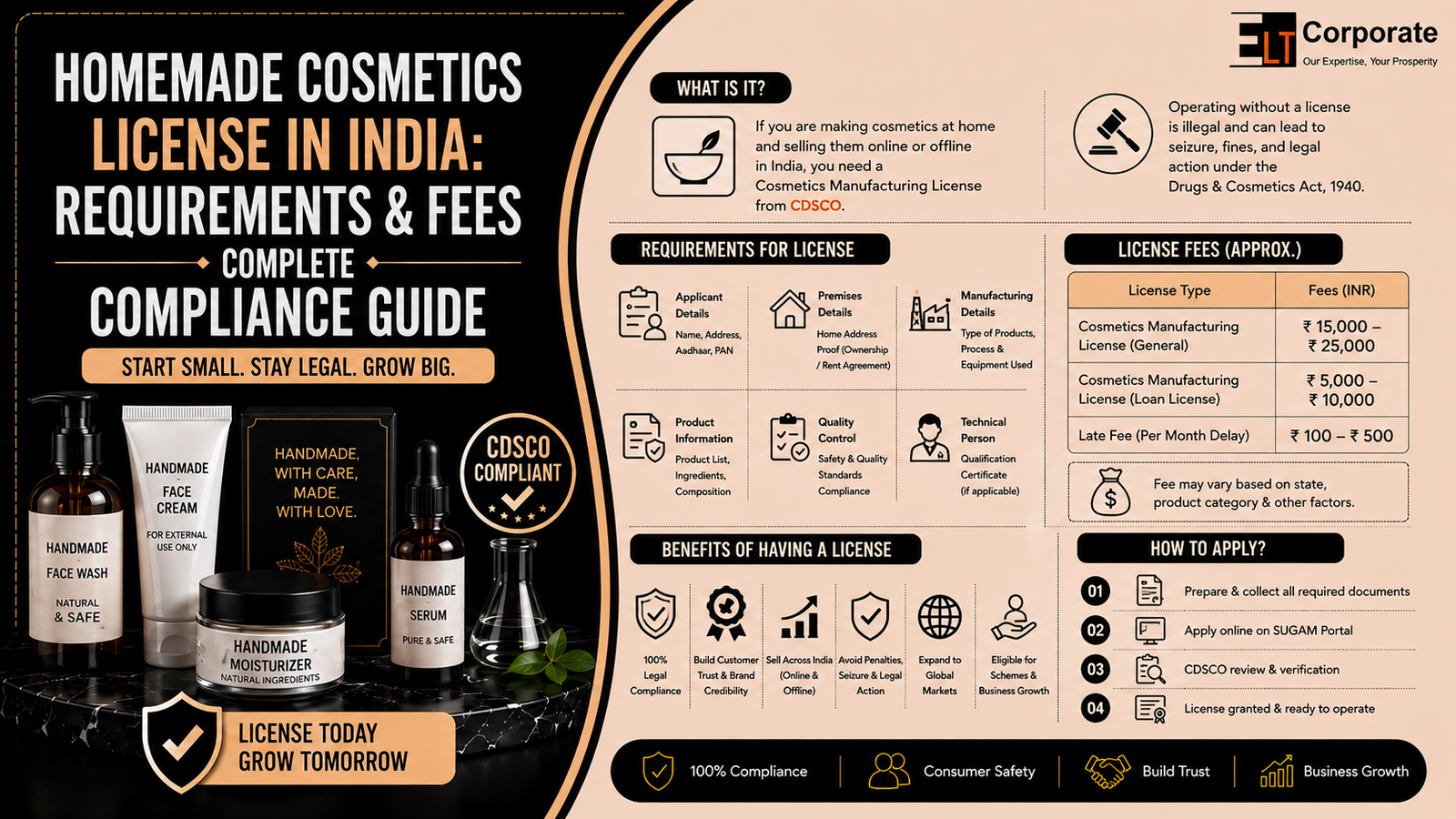
The documentation depends on the specific application and state requirements, but the Cosmetics Rules identify several important documents and pieces of information for a manufacturing license application.
These may include:
- Application in Form COS-5
- Applicable fee payment proof
- Approved layout plan of the manufacturing area
- Proof of lawful possession of the premises
- Rent agreement or ownership documents
- List of machinery and equipment
- Constitution documents of the business
- Details of competent technical staff
- Educational qualification and experience documents
- List of proposed cosmetic products
- Composition/formula of the products
- Proposed labeling information
- Brand ownership/trademark-related documents, where applicable
- Proprietor, partner, or director details
- GMP compliance self-certificate in Form COS-7
These requirements are set out in Part II of the Second Schedule to the Cosmetics Rules.
Competent Technical Staff
One area that small homemade cosmetic businesses often overlook is the requirement for appropriate technical personnel.
The documentation for a manufacturing license includes particulars of the competent technical staff employed for manufacturing and testing cosmetics, along with their educational qualifications and experience. The rules also require the competent technical staff to provide consent for full-time employment with the applicant firm.
Therefore, starting a commercial cosmetic manufacturing operation involves more than preparing recipes and packaging products. The manufacturing setup must satisfy the applicable regulatory requirements.
Homemade Cosmetics Manufacturing Premises Requirements
The manufacturing premises are an important part of the licensing process.
The Seventh Schedule of the Cosmetics Rules contains GMP requirements relating to:
- Location and surroundings
- Factory buildings
- Production areas
- Ventilation
- Lighting
- Cleanliness
- Prevention of contamination
- Equipment
- Storage
- Manufacturing operations
- Quality control
The rules state that the factory should be located in a sanitary place, maintained hygienically, and should not be used for residence or be interconnected with residential areas.
This is why entrepreneurs should conduct a premises assessment before investing heavily in a homemade cosmetics business.
Homemade Cosmetics License Fees in India
The official Third Schedule of the Cosmetics Rules, 2020, specifies the government fees for cosmetic manufacturing licenses.
For a license in Form COS-8, the fee for manufacturing cosmetics for sale or distribution is
| Particular | Government Fee |
| Up to 10 items of each cosmetic category | ₹10,000 |
| Each additional item in a category | ₹500 |
| 10 items of each additional cosmetic category | ₹10,000 |
| Duplicate COS-8 license | ₹500 |
| Further application after rejection | ₹1,000 |
| Retention fee for up to 10 items of each category | ₹10,000 |
| Retention fee for each additional item | ₹500 |
These are the fees specified in the Cosmetics Rules’ Third Schedule.
Is the License Valid for Only One Year?
No. Under the Cosmetics Rules, a license issued in Form COS-8 or COS-9 remains valid in perpetuity, subject to payment of the applicable retention fee within the prescribed five-year period, unless it is suspended or cancelled by the State Licensing Authority.
This means the applicant does not follow the traditional annual renewal model. However, the required retention fee must be paid within the prescribed period to keep the license valid.
Is There a Separate Fee for Every Homemade Cosmetic?
The fee structure depends on the number of items and cosmetic categories covered by the license.
The third schedule provides a base fee for up to ten items of each category and an additional fee for each additional item within a category.
Therefore, the total government fee can vary depending on the entrepreneur’s product portfolio.
For example, a business manufacturing only a limited number of products may have a different fee requirement from a business offering numerous cosmetic products across several categories.
Apart from government fees, the overall cost of starting a compliant manufacturing setup can also include expenses related to:
- Premises
- Equipment
- Technical personnel
- Testing
- Documentation
- Packaging
- Label development
- Quality control
- Professional regulatory assistance
These costs are separate from the statutory license fee.
Product Testing and Quality Requirements
Obtaining a license is only one part of cosmetic compliance.
Cosmetic products manufactured for sale or distribution must comply with applicable quality and safety standards. The Cosmetics Rules state that cosmetics manufactured in India must conform to the standards prescribed under the Ninth Schedule or other applicable standards under the Rules.
Depending on the product, appropriate testing and quality-control procedures may also be required.
This is especially important for homemade skincare products because products containing water, botanical ingredients, oils, fragrances, or other ingredients can require appropriate controls to maintain consistent quality.
Cosmetic Labeling Requirements
Homemade cosmetics sold commercially must also comply with applicable labeling requirements.
The label should be reviewed carefully before products are placed on the market. The Cosmetics Rules specifically provide labeling requirements under Rule 34, and CDSCO confirms that labels of cosmetics manufactured in India or imported into India must comply with the applicable provisions.
Depending on the product, labeling may include information such as
- Product name
- Manufacturer details
- Manufacturing information
- Net contents
- Batch number
- Manufacturing license information
- Ingredients
- Directions for use
- Warnings, where applicable
- Use-before or expiry information, where applicable
- Other information required under applicable rules
Labels should be reviewed according to the specific product and applicable legal requirements rather than copied from another brand.
What About Homemade Organic or Natural Cosmetics?
Using terms such as “natural,” “herbal,” “organic,” or “handmade” does not automatically exempt a product from cosmetic regulations.
If the product falls within the definition of a cosmetic and is manufactured for commercial sale or distribution, the applicable regulatory requirements still need to be assessed.
Additionally, businesses should be careful with product claims.
Cosmetics should not make false or misleading claims. CDSCO states that a cosmetic must not purport or convey an idea that is false or misleading to the intended user.
For example, a product marketed as a cosmetic should not casually make medicinal or disease-treatment claims without assessing whether those claims change the regulatory nature of the product.
Homemade Cosmetics vs Imported Cosmetics
It is important to distinguish between domestic manufacturing and importing.
If you manufacture your own cosmetic products in India, you generally need to consider the State Licensing Authority’s manufacturing license requirements.
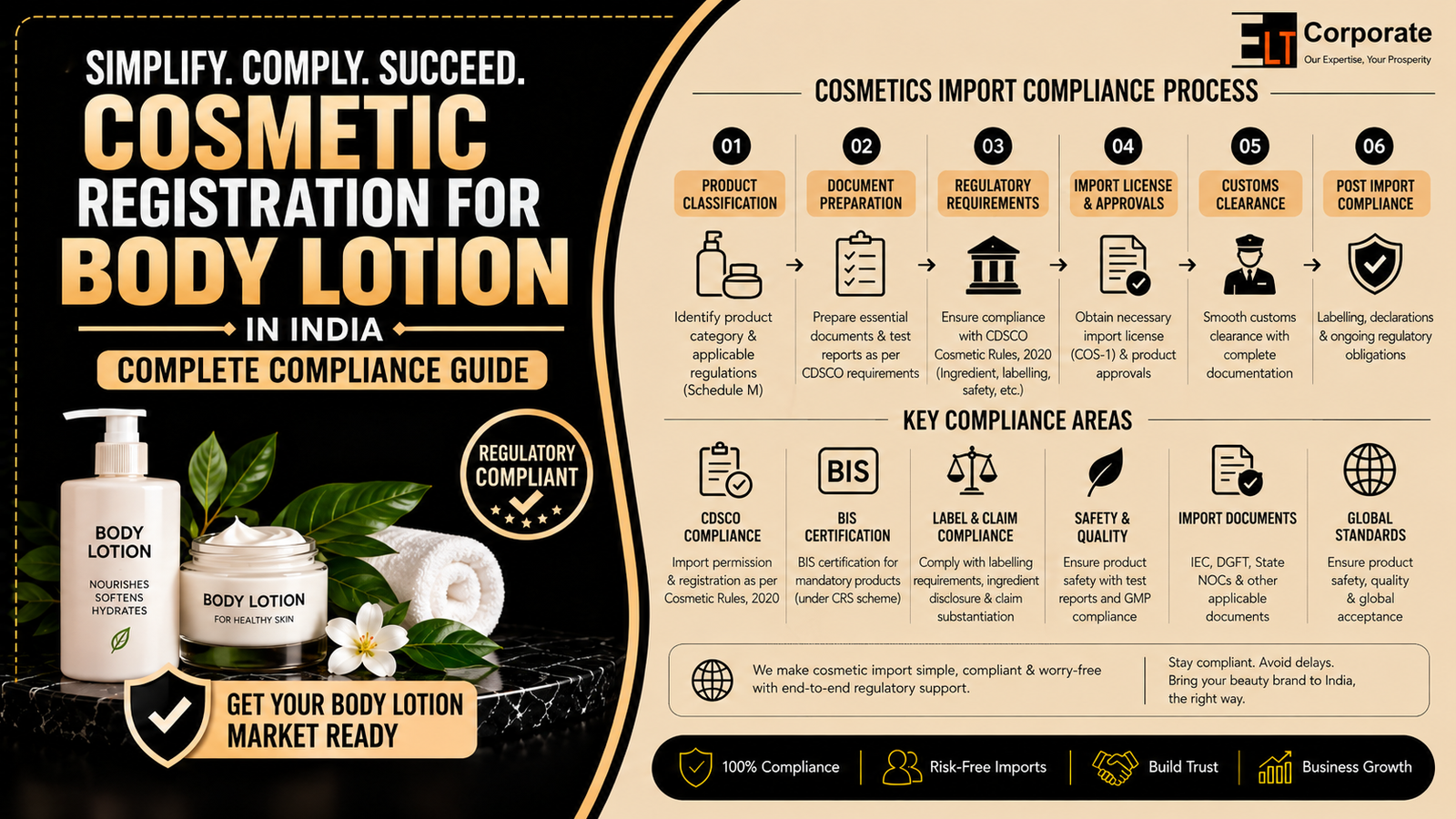
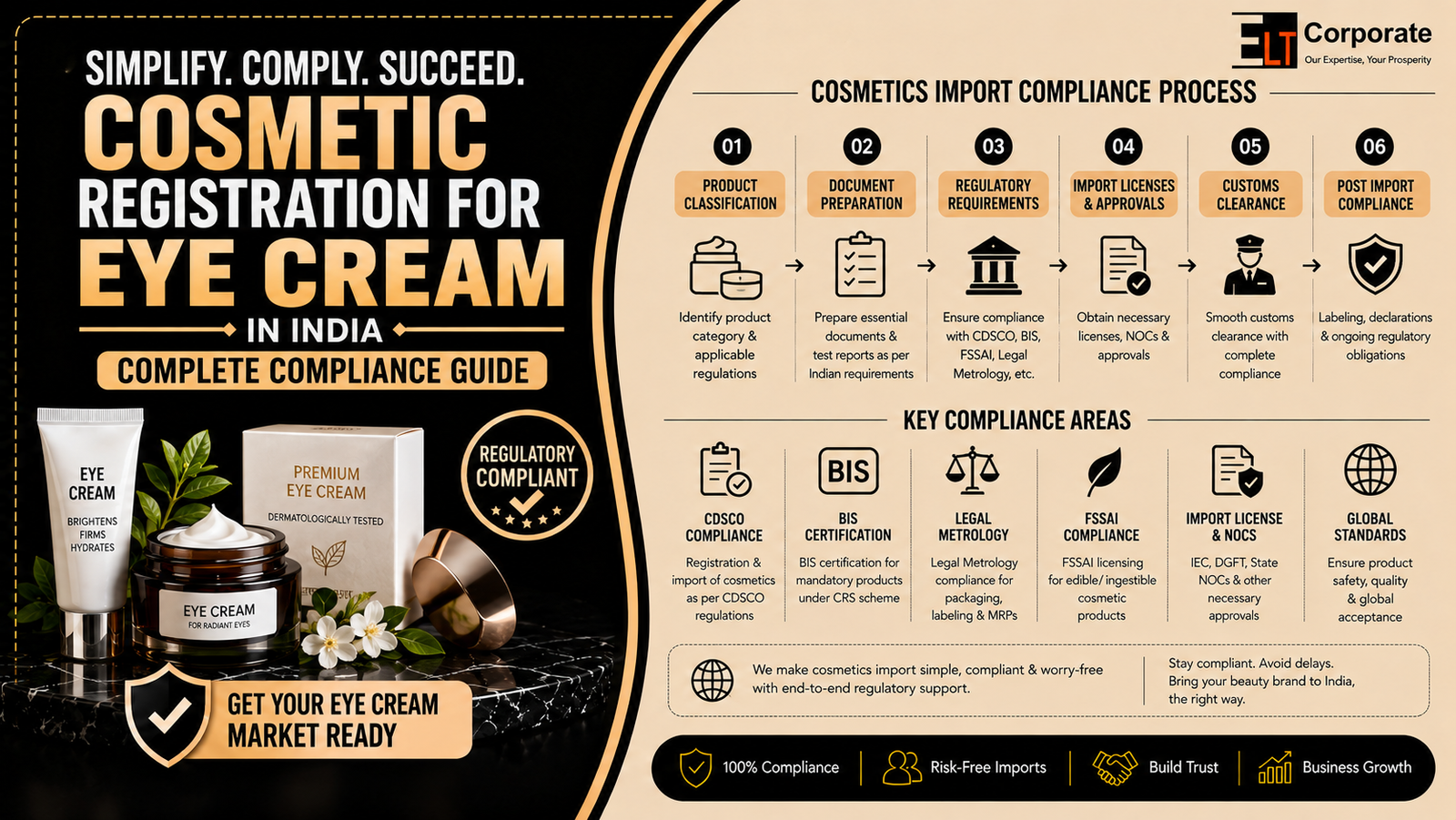
If you import a finished cosmetic manufactured outside India, the product is subject to the applicable CDSCO import registration requirements. CDSCO states that cosmetics imported into India must be registered before import under Rule 12 of the Cosmetics Rules.
So, the correct regulatory route depends on where and how the cosmetic is manufactured.
Step-by-Step Process for Homemade Cosmetics License
A practical process can look like this:
Step 1: Identify Your Products
Create a detailed list of the cosmetics you plan to produce and then sell.
Step 2: Determine the Applicable Categories
Sort each product in accordance with the relevant cosmetic category.
Step 3: Evaluate the Manufacturing Premises
Make sure that the proposed building layout, hygiene, and equipment are in compliance with requirements of the GMP standards.
Step 4: Arrange Technical Personnel
Identify competent technical staff meeting the applicable requirements.
Step 5: Prepare Product Information
Prepare formulations, product specifications, and proposed labeling information.
Step 6: Prepare Business Documents
Collect business constitution documents, premises documents, and other required records.
Step 7: Apply to the State Licensing Authority
Submit the applicable application, documents, and prescribed fee through the required process.
Step 8: Complete Inspection and Compliance Requirements
The licensing authority may assess the manufacturing premises and compliance with applicable requirements.
Step 9: Obtain the Manufacturing License
Once the requirements are satisfied, the applicable manufacturing license can be granted.
Common Mistakes in Homemade Cosmetic Businesses
Small businesses frequently make avoidable mistakes when starting cosmetic manufacturing.
Some common examples include
- Assuming handmade products do not need a license
- Manufacturing from an unsuitable residential area
- Ignoring GMP requirements
- Using unverified formulations
- Not maintaining proper product records
- Using non-compliant labels
- Making medicinal claims
- Starting commercial sales before completing compliance
- Not appointing appropriate technical personnel
- Assuming a trademark registration is the same as a manufacturing license
Addressing these issues before launch can make the licensing process considerably smoother.
Is It Possible to Begin Producing Your Own Beauty Products without a License for Manufacturing?
It is advisable that when one intends to produce cosmetics commercially, one should not assume that due to its small size or home-based nature, it does not require a manufacturing license. The main problem does not lie in its size.
The proposed manufacturing activity, product, premises, and intended commercial use must be assessed against the Cosmetics Rules.
A small cosmetic brand can still require a compliant manufacturing setup.
Why Professional Regulatory Support Can Help
It may not be easy for a fresh entrepreneur to understand cosmetic laws, especially if he or she begins business by manufacturing a few products only.
Professional help will be required in:
- Product classification
- Manufacturing license assessment
- Documentation
- Premises compliance
- GMP requirements
- Form COS-5 preparation
- Product documentation
- Label review
- Regulatory coordination
- License retention requirements
Getting the regulatory structure right at the beginning can help avoid costly changes after the business has already invested in products, packaging, and marketing.
Conclusion
Establishing your cosmetics business in India is not a bad decision at all; however, commercial production of your product is not limited to manufacturing it and then selling online.
If you are planning on manufacturing cosmetics for sale or distribution, you must evaluate your manufacturing license, premises, GMP, personnel, product documentation, testing, and labeling prior to commercial manufacture.
The Cosmetics Rules, 2020, provide the regulatory framework for cosmetic manufacturing, and the respective State Licensing Authority handles manufacturing licenses. The official fee for a Form COS-8 license starts at ₹10,000 for up to ten items of each cosmetic category, with additional fees depending on the number of products and categories.
Need Help With Cosmetic Licensing?
Get expert assistance for your cosmetic manufacturing license and compliance requirements.
WhatsApp Us Call Now Contact UsFrequently Asked Questions
Q1. Do homemade cosmetics need a license in India?
If cosmetics are manufactured for commercial sale or distribution, the applicable cosmetic manufacturing license requirements should be fulfilled. There is no blanket exemption simply because products are described as homemade or handmade.
Q2. Can I make cosmetics in my home kitchen and sell them?
A normal residential kitchen should not automatically be treated as an acceptable licensed cosmetic manufacturing facility. The proposed premises must satisfy applicable requirements under the Cosmetics Rules, including GMP and premises requirements.
Q3. Who issues the cosmetic manufacturing license in India?
The manufacturing license for cosmetics manufactured in India is issued by the respective State Licensing Authority, not directly by CDSCO.
Q4. What is the fee for a cosmetic manufacturing license?
Under the Third Schedule, the fee for a Form COS-8 license covering up to ten items of each cosmetic category is ₹10,000, with additional fees applicable for additional items or categories.
Q5. What form is used for a cosmetic manufacturing license?
The application is made in Form COS-5, while the manufacturing license is issued in Form COS-8. A loan license uses Forms COS-6 and COS-9, respectively.
Q6. Is the cosmetic manufacturing license renewed every year?
The license remains valid in perpetuity, subject to payment of the prescribed retention fee within the applicable five-year period and unless suspended or cancelled.
Q7. Do homemade organic cosmetics need a license?
Using the term “organic” or “natural” does not by itself remove applicable cosmetic manufacturing requirements. The product and manufacturing activity should be assessed under the Cosmetics Rules.