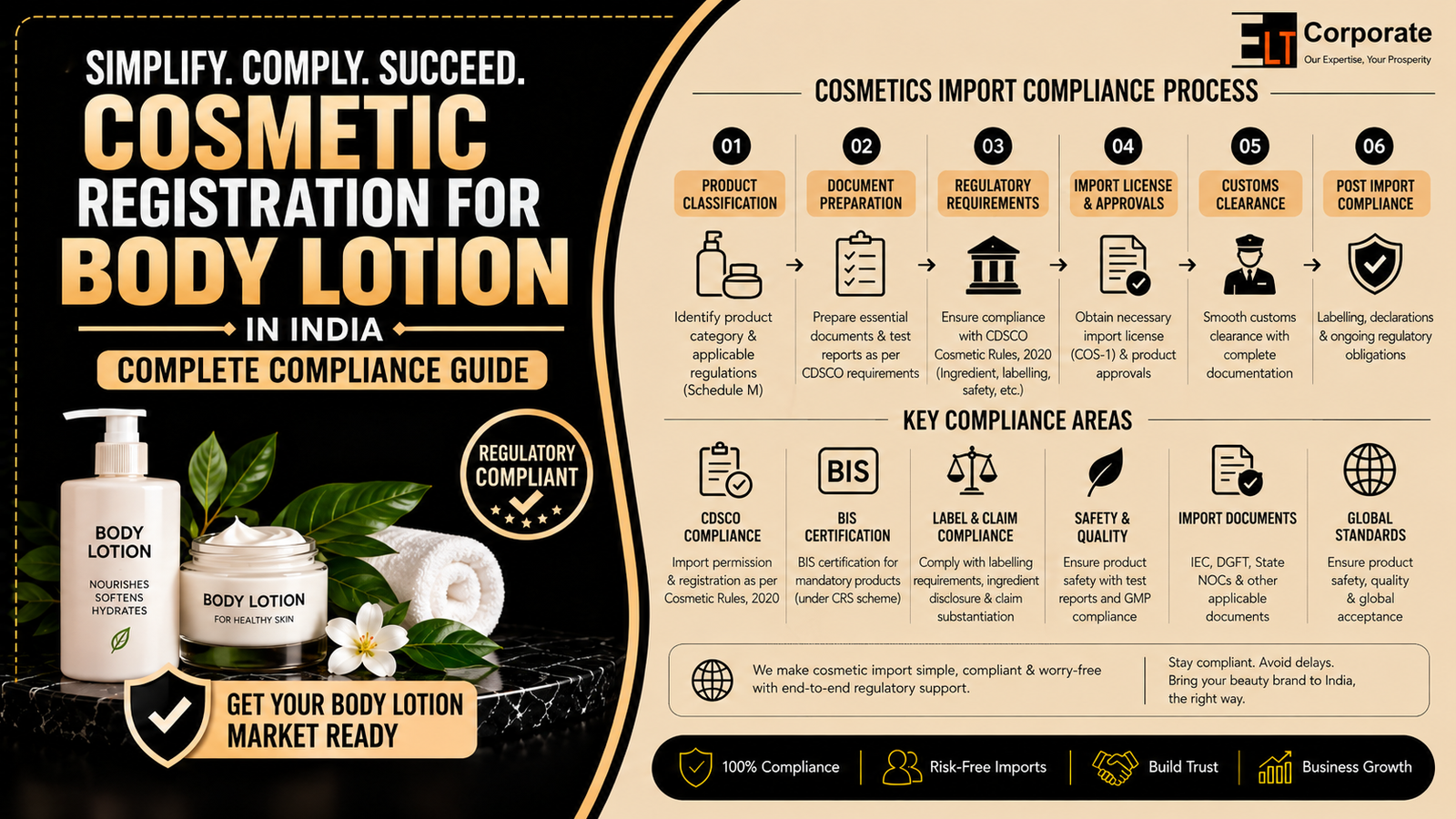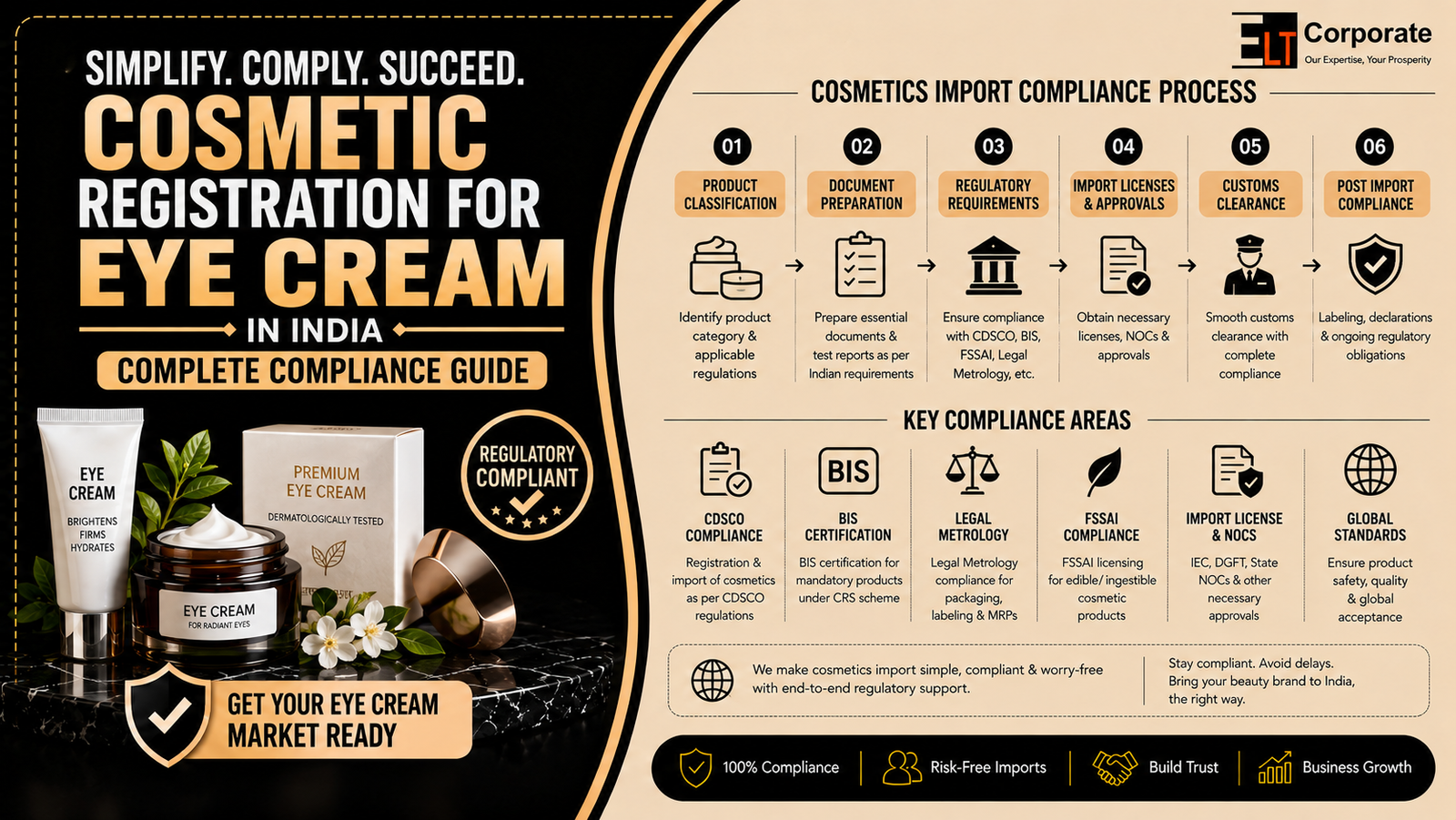

Common cosmetic products that require registration are: The need for body lotions and moisturizers is growing as people become more aware about their skincare, hydration, and the quality of products. It doesn’t matter if you’re a manufacturer, importer, or brand owner, as well as a distributor; knowing how to identify body lotions and moisturizers is crucial prior to introducing products onto the Indian market.
Cosmetic products that are sold in India must conform to India’s Cosmetics Rules, 2020, and other requirements for regulatory compliance governed through the Central Drugs Standard Control Organization (CDSCO). Inability to obtain appropriate approvals can result in delays in shipment, seizures of products, and loss of money, as well as issues with compliance.
This guide provides information on the process of registration, necessary papers, requirements for compliance, and tips for helping companies make their entry into the market smooth.
Understanding Cosmetic Registration for Body Lotions and Moisturizers
Body lotions and moisturizers are classified as cosmetic products because they are intended to cleanse, beautify, and enhance the appearance of skin and ensure healthy skin without altering the body’s structure or functions.
Common cosmetics that require registration are:
- Body lotions
- Moisturizing creams
- Hydrating body gels
- Skin-softening lotions
- Shea butter moisturizers
- Herbal body moisturizers
- Anti-dryness body creams
Before importing or marketing these products, businesses must ensure they meet Indian cosmetic regulations.
Why Registration Matters
Registration helps authorities verify:
- Product safety
- Ingredient compliance
- Manufacturing standards
- Labeling accuracy
- Consumer protection requirements
Who Needs Registration?
The following entities typically require cosmetic registration:
| Business Type | Registration Requirement |
| Foreign Cosmetic Manufacturers | Required |
| Authorized Indian Importers | Required |
| Brand Owners | Required |
| Cosmetic Distributors | Compliance Required |
| E-commerce Sellers | Must sell compliant products |
If the body lotion or moisturizer is imported into India, obtaining the appropriate cosmetic import registration becomes mandatory before commercial distribution.
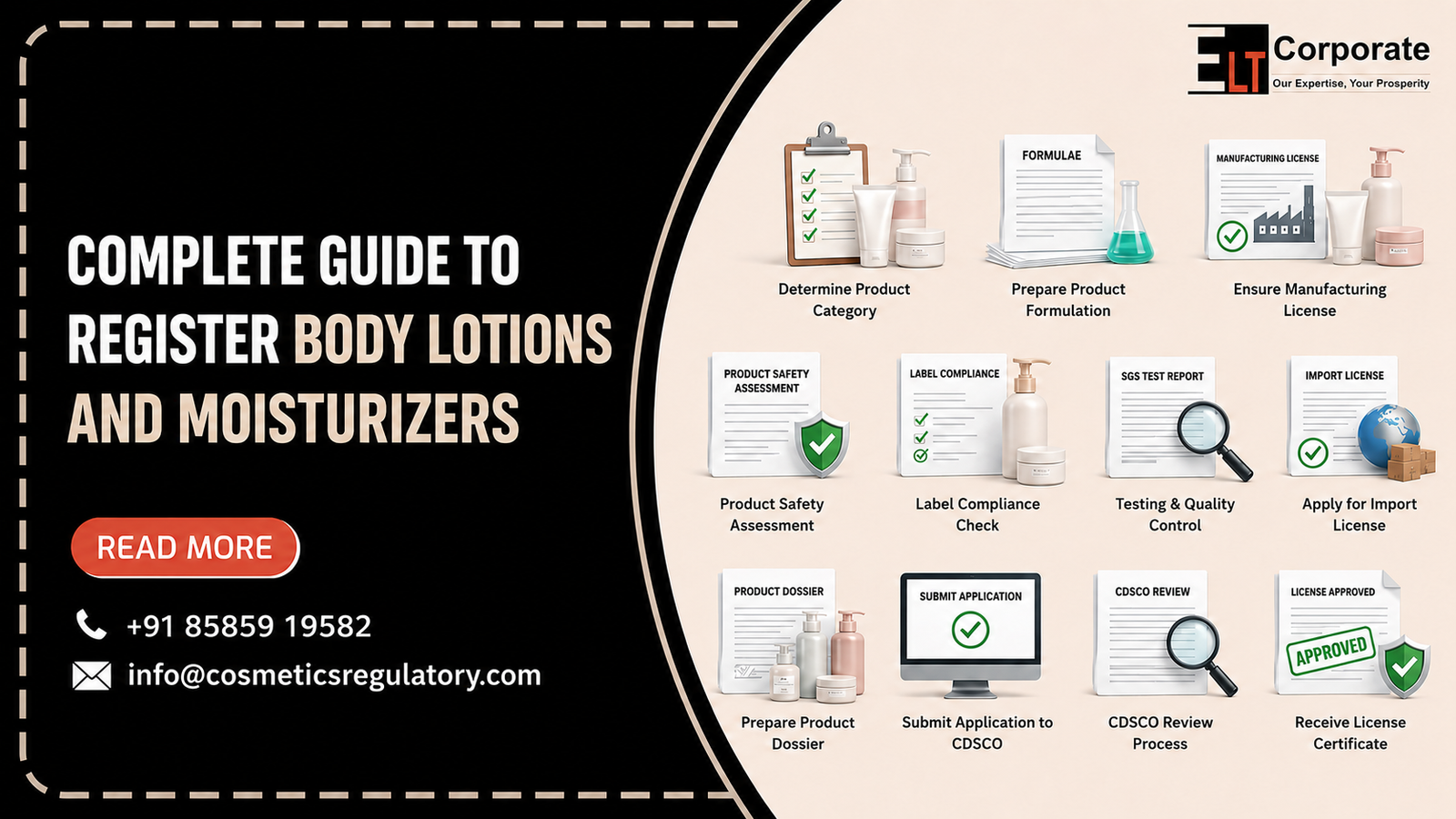
How to Register Body Lotions and Moisturizers in India
Step 1: Verify Product Classification
Confirm that the product falls under the cosmetic category according to Indian regulations.
Review:
- Product claims
- Intended use
- Ingredient composition
- Marketing statements
Products making therapeutic or medicinal claims may require additional regulatory approvals.
Step 2: Appoint an Authorized Indian Agent
Foreign companies must designate the authorized representatives in India to manage the submissions to regulatory authorities and communication. The authorized agent is the main contact point for the regulatory authorities.
Step 3: Gather Product Documentation
Make sure you have all the necessary documents, both regulatory and technical, prior to the submission. This can help reduce the chance of delays and deficiencies.
Step 4: Review Ingredient Compliance
Carefully evaluate:
- Restricted ingredients
- Prohibited substances
- Color additives
- Preservatives
- Fragrances
Every ingredient should comply with applicable Indian cosmetic standards.
Step 5: Submit Registration Application
The application is submitted through the designated regulatory process along with supporting documentation and applicable government fees.
Step 6: Regulatory Review
Authorities evaluate:
- Product formulation
- Safety information
- Manufacturing details
- Labeling compliance
- Supporting certifications
Additional clarifications may be requested during review.
Step 7: Approval and Market Entry
Upon successful review, the registration process is completed, allowing lawful import and distribution of body lotions and moisturizers in India.
Documents Required for Registration
Proper documentation significantly improves approval timelines.
Essential Document Checklist
✓ Product ingredient list
✓ Manufacturing license
✓ Product specifications
✓ Label artwork
✓ Free Sale Certificate
✓ Power of Attorney
✓ Product testing reports
✓ Manufacturer details
✓ Brand authorization documents
✓ Product safety information
Document Preparation Tips
- Ensure consistency across all documents.
- Verify manufacturer details.
- Avoid discrepancies in product names.
- Submit updated certificates.
- Review labeling before application.
Labeling and Compliance Requirements
Cosmetic labels must comply with Indian regulations.
Mandatory Label Information
- Product name
- Manufacturer name and address
- Importer details
- Net quantity
- Batch number
- Manufacturing date
- Expiry date (if applicable)
- Ingredient declaration
- Country of origin
Common Labeling Errors
- Missing importer details
- Incorrect ingredient declaration
- Unapproved claims
- Incomplete address information
- Non-compliant formatting
Proper labeling is often overlooked but remains one of the most important compliance requirements.
Benefits of Registering Body Lotions and Moisturizers
Obtaining proper registration offers several business advantages.
- Regulation Compliance: Ensure that the products meet legal requirements prior to introduction into the market.
- Quicker clearance of customs: Registered goods generally face fewer difficulties when it comes to imports.
- Trust in the consumer: Products that meet the requirements increase trust among customers and improve the credibility of a brand.
- Reduced risk for businesses: Reduces the chance of regulators’ actions or market disruptions.
- Market Expansion: Gives you the chance to promote products across India via online and retail channels.
Common Mistakes to Avoid
Many cosmetic registration applications face delays because of avoidable errors.
1. Incomplete Documentation
Missing certificates remain one of the most common causes of application delays.
2. Incorrect Product Classification
Misclassification can trigger additional regulatory scrutiny.
3. Non-Compliant Ingredients
Restricted substances may lead to rejection or reformulation requirements.
4. Labeling Deficiencies
Even small labeling mistakes can delay approvals.
5. Unverified Claims
Claims such as “medical treatment” or “cures skin disease” can create regulatory complications.
6. Poor Document Consistency
Differences in manufacturer names, addresses, or product details often result in clarification requests.
Expert Tips for Faster Approval
- Conduct a Compliance Review Early: Review formulations and labels before initiating the registration process.
- Use Consistent Product Information: Ensure all documents contain identical product names and manufacturer details.
- Maintain Updated Certificates: Expired certificates frequently delay approvals.
- Keep Technical Documentation Organized: Maintain a centralized document repository for easy submission.
- Work with Regulatory Professionals: Experienced regulatory consultants can identify potential issues before filing applications.
Conclusion
The process of registering body lotions and moisturizers is vital for importers, manufacturers, and cosmetic brands that are planning to expand into the Indian market. A properly written application, precise documentation, labeling that is compliant, and the proper planning of regulatory requirements can significantly speed up approval times and lower compliance risk.
If you’re planning to register or import body lotions and moisturizers into India Professional regulatory assistance will make the process easier and assist in ensuring full conformance in accordance with CDSCO as well as Cosmetics Rules standards.
Contact Cosmetics Regulatory today for expert assistance with the registration of cosmetics, import license review, compliance, and the regulatory documents required.
Frequently Asked Questions
Q1. Do body lotions require cosmetic registration in India?
Yes. Imported body lotions generally require cosmetic registration before commercial sale.
Q2. Are moisturizers considered cosmetics?
Yes. Moisturizers are classified as cosmetic products under Indian regulations.
Q3. Can foreign manufacturers apply directly?
Foreign manufacturers typically appoint an authorized Indian agent for submissions.
Q4. What is the most important registration document?
A complete documentation package is essential, including manufacturing and product-related certificates.
Q5. How long will the registration procedure take?
The timeframes vary based on the complexity of the product and the requirements of regulatory review.
Q6. Are natural moisturizers not subject to registration?
No. Herbal cosmetic products should also conform to the regulations applicable.
Q7. What is the consequence if a product is imported without registering?
Authorities could detain packages and may initiate compliance actions.
Q8. Is product testing required?
Testing requirements depend on the product and supporting documentation.
Q9. Can one registration cover multiple products?
Coverage depends on product categories and regulatory requirements.
Q10. Why do applications get delayed?
Incomplete documentation, labeling issues, and inconsistent information are common reasons.