
Launching a cosmetics company is never more thrilling. There’s no better time to start a cosmetic brand. The Indian cosmetic and personal-care industry is growing rapidly, and people are always looking for new cosmetics, haircare, skincare, and also personal-care products. The good thing is you do not have to create an entire manufacturing plant in order to get into this market.
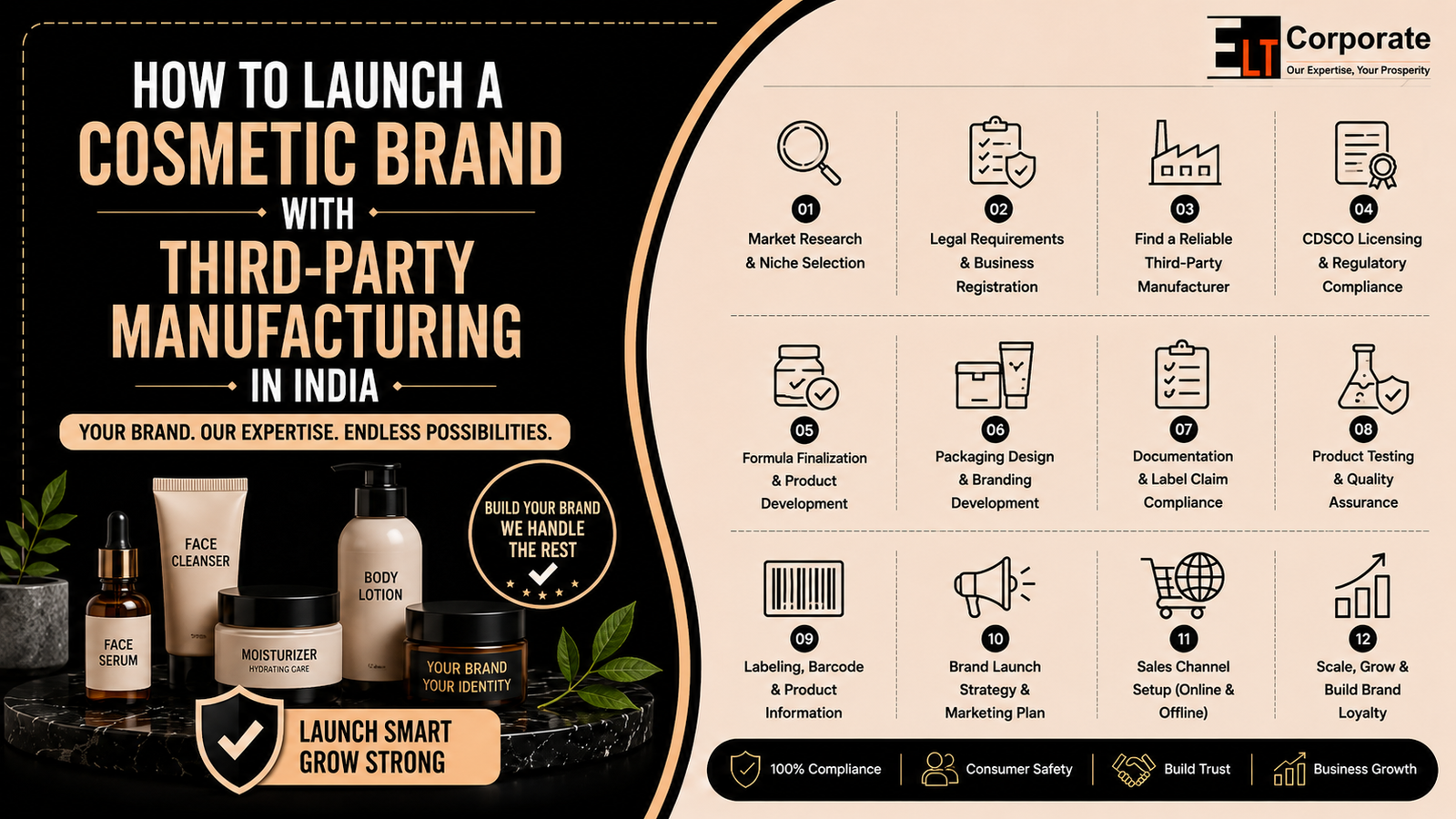
A lot of successful cosmetic companies in India depend heavily on third-party production, which is also referred to by the name of contract manufacturing, to create and make their products. This model of business allows entrepreneurs to concentrate on branding, marketing, and sales, while skilled manufacturers manage production.
If you’re looking to launch your own cosmetics brand. This guide will explain all you have to know, from selecting a manufacturer to ensuring you meet regulatory requirements before making your products available for sale.
Launch Your Cosmetic Brand with Expert Support
Get professional assistance for third-party manufacturing, cosmetic registration, and regulatory compliance.
Get Started →What Is Third-Party Cosmetic Manufacturing?
Manufacturing of third-party cosmetics is a commercial arrangement where a registered cosmetic manufacturer manufactures products for your brand.
The manufacturer generally handles:
- Formulation of the product
- Manufacturing
- Testing for quality
- Packaging and filling
- Labeling (as per your requirements)
- Quality Control
You own the brand, and the manufacturer makes the goods in accordance with the agreed specifications.
The reason this model is so popular is because it cuts down on investment costs and permits businesses to introduce new products more quickly rather than creating a manufacturing facility.
Why Choose Third-Party Manufacturing?
For growing and new businesses. Third-party manufacturing has many advantages.
Lower Initial Investment
The process of setting up an industrial manufacturing facility for cosmetics requires substantial investment in equipment and infrastructure, as well as skilled employees and regulatory approvals.
Through third-party manufacturing, it is possible to avoid these costs and invest more money in the development of products, branding, and marketing.
Faster Market Entry
A well-established manufacturer already has the tools as well as production processes and regulatory procedures in place. This means that your product will get to market faster.
Access to Industry Expertise
Established manufacturers know about the formulation of cosmetics and stability testing and ingredient compatibility and packaging, as well as the quality standards. Their experience can enhance the overall quality of the products you sell.
Flexible Production Volumes
When you’re setting up a new product line or preparing for a massive production, several manufacturers provide the flexibility of minimal order amounts (MOQs) that make it easier for brand new companies to begin.
Step 1: Decide Your Product Range
Before you contact manufacturers, determine what you intend to sell.
Some of the most sought-after cosmetic categories are
- Face Wash
- Moisturizers
- Sunscreens
- Serums
- Lip Balms
- Lip Sleeping Masks
- Face Masks
- Hair Oils
- Shampoo
- Conditioner
- Body Lotion
- Beard Care Products
- Makeup Products
- Perfumes
Instead of launching multiple products simultaneously, consider beginning with a specific product line that matches your brand’s image.
Step 2: Understand Your Target Audience
Knowing your clients will aid you in selecting the best products and formulations.
Do you ask yourself:
- Who would be your ideal client?
- What hair or skin concerns are you dealing with?
- Do you want your products to be top quality or inexpensive?
- Are you aiming at women, men, or both?
- Do you have products that are organic, vegan, herbal, or animal-free?
Answers to these questions clearly can help you develop your product’s design and marketing plan.
Step 3: Choose the Right Third-Party Manufacturer
Choosing the best manufacturing partner is among the most crucial decisions you make for your company.
Find manufacturers who:
- Maintain a valid cosmetic manufacturing permit
- Follow Good Manufacturing Practices (GMP)
- Keep strong quality control systems in place
- Have you had experience with your product’s line
- Offer formulation customization
- Make use of top-quality raw materials
- Provide transparent documentation
- Be on time for delivery
Before signing a contract, ask for samples of the product or visit the manufacturer’s plant if it is possible.
Step 4: Finalize Product Formulations
You have two choices:
Use Existing Formulations
A lot of manufacturers have ready-made formulations that can be customized using your brand’s branding and package. This is a faster and cheaper option.
Develop Custom Formulations
If you’re looking for products that are unique, then you can partner with the manufacturer to develop distinctive formulations. Although this can require more time and money, it will help distinguish your product from competitors in the market.
Step 5: Create Your Brand Identity
A brand that is memorable is about more than the mere logo.
Develop:
- Brand name
- Logo
- Product packaging
- Brand colors
- Brand story
- Product positioning
- Marketing message
Your brand’s visual identity should resonate with your intended audience and remain constant across packaging, your website, and social media platforms.
Step 6: Ensure Regulatory Compliance
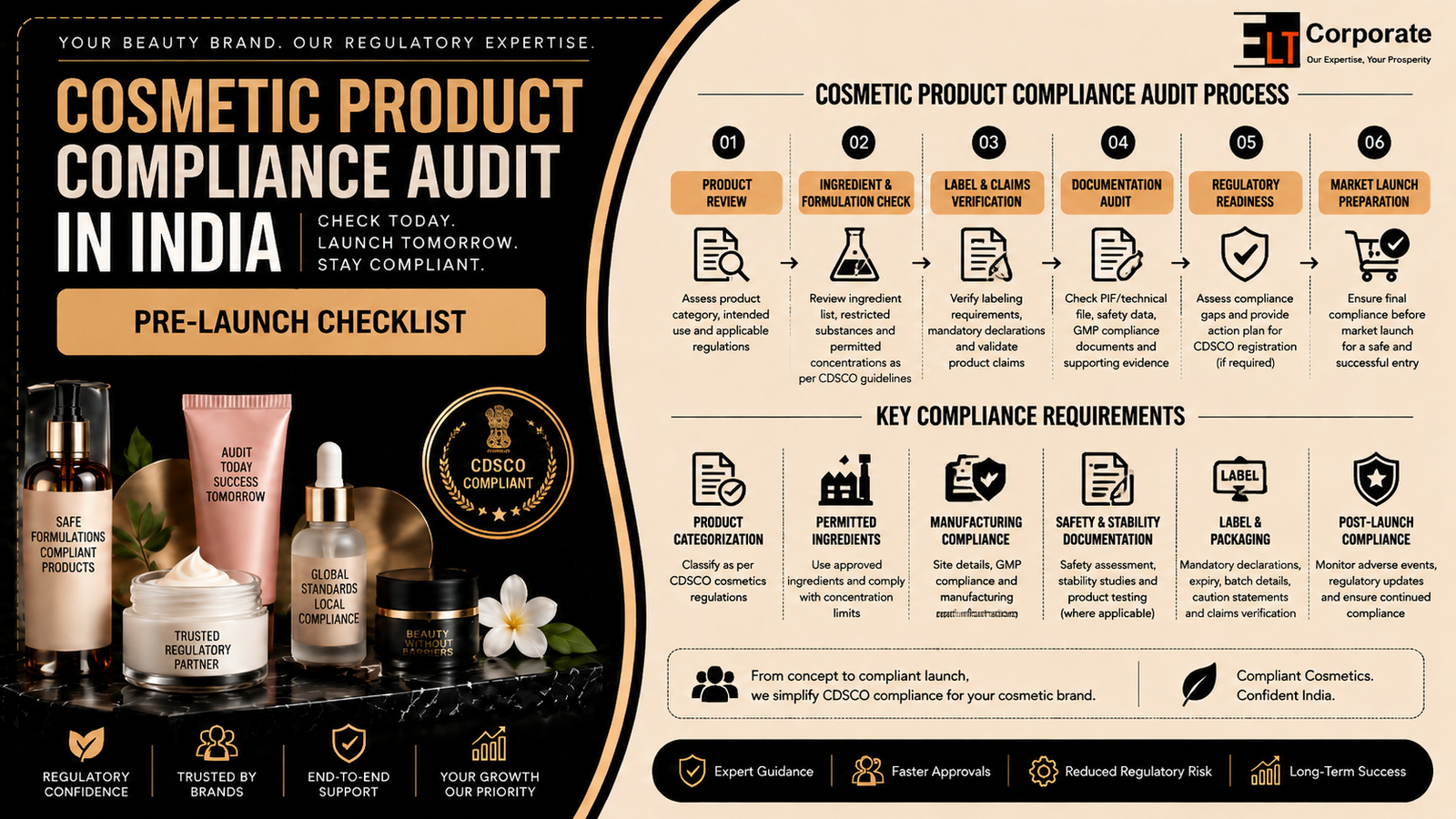
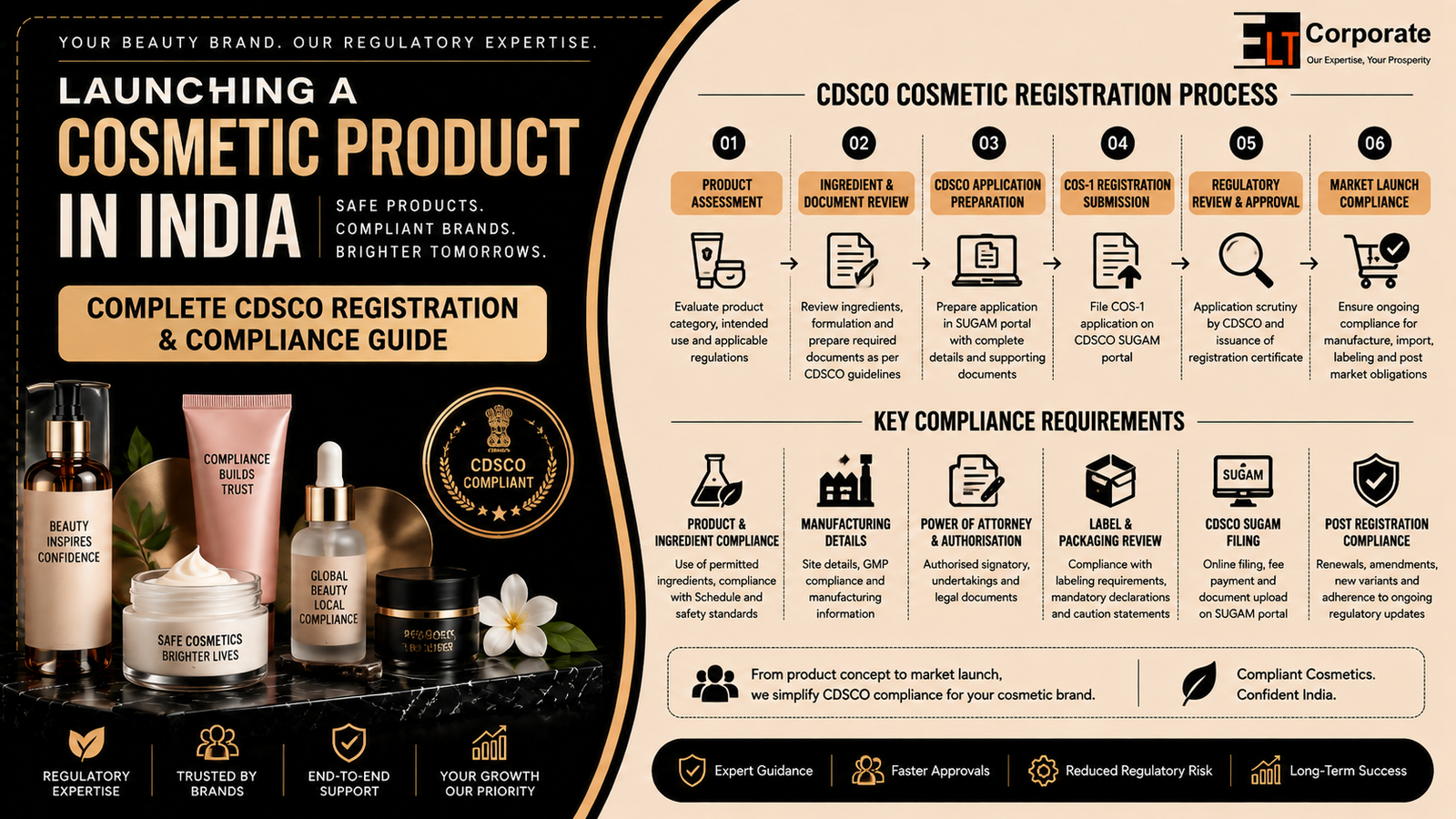
The launch of a cosmetics company in India is a matter of complying with any applicable regulations.
Depending on the model of your business, you might need to take into consideration:
- Cosmetic Manufacturers License (for manufacturers)
- Cosmetics Import Registry (for import of cosmetics)
- Conformity of product labeling
- Packaging specifications
- Ingredient compliance
- Registration of trademarks for the brand you want to protect
- GST registration
- Registration for businesses
The assistance of regulatory experts can assist you in avoiding delays and make sure your products are legal before going on sale.
Step 7: Design Compliant Product Labels
Your labels for products must not just look appealing but should also contain the essential information that is required under Indian regulations.
Typical label details include:
- Name of the product
- Net quantity
- Batch number
- Manufacturing details
- Date of expiration or best-before
- Ingredient list
- Directions for use
- Storage guidelines
- Where applicable, warnings
- Information on the manufacturer
Beware of misleading or unsubstantiated claims, such as “100% guaranteed cure” or “chemical-free” unless they can be legally validated.
Step 8: Select Suitable Packaging
It protects products and provides the first impression to the customer.
Select packaging that’s:
- Durable
- Leak-resistant
- Easy to use
- It is compatible with the formula
- Beautiful and practical
- Ideal for transport
The investment in high-quality packaging can dramatically improve customer satisfaction and perception of the brand.
Step 9: Plan Your Sales Channels
When your products are finished, choose where you’ll offer your products.
Common channels of sales are the following:
- Your own site
- Marketplaces on the internet
- Beauty stores
- Pharmacies
- Spas and salons
- Social platforms for commerce
- Wholesale distributors
A multi-channel strategy will allow you to reach a greater audience and boost your brand’s exposure.
Step 10: Build a Strong Marketing Strategy
Even the most innovative products require efficient marketing.
Concentrate on:
- Search Engine Optimization (SEO)
- Marketing through social media
- Collaborations between Influencers
- Educational content
- Customer reviews
- Email marketing
- Paid advertisement
- Referral programs
Consistent branding and quality content can increase trust and inspire repeat purchases.
Common Mistakes to Avoid
A lot of first-time cosmetic entrepreneurs make mistakes that are easily avoided, like
- The selection of manufacturers should be based solely on the price that is the most affordable
- Dodging the requirements of the law
- Making use of poor-quality packaging
- Avoiding product testing
- Untrue claims about products
- Launching too many new products simultaneously
- Inability to understand the needs of customers
- The brand is not being built properly
By avoiding these mistakes, you will save time and cash in the end.
Tips for Long-Term Success
To develop a long-lasting cosmetic brand:
- Be focused your attention on the high quality and value of the item, not the amount.
- Keep track of the feedback received from customers and strive to work on improving.
- Keep abreast of developments regarding the regulation framework.
- You should invest in customer service and branding.
- Maintain the same consistency for all your items.
- Build long-term relationships with reliable manufacturing partners.
Be aware that the most successful brand names are built around trust as well as reliability as well as satisfaction. Not only attractive packaging.
Conclusion
In the beginning, launching a cosmetic brand via manufacturing through a third party is among the most efficient ways to join the rapidly growing beauty market in India without the expense of setting up a manufacturing facility. Through partnering with a trusted manufacturer, you can ensure regulatory compliance as well as create a strong brand image and provide top-quality products; you can establish a brand that stands out in a crowded market.
It’s not a quick process. However, with carefully planned planning, the right manufacturing partner and a focus on the customer Your cosmetics brand will become a trusted brand. Make sure you choose high-quality products over cheap ones, stay on top of regulations, and build lasting relationships with your clients.
Frequently Asked Questions (FAQs)
Q1. What is third-party cosmetic manufacturing?
It’s an arrangement in which an authorized manufacturer creates cosmetics under your brand’s name while you oversee marketing, branding, and sales.
Q2. Do I need to have my own manufacturing facility in order to begin an online cosmetics brand?
No. Third-party manufacturing permits you to create your own brand without the need for manufacturing facilities.
Q3. Can I design my own cosmetic formula?
Yes. Numerous manufacturers provide customized formulations if you require unique products that are exclusive to your company’s brand.
Q4. Do you need regulatory compliance for cosmetics manufactured by third parties?
Yes. Your products must be in compliance with all applicable Indian cosmetic regulations, which include the labeling and packaging requirements prior to their being marketed.
Q5. How can I pick the correct cosmetic manufacturer?
Find a licensed manufacturer that has high quality standards, relevant experiences, and transparent processes. an established track record of providing reliable items.
🚀 Ready to Launch Your Cosmetic Brand?
Planning to start your own skincare, haircare, or beauty brand? Our regulatory experts can help you with third-party manufacturing, cosmetic registration, labeling compliance, packaging review, and licensing so you can launch your products with confidence.
📩 Get Free Consultation 💬 Chat on WhatsApp