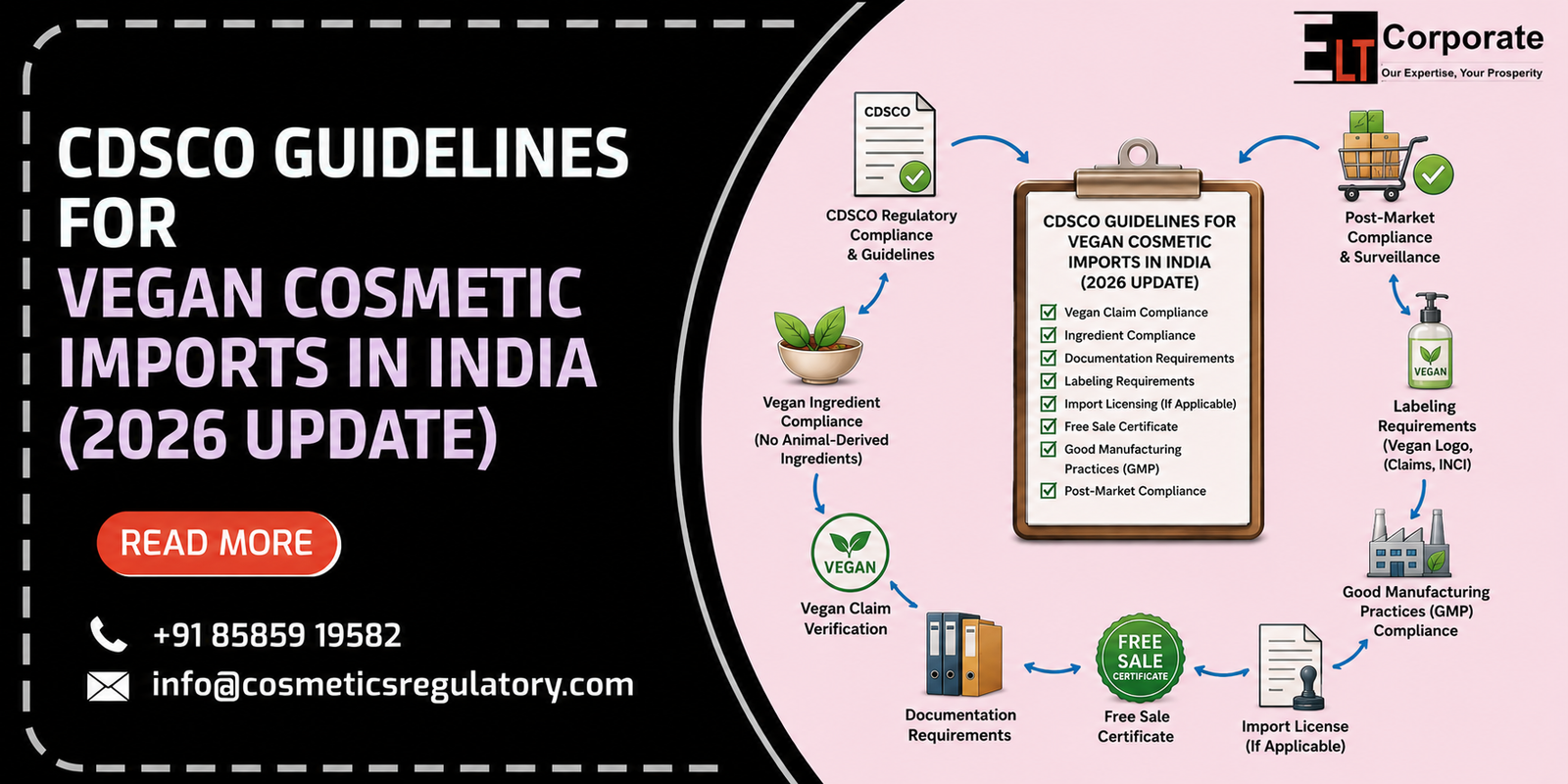

The demand for vegan makeup and personal care products in India is increasing day by day. People are becoming more conscious about buying makeup products that don’t contain any animal-based substances and that have been manufactured without the use of any animal-based testing. To support international brands to enter the Indian market, awareness of the CDSCO guidelines for vegan cosmetic imports is important.
The import of cosmetics into India is regulated by the Central Drugs Standard Control Organization (CDSCO) under the Cosmetics Rules, 2020. Currently there is no separate registration for vegan cosmetics in India. However, the import of vegan cosmetics into India has to be in accordance with the regulatory procedure applicable to other cosmetics and other relevant factors in respect of vegan cosmetics.
Cosmetics Regulatory to import vegan cosmetics in India 2026: A Complete Guide
Vegan Cosmetics According to Indian Rules: The Basics
A vegan cosmetic product may generally be understood to mean any kind of cosmetic product that:
- Contains no animal-derived ingredients
- Is not tested on animals
- Uses plant-based or synthetic alternatives
- Does not contain animal by-products, e.g., beeswax, lanolin, collagen, keratin, carmine, or gelatine.
Currently, there is no formal legal definition of “vegan cosmetics” under Indian laws. However, brands making vegan claims need to ensure that such claims are true, substantiated, and backed by product documentation.
Reasons for Compliance with CDSCO Regulations for Vegan Cosmetics
Every cosmetic product imported to India needs regulatory approval prior to its commercial launch.
In case of non-compliance, the following consequences can be experienced:
- Detention at customs clearance
- Product recall from the market
- Regulatory penalties
- Entry delays in the market
- Reputational damage
As far as vegan cosmetic products are concerned, compliance may involve confirmation of the ingredients and claims.
CDSCO Regulations for Vegan Cosmetics Imported to India
Import Registration Certificate
Prior to the importation of any cosmetic product into India, an import certificate must be obtained by the importer through CDSCO.
- This certificate can be granted to:
- Indian agent authorized for imports
- Subsidiaries of international brands
- Authorized importers
Compliance with Product Safety Standards
The imported cosmetic should fulfill:
- Requirements relating to safety standards according to Indian laws
- Permitted cosmetic formulations
- No prohibited or restricted ingredients
- Manufacturing Facility Details
Manufacturing Facility Information
Under CDSCO regulations, provide:
- Details about manufacturing facility
- Quality control details
- Manufacturing license or certificate details
- GMP compliance-related information
How to Register the Import Business Step by Step
Step 1: Appointment of Authorized Person: Agent in India on behalf of Your Company: This is about the appointment of an authorized agent to represent your company in India.
Step 2: Collect Required Documentation for Approval: Documentation required for regulatory approval of the imported medical device shall be collected.
Step 3: Submit CDSCO Application: Applications are submitted through the CDSCO online portal.
Step 4: Regulatory Review: Authorities review:
- Product composition
- Labeling compliance
- Manufacturer credentials
- Safety documentation
Step 5: Registration Approval: Once approved, the importer receives the registration certificate required for customs clearance and commercial import.
Documents Required for Vegan Cosmetic Imports
The following documents are generally required:
| Document | Purpose |
| Power of Attorney | Authorization for Indian agent |
| Free Sale Certificate | Proof of legal sale in country of origin |
| Ingredient List | Verification of formulation |
| Product Labels | Regulatory review |
| Manufacturing License | Facility authorization |
| Product Specifications | Quality assessment |
| Safety Data Documents | Product safety verification |
| Declaration of Vegan Claims | Support for vegan marketing statements |
Additional Documents for Vegan Products
Importers should maintain the following:
- Vegan certification (if available)
- Ingredient source declarations
- Animal-testing declarations
- Supplier certifications
These documents may help support product claims during regulatory review and market inspections.
Labeling and Packaging Requirements
Proper labeling remains one of the most important compliance requirements.
The cosmetic label should include:
- Product name
- Manufacturer details
- Country of origin
- Batch number
- Manufacturing date
- Expiry date or best-before date
- Net quantity
- Directions for use
- Importer details
Vegan Labeling Considerations
When displaying claims such as the following:
- Vegan
- 100% Vegan
- Animal-Free
- Cruelty-Free
Brands should ensure they possess documentary evidence supporting these statements. Misleading claims can trigger regulatory actions and consumer complaints.
Vegan Claims and Regulatory Considerations
Many brands mistakenly assume that a vegan logo alone guarantees compliance.
CDSCO focuses on:
- Ingredient Verification: Authorities may review ingredient composition to ensure restricted substances are not present.
- Claim Substantiation: Marketing claims must be supported by evidence.
- Consumer Protection: Claims should not mislead consumers regarding product performance, safety, or composition.
Import Documentation Consistency
Information on:
- Labels
- Product dossiers
- Certificates
- Marketing materials
must remain consistent throughout the registration process.
The Benefits of Vegan Cosmetic Imports
CDSCO said, “Compliance with the regulations has significant commercial benefits:
- Faster Import Times Well-registered products cross customs faster.
- Verified compliance builds brand trust. Enhanced Consumer Confidence:
- Regulatory Risks: Lower likelihood of penalties and enforcement actions.
Easier Market Expansion
Compliant products can be distributed through the following:
- Retail chains
- E-commerce platforms
- Beauty distributors
- Professional salon networks
- Stronger Brand Positioning
Consumers increasingly prefer transparent and ethically sourced products.
Importer Mistakes to Avoid
- Incomplete Ingredient Disclosure: Failing to provide a complete list of the formulation can cause delays in approval.
- Unsupported Vegan Claims: Unsupported vegan claims can cause compliance problems due to lack of documentation.
- Misclassification of Products: Products are to be correctly classified under cosmetic regulations.
- Noncompliant Labels: Customs and regulatory problems are often caused by the absence of mandatory information.
- Last-minute document collection: Getting your certificates after the submission of the application can cause a huge delay in approvals.
Expert Tips for Faster Regulatory Approval
- Pre-Submission: Compliance Assessment – Review your application before submission.
- Ingredient Check: Cross-check ingredients with the relevant Indian regulatory requirements.
- Documentation Consistency: Make sure your labels, certificates, and other documents are consistent.
- Vegan Product Proof: Gather vegan product documentation from suppliers.
- Consult with Regulatory Experts: Regulatory experts will find any loophole for you prior to submission.
Conclusion
The success of your venture in the Indian vegan cosmetics market depends on the adherence to the regulatory requirements for importing vegan cosmetics to India as defined by CDSCO. There are considerable opportunities for international cosmetic brands to enter the Indian vegan cosmetics market.
Systematic documentation, labeling, ingredient verification, and claims will make the entire process easier and ensure your future success in building trust amongst Indian consumers. Regulations continue to change through 2026, so it’s important to start planning now to stay ahead of the curve.
For professional assistance with cosmetic import registration, labeling compliance, vegan claim verification, and CDSCO approvals, contact the regulatory experts at Cosmetics Regulatory and streamline your entry into the Indian cosmetics market.
Frequently Asked Questions
Q1. Is the CDSCO registration mandatory for vegan cosmetic products?
No. Registration for vegan cosmetics in CDSCO does not differ from registration for regular cosmetics.
Q2: Is certification for vegans necessary while importing cosmetics?
No. However, documents are recommended.
Q3: Can cosmetics imported into India have the vegan seal?
Yes. On the condition that there is truthfulness in the claim.
Q4: Are cruelty-free and vegan products the same?
No. Cruelty-free means no animal testing. “Vegan” means no animal ingredients.
Q5: Who is eligible to apply for the cosmetic import license?
Indian authorities, or affiliates thereof.
Q6. What organization is responsible for cosmetic imports in India?
CDSCO (Central Drugs Standard Control Organization)
Q7: What is the use of the free sale certificate?
To show that the cosmetic is legal in its place of origin.
Q8: Can customs hold non-compliant cosmetic imports?
Yes. They could be arrested or sent away.
Q9: How vital is the label conformity for imported cosmetics?
It is very important.
Q10. Can vegan claims be challenged by regulators?
Yes. Authorities may request supporting documentation for marketing claims.