
A licence is linked to approved premises. A change of cosmetic manufacturing premises requires State Licensing Authority guidance.
The cosmetic industry in India is growing, and many manufacturers are expanding their operations, upgrading factory infrastructure, or shifting production facilities to new locations. However, relocating a cosmetic manufacturing unit involves more than changing the factory address.
Businesses must follow the applicable provisions of the Cosmetics Rules, 2020, and obtain the necessary regulatory approval from the concerned State Licensing Authority. Understanding the change of cosmetic manufacturing premises process, documentation, licensing requirements, and inspection procedures helps manufacturers avoid compliance issues and continue their operations smoothly. Cosmetics Regulatory assists businesses in understanding these requirements and preparing for the licensing process.
Planning to Change Your Cosmetic Manufacturing Premises?
Relocating your cosmetic manufacturing unit? Get expert assistance with licensing requirements, documentation, and regulatory approvals under the Cosmetics Rules, 2020.
Get Free Consultation WhatsApp an Expert Contact UsWhat Does a Change of Cosmetic Manufacturing Premises Mean?
“Change of cosmetic manufacturing premises” refers to shifting an existing cosmetic manufacturing operation from its currently approved factory address to another location. Reasons include expansion or improved facilities.
The new site must meet infrastructure, hygiene, equipment, and safety requirements.
What Do the Cosmetics Rules, 2020 Say?
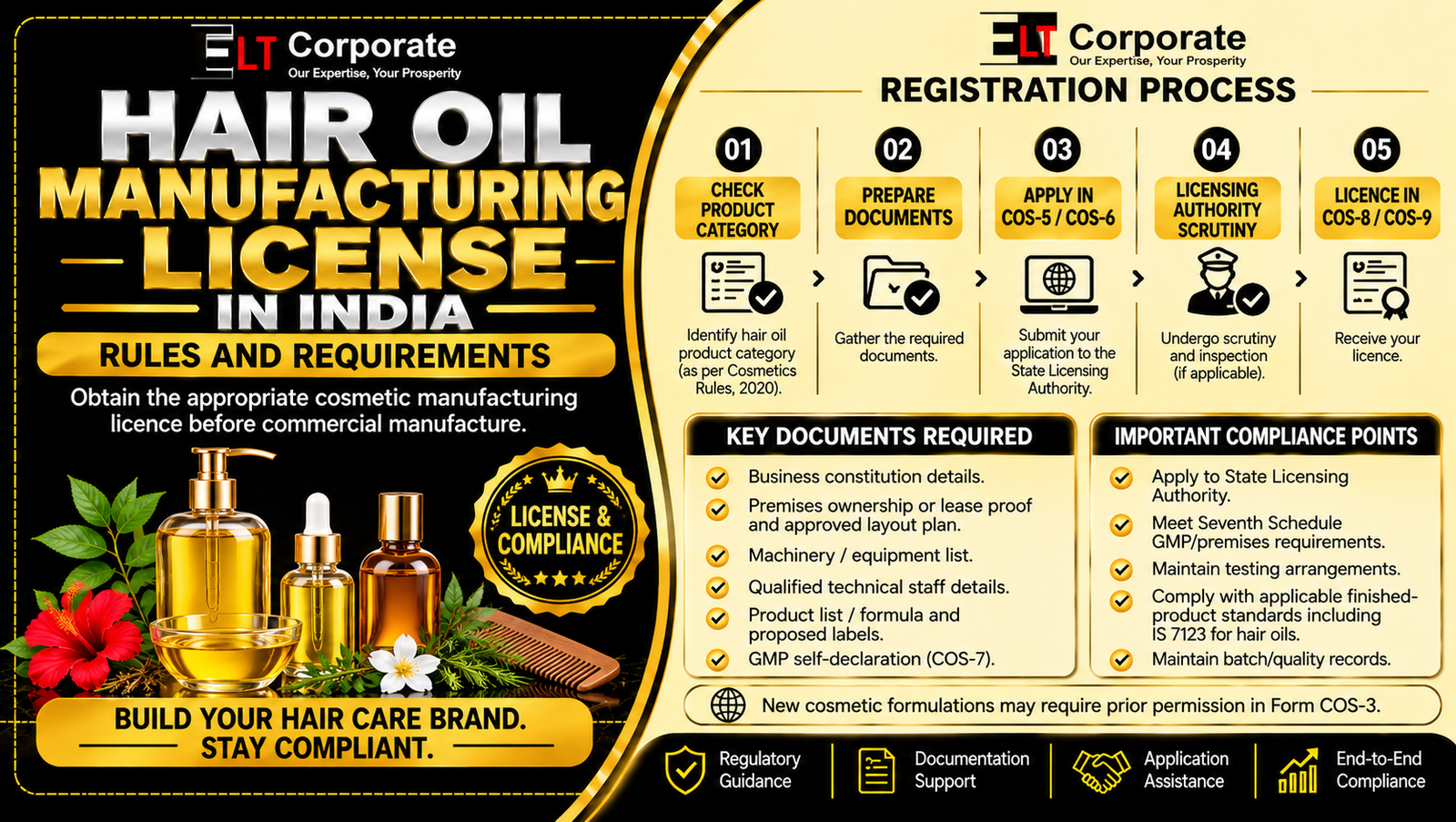
The Cosmetics Rules, 2020, regulate the manufacture of cosmetics for sale or distribution in India. Under Rule 23, an application for a manufacturing licence is submitted to the State Licensing Authority in Form COS-5. A loan licence application is made in Form COS-6.
Rule 24 provides that where cosmetics are manufactured at more than one premises, a separate application must be made and a separate licence obtained for each premises.
The licence is issued in Form COS-8 and a loan licence in Form COS-9.
For a change of cosmetic manufacturing premises, manufacturers should review their licence conditions and seek written regulatory guidance before shifting production. The authority may require a fresh application for the new site rather than a simple correction to the existing licence.
When Is a Change in Manufacturing Location Required?
Manufacturers may relocate for reasons such as
- Moving from a rented building to an owned industrial premises.
- Shifting production to a larger facility to increase manufacturing capacity.
- Relocating to an industrial estate with better utilities and infrastructure.
- Moving closer to suppliers, distributors, or logistics facilities.
- Renovating an existing factory when continued production at that site is not practical.
Treat the change of cosmetic manufacturing premises as a compliance activity, not just an address update. Assess the new facility before production. A change of cosmetic manufacturing premises also requires clear communication with the regulator.
Documents Required for Change of Cosmetic Manufacturing Premises
The checklist varies by state. Documents may include:
- Existing cosmetic manufacturing licence in Form COS-8 or loan licence in Form COS-9, as applicable.
- Application in the form and manner prescribed by the State Licensing Authority.
- Proof of ownership, lease, rent agreement, or lawful possession of the new premises.
- Approved or proposed manufacturing area layout plan.
- Details of manufacturing sections, storage areas, testing facilities, and utilities.
- Updated list of machinery and equipment installed at the new site.
- Details and qualification documents of competent technical staff.
- Constitution documents of the business, such as incorporation documents or partnership deed, where applicable.
- Product list, composition details, and relevant licence endorsements.
- GMP compliance self-certificate in Form COS-7, where required.
- Applicable government fee receipt or payment proof.
- Any additional undertaking, clarification, or document requested by the authority.
For a change of cosmetic manufacturing premises, identify both addresses and match the records to the new factory. Keep the change of cosmetic manufacturing premises records with the application.
Need Help with Cosmetic Registration Documents?
Not sure which documents are required for cosmetic registration in India? Get expert guidance on documentation, licensing, and CDSCO compliance.
View Required DocumentsProcedure for Changing Cosmetic Manufacturing Premises
Coordinate the process with the State Licensing Authority:
Step 1: Review the Existing Licence
Check the current license, approved address, product endorsements, and licence conditions. Identify whether the proposed relocation also involves changes in ownership, constitution, technical staff, or manufacturing activities.
Step 2: Select a Compliant New Location
Choose premises capable of meeting the requirements of the Seventh Schedule. Consider production flow, ventilation, sanitation, water supply, storage, waste management, and separation of relevant activities.
Step 3: Prepare the Updated Layout and Documents
Prepare the layout and records, lawful possession proof, machinery details, testing arrangements, and technical staff documents.
Step 4: Contact the State Licensing Authority
Submit a written request explaining the proposed relocation and ask which application route applies. Ask whether a fresh license, amendment, inspection, or extra documents are required.
Step 5: Submit the Applicable Application
Submit the applicable form, fee, and documents through the state portal or prescribed process. Rule 23 specifies Form COS-5 for a fresh licence and Form COS-6 for a loan licence.
Cosmetic Manufacturing License in MaharashtraStep 6: Respond to Queries and Inspection Requirements
The authority may review documents, seek clarification, or inspect the site.
Step 7: Obtain Regulatory Approval Before Production
Start manufacturing at the new premises only after obtaining the required licence or written approval applicable to the case. Keep the approved licence and supporting records available at the factory. A change of cosmetic manufacturing premises is not complete until the required permission is in place.
Important Compliance Requirements at the New Factory
The Seventh Schedule covers premises, plants, and equipment requirements. Check:
- Premises and layout: Production areas should be suitable for the products being manufactured and arranged to support orderly operations.
- Hygiene and sanitation: Maintain clean floors, walls, equipment, and work areas.
- Machinery and equipment: Install appropriate equipment and maintain it in good working condition.
- Storage facilities: Provide suitable arrangements for raw materials, packaging materials, finished products, and rejected materials.
- Quality control: Maintain appropriate testing arrangements through an adequately equipped facility or an eligible approved laboratory, as applicable.
- Technical staff: Ensure manufacturing and testing activities are supervised by competent personnel as required by the rules.
- Records: Maintain batch manufacturing, testing, and other prescribed records.
A GMP compliance review before relocation can help identify gaps and reduce the risk of regulatory objections.
Planning to Change Your Cosmetic Manufacturing Premises?
Relocating your cosmetic manufacturing unit? Get expert assistance with licensing requirements, documentation, and regulatory approvals under the Cosmetics Rules, 2020.
Get Free Consultation WhatsApp an Expert Contact UsCommon Mistakes Manufacturers Should Avoid
Avoid these mistakes:
- Starting production at the new address without the required approval.
- Assuming that the existing licence automatically covers another premise.
- Submitting an outdated or incomplete factory layout.
- Failing to provide valid ownership or rental documents.
- Ignoring changes in machinery, storage, or technical staff.
- Overlooking inspection observations and pending clarifications.
- Updating business records but not informing the Licensing Authority.
Avoiding these mistakes makes the change of cosmetic manufacturing premises more organized and reduces delays.
Why Professional Regulatory Assistance Matters
Relocation requires rule review, site assessment, documents, and authority coordination.
Cosmetics Regulatory assists cosmetic manufacturers with licensing and compliance-related requirements. Cosmetics Regulatory can review licence details, identify documentation gaps, prepare application information, and guide businesses through the regulatory process.
For Change of Cosmetic Manufacturing Premises, cosmetic regulatory support can clarify documentation and application requirements.
Cosmetics Regulatory helps businesses understand cosmetic manufacturing licence requirements, Form COS-5, Form COS-6, and GMP compliance. Cosmetics Regulatory recommends confirming the route with the authority.
Conclusion
A change of cosmetic manufacturing premises should be handled before operations move.
Cosmetics Regulatory can guide manufacturers with documentation, licensing procedures, and compliance preparation for a smooth transition. Cosmetics Regulatory is committed to helping cosmetic businesses understand regulatory requirements and manage their manufacturing compliance responsibilities with greater clarity.
Planning to Change Your Cosmetic Manufacturing Premises?
Relocating your cosmetic manufacturing unit? Get expert assistance with licensing requirements, documentation, and regulatory approvals under the Cosmetics Rules, 2020.
Get Free Consultation WhatsApp an Expert Contact UsFrequently Asked Questions
Q1. Can I use my existing licence at a new address?
Not automatically. Obtain the required approval for the new premises before manufacturing.
Q2. Which authority handles the change?
The State Licensing Authority regulates manufacturing licenses in the state where the factory is located.
Q3. Is a separate licence needed for another unit?
Yes. Rule 24 requires a separate application and licence for each manufacturing premises.
Q4. Which forms apply?
Form COS-5 is for a manufacturing licence and Form COS-6 for a loan licence. The licenses are issued in Form COS-8 and COS-9, respectively.
Q5. Can production continue during relocation?
Confirm the transition arrangements with the authority. Do not shift production to the new site under the assumption that the old approval is sufficient.
Q6. Can the new factory be inspected?
The authority may inspect the premises and verify compliance and submitted details.