
The demand for aloe gel is increasing significantly in India due to its soothing and moisturizing as well as beneficial effects for the skin. It is widely used to moisturize the skin, ease skin irritation, decrease sunburn, and aid in routine skin care routines. A lot of Indian firms import aloe gel products from manufacturers in the world to satisfy the growing demand of consumers.
However, before the imported aloe vera gel is legally available in India, it must comply in accordance with the Drugs and Cosmetics Act, 1940, as well as the Cosmetics Rules, 2020. When the substance falls into the category of cosmetics, then obtaining an approval through the Central Drugs Standard Control Organization (CDSCO) is required prior to it being allowed to be imported.
This guide provides the entire procedure for cosmetic registration of aloe vera gel. This includes eligibility, documentation required, and registration procedures as well as labeling requirements and tips for compliance.
👉 Apply for Cosmetic Registration Today
What Is Aloe Vera Gel?
It is an aloe-vera skin product made from aloe vera extract as well as other cosmetic ingredients. It is widely used to:
- Hydrate dry skin
- Mild skin irritations
- Reducing the effect of sun exposure
- The skin is nourished and refreshed.
- Make sure you are following a daily skincare routine
If it is advertised for purposes like the ability to soothe, moisturize, or enhance appearance, aloe vera is usually considered a cosmetic product in India.
Is Cosmetic Registration Required for Aloe Vera Gel?
Yes.
If aloe vera gel is imported into India and is intended to be used for cosmetic purposes, a cosmetic registration is required prior to the product being legally imported and distributed or sold.
No registration required:
- Customs may stop imported shipments.
- The entry of products is not guaranteed to India.
- Importers might be subject to regulation.
- Product sales may be delayed.
Registering helps in ensuring legal market access and compliance with regulatory requirements.
Why Cosmetic Registration Is Important
Registration of Aloe Vera Gel can provide a variety of benefits:
- Legal importation to India
- Conformity with CDSCO regulations
- Customs clearance faster
- Higher confidence of consumers
- Risks of compliance reduced
- Smooth nationwide distribution
An appropriate registration can also protect importers from unnecessary delays to regulatory requirements.
👉 Talk to Our Cosmetic Registration Experts
Documents Required for Cosmetic Registration
Documents like these are typically needed:
- Cover Letter
- Power of Attorney obtained from the manufacturer
- Free Sale Certificate
- Manufacturing License
- Complete Ingredient List
- Product Labels
- Product Specifications
- Brand Authorization Letter
- Pack Size Details
- Applicant Information
- Manufacturer Details
Based on the type of product being used, CDSCO may request additional supporting documents.
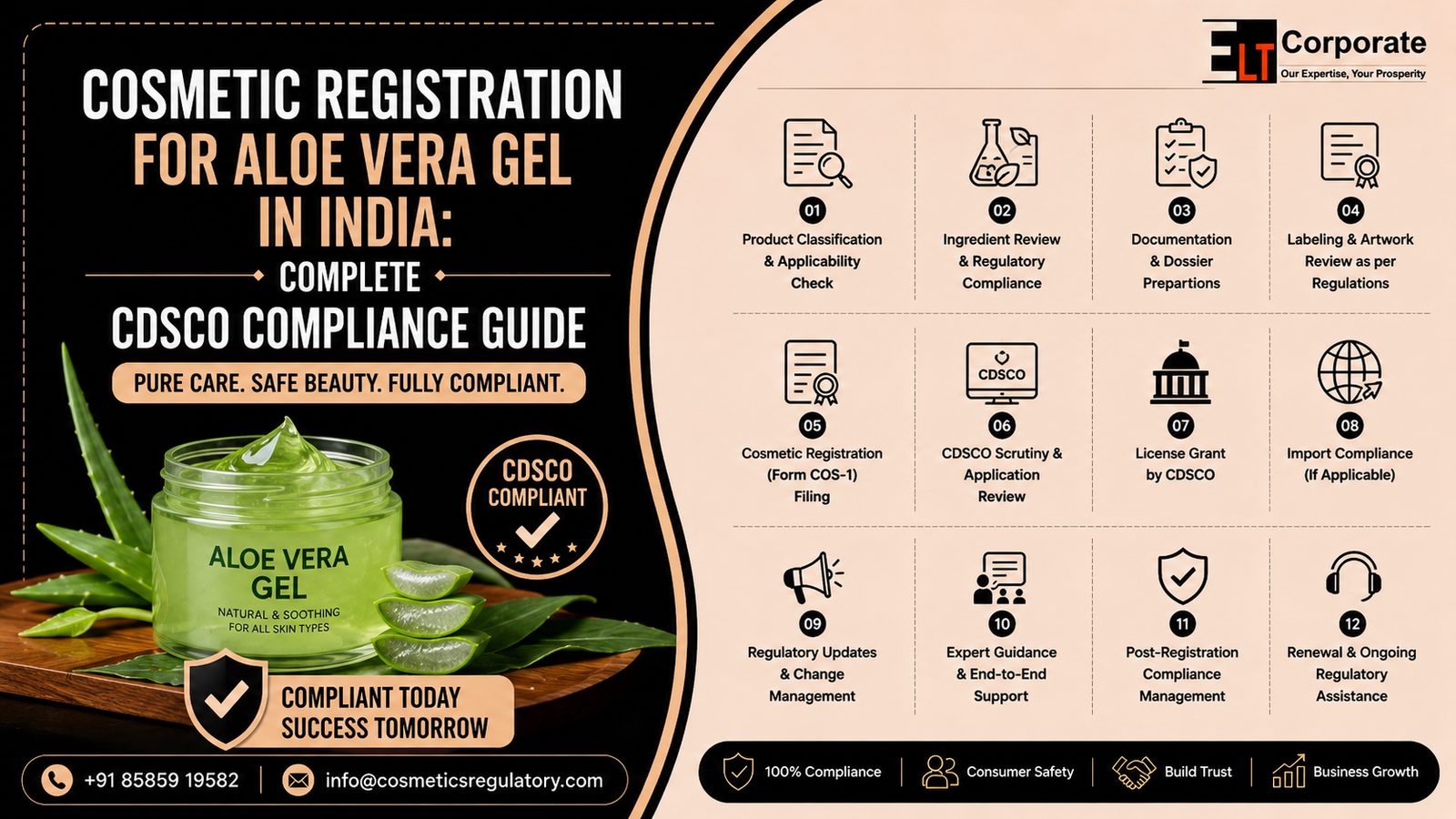
Cosmetic Registration Process
Step 1: Collect Required Documents
Get all the necessary documents from the manufacturer in another country.
Step 2: Verify Product Compliance
Check ingredients, labels on products’ packaging, claims, and ingredients to ensure that they are in compliance with Indian cosmetics rules.
Step 3: Submit the Registration Application
Complete the application with the required documents.
Step 4: CDSCO Review
The regulator reviews the information submitted and confirms that it is in compliance with any applicable cosmetic regulations.
Step 5: Registration Approval
After a successful review, the product is legally importable and is available for sales in India.
Labeling Requirements for Aloe Vera Gel
Products made from imported aloe vera gel must meet Indian cosmetic labeling specifications.
The label of the product should usually contain:
- Product Name
- Manufacturer Name and Address
- Country of Origin
- Batch Number
- Manufacturing Date
- Expiry Date
- Net Quantity
- Ingredient List
- Importer Details
- Directions for Use
- Necessary Warnings
A proper labeling system helps reduce customs objections and enhances regulatory compliance.
Common Compliance Challenges
Importers often experience delays due to the following:
- Missing documentation
- Incorrect ingredient declarations
- Non-compliant labels
- Incomplete authorization documents
- Untrue product classification
- Packaging errors
Documentation that is well-organized can greatly reduce the time it takes to approve.
Tips for Importers
Before importing aloe vera gel into India:
- Check the ingredients of the product.
- Check that cosmetic claims are compliant with the regulations.
- Make sure you are following the labeling guidelines.
- Keep manufacturer documents updated.
- Submit complete documentation.
- Check with regulatory experts prior to importing.
These steps are for making registration easier.
Why Professional Regulatory Support Matters
The process of cosmetic registration involves technical documentation as well as regulatory compliance. Even minor documentation errors may delay approval.
Expert consultants can assist with:
- Documentation preparation
- CDSCO conformity
- Label review
- The regulatory guidance
- Processing of applications faster
This helps businesses concentrate on the launch of their product while still ensuring compliance.
Conclusion
The popularity of aloe vera gel is growing throughout the Indian skin care market. Businesses that import these products must ensure that they are in compliance with Indian cosmetic laws before launch commercially.
The cosmetic registration process for aloe vera gel can help businesses to import legally imported products to comply with CDSCO requirements to avoid customs delays and increase trust with customers. With precise documentation and adhering to the procedure for registration, importers can effectively introduce aloe vera gel-based products to India. Indian market.
👉 Get a Free Cosmetic Registration Consultation
Frequently Asked Questions (FAQs)
Q1. Does aloe vera gel need registration for cosmetics in India?
Yes. The import of aloe vera gel intended for cosmetic purposes generally requires registration as a cosmetic product prior to its being sold and imported.
Q2. Which body supervises registration of cosmetics?
The Central Drugs Standard Control Organization (CDSCO) regulates imports of cosmetics in India.
Q3. What are the documents required?
Common documents are documents that are commonly used, including the Power of Attorney, Free Sale Certificate, ingredient list, labels for products, manufacturing information, and authorization documents.
Q4. Is aloe vera gel able to be brought into the country without cosmetic registration?
No. Importing cosmetic products that do not have the necessary registration could result in customs detention or rejection or legal actions.
Q5. Why is it important to register cosmetically?
It guarantees legal imports, compliance with regulations, more efficient customs clearance, and a greater level of trust among consumers.