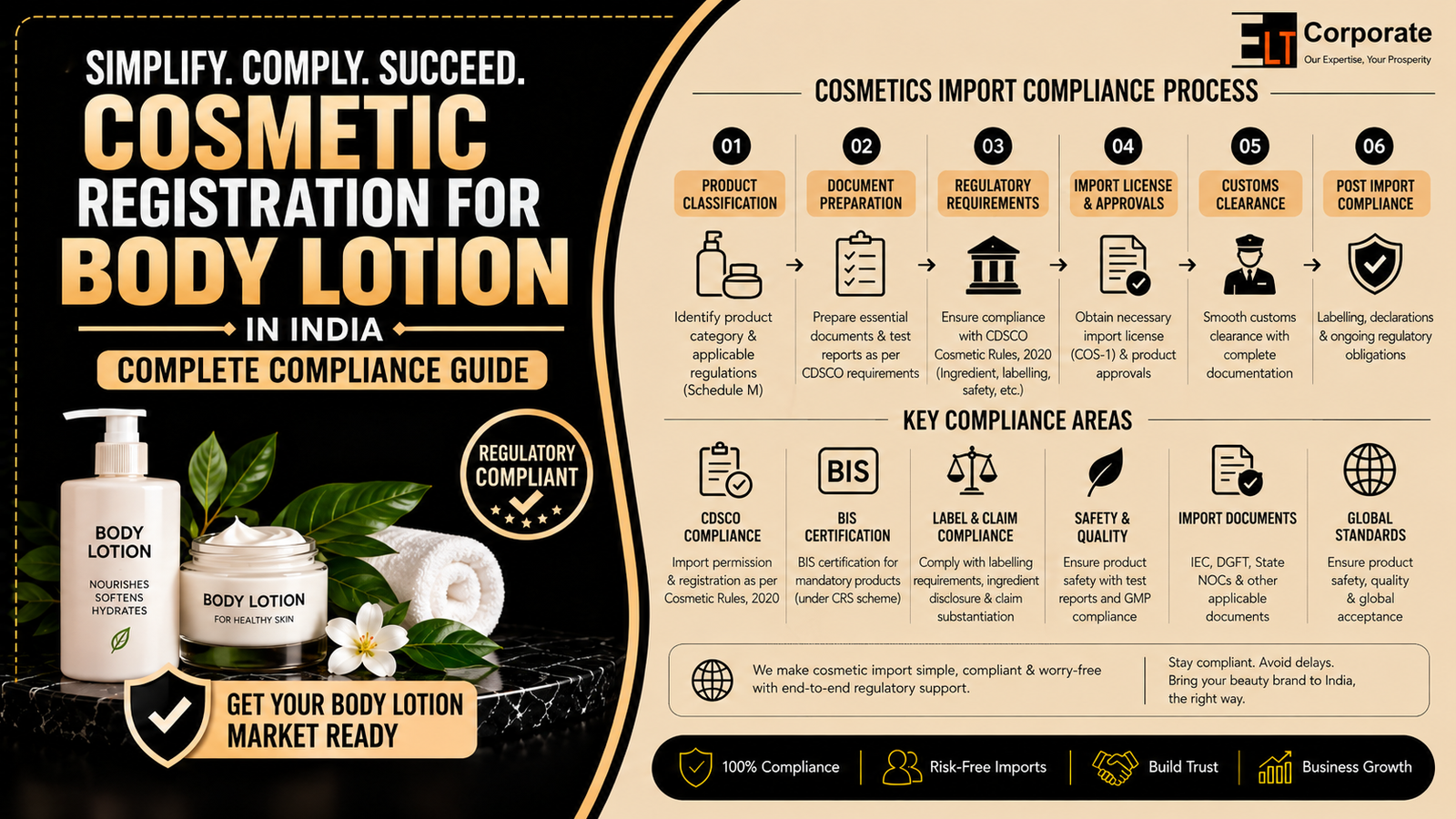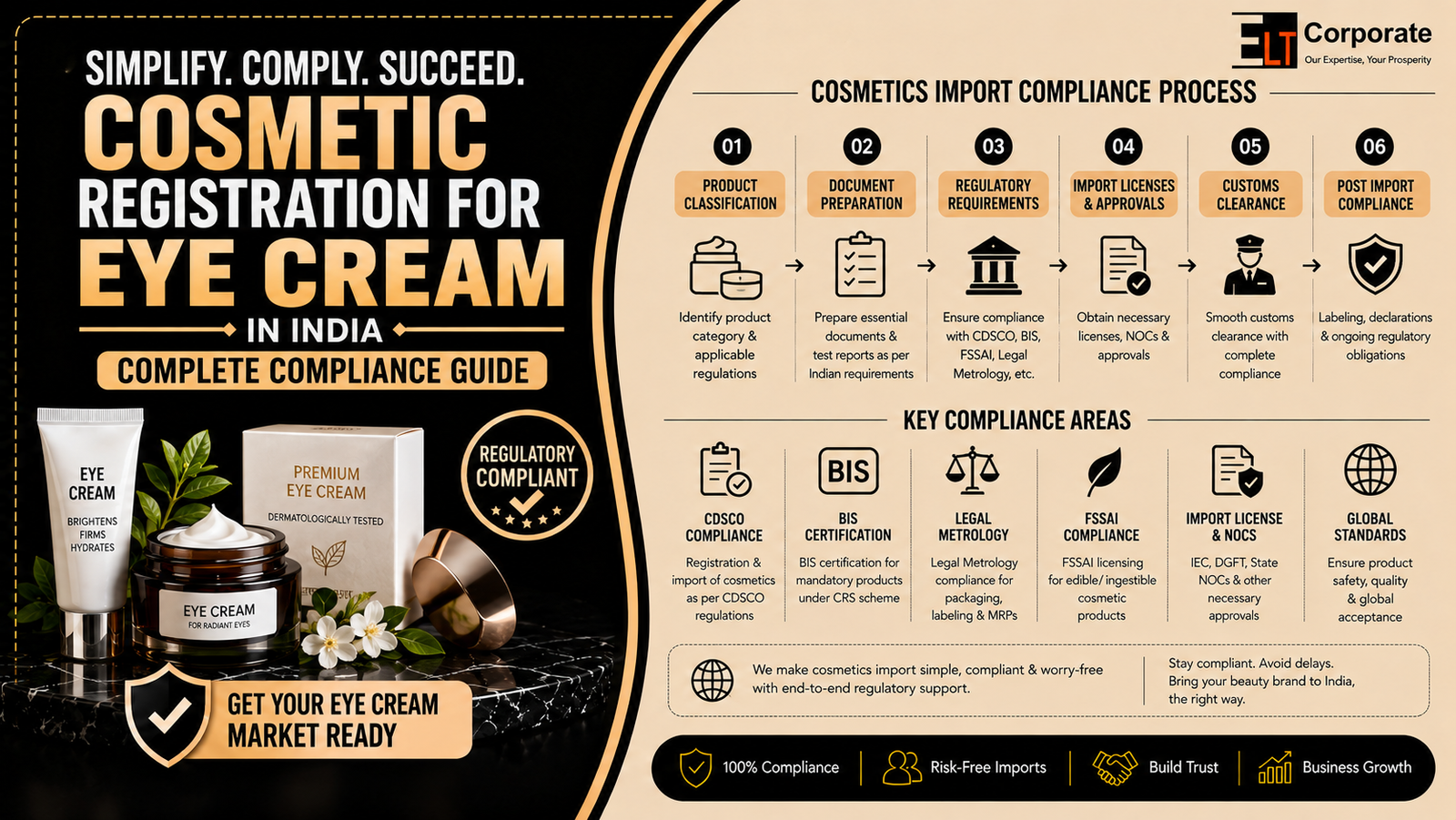
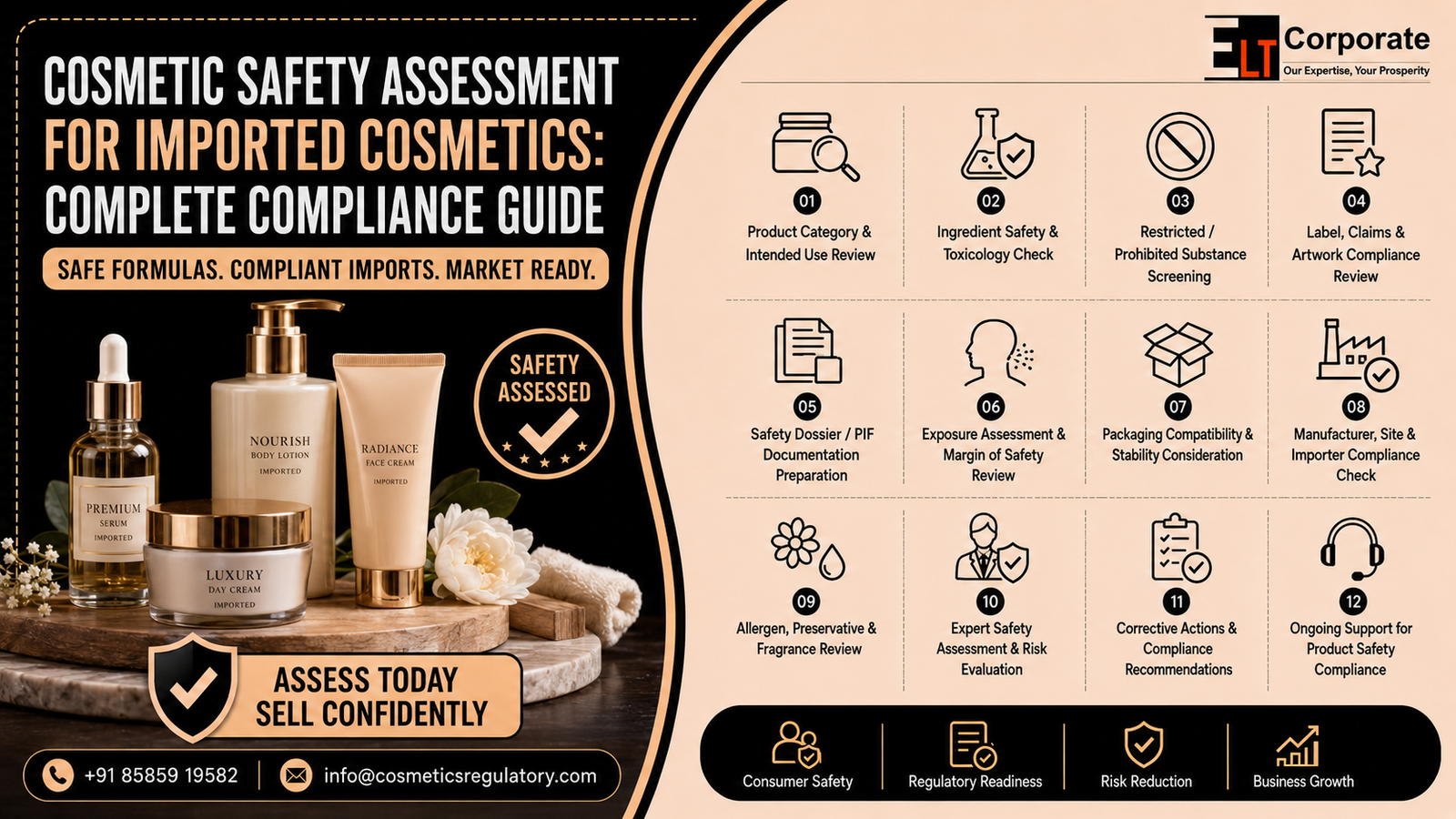

The Indian cosmetics and personal care market continues to expand quickly, creating huge opportunities for international brands in the field of cosmetics. But, before cosmetics imported from abroad are allowed to be sold legally in India, the companies need to ensure that their products comply with the safety and regulations. An assessment of the safety of cosmetics for imports of cosmetics is an important measure to prove that the products are safe for customers and meet the standards from the Central Drugs Standard Control Organization (CDSCO).
If you’re an importer or manufacturer from abroad or an authorized Indian agent, knowing the process for assessing cosmetic safety will help you avoid regulatory delays as well as product rejections and concerns about compliance.
In this article we’ll outline why it’s important to have cosmetic safety tests as well as the essential guidelines, documentation required, and the best practices to import products for cosmetic use into India.
Need Help with Cosmetic Safety Assessment?
Our regulatory experts help you meet CDSCO safety and compliance requirements for imported cosmetics.
Get Expert AssistanceCosmetic Safety Assessment at a Glance
| Aspect | Details |
| Assessment Purpose | Examine the quality of imported cosmetics prior to introducing them into India |
| Regulatory Authority | Central Drugs Standard Control Organization (CDSCO) |
| Applicable Regulations | Drugs and Cosmetics Act, 1940 & Cosmetics Rules, 2020 |
| Applicable Products | Imported haircare, skincare products, makeup, perfumes, personal care products, as well as other cosmetics |
| Who Should Comply | Importers and manufacturers from abroad along with authorized Indian agents |
| Documents Required | Ingredient list, formulation of the product manufacturing information and labels, safety information and certificates of support |
| Main Objective | Make sure that cosmetics have been tested for safety by consumers and in line with Indian rules |
| Benefits | Faster approval of regulatory requirements, less risks of compliance, and a more ease of importation |
What is a Cosmetic Safety Assessment?
An assessment of cosmetic safety is a scientific analysis carried out to determine if an item of cosmetics is safe for the intended usage. The assessment evaluates the ingredients’ formulation and manufacturing methods along with product labeling and safety data available to identify potential dangers for consumers.
For cosmetics imported from abroad, the assessment helps ensure compliance with Indian regulations and will help ensure that the products coming into the Indian market comply with acceptable safety standards.
What is the purpose of a cosmetic safety evaluation? crucial?
Conducting a safety assessment of cosmetics for imported cosmetics can provide a variety of benefits, such as:
- Provides assurance of product safety prior to its being imported.
- It supports the compliance in accordance with CDSCO requirements.
- Reduces the risk of rejection.
- Helps prevent regulatory delays.
- Guards the health and safety of consumers.
- Establishes trust with distributors as well as customers.
- Helps facilitate seamless customs clearance.
A well-documented safety assessment can help make the process of approving imports more efficient.
Who Needs a Cosmetic Safety Assessment?
The importance of safety assessments is for those involved in importing cosmetics, such as
- Foreign cosmetics manufacturers
- Authorized Indian agents
- Cosmetic importers
- International beauty brands are entering the Indian market
- Companies launch new cosmetic products
Products That May Require Safety Assessment
A variety of cosmetic products imported from the United States must be screened for safety like the following:
- Creams for the face
- Serums
- Sunscreens
- Lipsticks
- Lip balms for the lips
- Foundations
- Hair oils
- Hair serums
- Shampoos
- Conditioners
- Masks for faces
- Toners
- Body lotions
- Perfumes
- Deodorants
- Products for makeup
- Cosmetics for baby care
Documents Required for Cosmetic Safety Assessment
The documentation required by law may vary according to the product; however, businesses are generally required to keep the following:
- Product formulation details
- Complete ingredient list
- Information about the manufacturing process
- Specifications for the product
- Labels for products
- Safety information for ingredients
- Manufacturing License
- Free Sale Certificate
- Test reports for the product (where appropriate)
- Declaration of conformity
- Registration documents for companies
Maintaining complete and up-to-date documentation aids in the process of reviewing regulatory approval.
Cosmetic Safety Assessment Process
Step 1: Review Product Ingredients
Every ingredient is scrutinized to determine if it’s allowed for use in cosmetics and if it is in compliance with any applicable regulatory requirements.
Step 2: Evaluate Product Formulation
Experts examine the composition of ingredients and evaluate whether the formulation is appropriate for its cosmetic use.
Step 3: Verify Product Labels
The labels of products are scrutinized to ensure that they contain all the mandatory information required by Indian regulations on cosmetic labels.
Step 4: Review Manufacturing Information
The manufacturing facility and the production process are analyzed to confirm that the products are produced in accordance with the appropriate quality standards.
Step 5: Compile Supporting Documentation
Every technical document, security data declarations, certificates, and other documents are prepared prior to regulatory submission.
Step 6: Regulatory Compliance Review
The entire documentation package is reviewed to ensure that the imported cosmetic is compliant with the regulations in the Drugs and Cosmetics Act, 1940, as well as the Cosmetics Rules, 2020.
Common Challenges During Cosmetic Safety Assessment
Business owners often have problems like the ones listed below:
- Incomplete ingredient information
- Incomplete safety documentation
- Labels for products that are not compliant
- Incorrect ingredient declarations
- Old manufacturer certificates
- Technical documentation is inconsistent.
- Late delivery of supporting documents
A well-planned approach can help you avoid common compliance problems.
Best Practices for Importers
To be sure of a successful cosmetic safety test:
- Maintain complete product documentation.
- Verify the ingredient’s compliance prior to making an import.
- Check that labels comply with Indian regulations.
- Update manufacturer certificates regularly.
- Be sure to have safety information readily accessible.
- Examine the technical documents thoroughly before the submission.
- Consult with experienced and knowledgeable regulatory consultants whenever needed.
These practices can reduce the risk of delays due to regulatory requirements.
Why Professional Regulatory Support Matters
The process of assessing the safety of cosmetics includes documentation of a technical nature as well as evaluation of ingredients and the need to ensure compliance with regulations. Expertly trained regulatory consultants can help with:
- Examining formulations of products
- Checking ingredient compliance
- Preparing technical documentation
- Verifying the labels of products
- Supporting CDSCO compliance
- Reducing approval delays
Assistance from professionals can help companies to navigate the regulatory process with greater efficiency.
Need Help with Cosmetic Safety Assessment?
Our CDSCO experts are ready to help you with cosmetic safety assessment, documentation, and compliance.
💬 WhatsApp: +91 85859 19582 Get Expert AssistanceConclusion
A cosmetic safety evaluation for imports of cosmetics is an important element of ensuring regulatory compliance and safety for consumers in India. Through assessing the ingredient list and formulas, ensuring full documentation, and adhering to CDSCO specifications, businesses can greatly increase the odds of a smooth process for import.
If you’re reimporting products for hair care, makeup, skin care, or personal products for personal care, investing to conduct a thorough safety audit can help reduce compliance risks and help ensure long-term business growth within your Indian beauty market.
Frequently Asked Questions (FAQs)
Q1. What is a cosmetic health assessment?
A scientific analysis that determines if a product is appropriate for the intended use and is in compliance with applicable requirements of regulatory authorities.
Q2. Who requires a cosmetic safety evaluation in the case of imported products?
Cosmetic importers, foreign manufacturers, and authorized Indian agents, as well as international cosmetic brands that import their merchandise into India.
Q3. What types of documents are typically required?
Ingredient list, formulation of the product manufacturing information Labels for the product Safety information, free sale certificates, manufacturing licenses, and corporate documents.
Q4. What makes a safety evaluation vital?
It ensures the safety of products, helps with CDSCO compliance, minimizes the risk of regulatory violations, and helps facilitate more efficient import approvals.
Q5. Do regulatory consultants help in assessing the safety of cosmetics?
Yes. Consultants from the regulatory field can assist with reviewing documents, confirm the ingredient’s compliance, write technical files, and aid in the entire compliance process.
Need Help with Cosmetic Regulatory Compliance?
Our experts provide end-to-end support for CDSCO registration, cosmetic import licensing, documentation, and regulatory compliance. Contact us today for expert guidance.
Get Expert Assistance