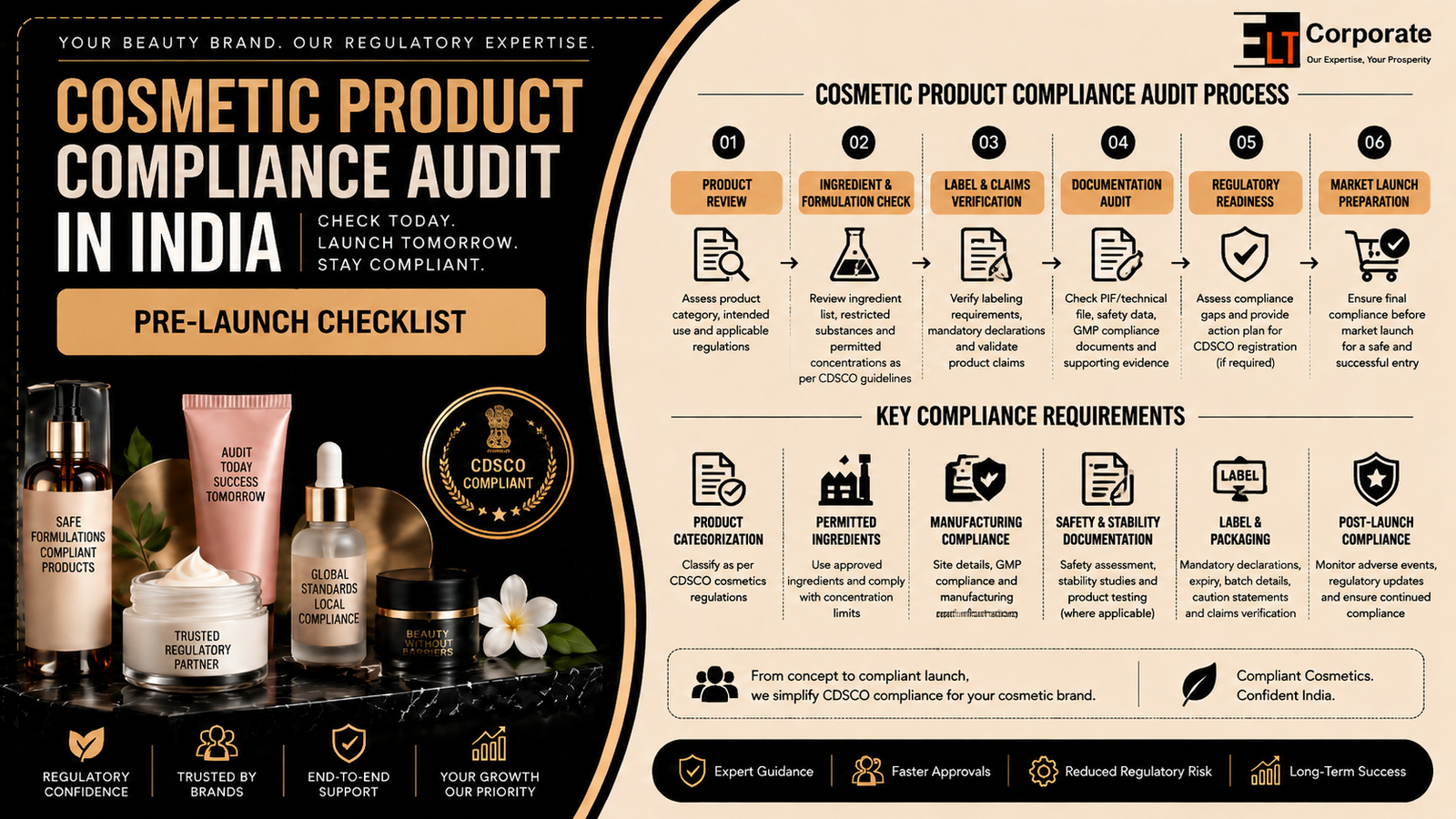
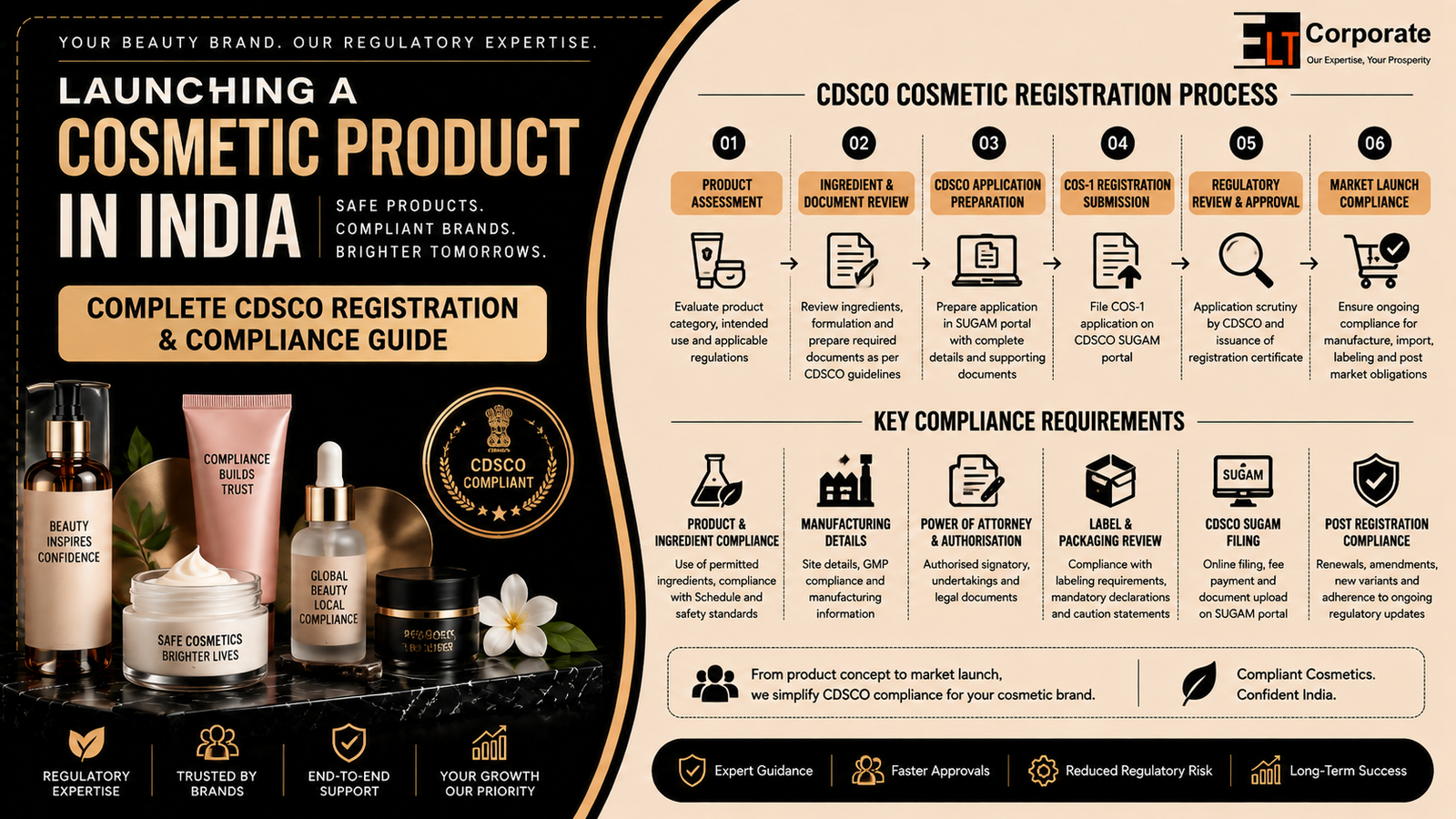

Launching a cosmetic product in India requires more than creating a good formula, attractive packaging, and an effective marketing strategy. Before a cosmetic product is manufactured, imported or marketed, businesses need to understand the applicable CDSCO registration, cosmetic licensing, documentation, labelling, testing and claims compliance requirements.
India’s cosmetic regulatory framework is primarily governed by the Drugs and Cosmetics Act, 1940, and the Cosmetics Rules, 2020. Businesses planning to enter the Indian cosmetics market should identify the correct regulatory route before manufacturing, importing, or commercially launching their products.
Whether you are a startup, private-label brand, Indian manufacturer, foreign manufacturer, or cosmetic importer, early regulatory planning can help reduce documentation errors and packaging changes and avoid compliance delays.
🚀 Launching a Cosmetic Product in India?
Get expert support for CDSCO registration, cosmetic licensing, documentation, labelling and compliance.
Get Free Consultation 💬 WhatsApp an ExpertNeed help with your cosmetic product launch? Talk to our regulatory experts today.
What Is Required for Launching a Cosmetic Product in India?
The regulatory requirements can vary depending on the product and business model.
Before launching a cosmetic product, a business should determine:
- Whether the product will be manufactured in India or imported
- The applicable cosmetic category
- Product formulation and ingredients
- Manufacturing arrangements
- Applicable registration or licensing requirements
- Product packaging and labeling requirements
- Product claims and advertising language
- Required technical and regulatory documents
- Applicable testing and safety requirements
The regulatory route for an Indian cosmetic manufacturer can be different from the route applicable to an importer of finished cosmetics.
1. Determine Whether Your Product Is a Cosmetic
The first step in launching a cosmetic product in India is understanding how the product is classified under the applicable regulations.
Cosmetic products can include:
- Face creams
- Moisturisers
- Serums
- Cleansers
- Sunscreens
- Shampoos
- Conditioners
- Hair masks
- Body lotions
- Lip-care products
- Makeup products
- Bath and personal-care products
However, the product name alone does not determine its regulatory position. Its intended use, formulation, presentation, and claims should also be considered.
For example, a product marketed purely for cosmetic purposes may have a different regulatory position from a product promoted as treating or curing a medical condition.
Therefore, businesses should review the product’s intended use and claims before finalizing its launch strategy.
2. Decide Whether You Will Manufacture or Import the Cosmetic
One of the most important decisions is determining how the product will enter the Indian market.
Manufacturing Cosmetics in India
If you plan to manufacture cosmetics in India for sale or distribution, you need to evaluate the applicable cosmetic manufacturing license requirements.
The manufacturing setup may involve requirements relating to:
- Manufacturing premises
- Technical staff
- Equipment
- Testing facilities
- Documentation
- Quality control
- Manufacturing practices
- Regulatory compliance
For businesses planning their own manufacturing facility, the COS-8 License in India is an important regulatory topic to understand.
The COS-8 framework is relevant to businesses manufacturing cosmetics for sale or distribution at their manufacturing premises. The applicable licensing requirements should be evaluated according to the actual manufacturing arrangement.
Importing Cosmetics into India
Foreign cosmetic manufacturers and Indian importers follow a different regulatory route.
Imported cosmetics are subject to the applicable CDSCO cosmetic registration requirements before commercial import into India.
If you are planning to import skincare, haircare, makeup, or other cosmetic products from countries such as South Korea, the USA, the UK, Japan, or European markets, the Indian regulatory requirements should be reviewed before shipment.
For businesses starting with imported cosmetics, understanding the SUGAM Portal for CDSCO Cosmetic Registration is particularly useful because applicable cosmetic registration applications are submitted through the online regulatory system.
3. Prepare the Documents Required for Cosmetic Registration
Documentation is one of the most important parts of the cosmetic compliance process.
Depending on the product and regulatory route, documents may include:
- Product details
- Manufacturer details
- Manufacturing-site information
- Product formulation information
- Ingredient information
- Product specifications
- Label artwork
- Packaging details
- Safety and testing information
- Free Sale Certificate or equivalent supporting documents, where applicable
- Authorisation documents
- Product claims and supporting information
- Government fee/payment records
- Other documents specified under the applicable regulatory process
For imported cosmetics, businesses should prepare and cross-check the documents before submitting their application.
For a detailed document checklist, see our guide on Documents Required for Cosmetic Registration in India.
This is especially important for foreign manufacturers because documents may come from different countries, authorities, and manufacturing facilities.
Why Is Documentation Important?
Incorrect, incomplete, or inconsistent documents can result in regulatory queries and additional work during application processing.
Product information should therefore remain consistent across:
- Application forms
- Product documents
- Manufacturer documents
- Labels
- Free Sale Certificates
- Authorisation documents
- Supporting declarations
A document review before filing can help identify inconsistencies early.
4. Review the Cosmetic Formula and Ingredients
Before manufacturing or importing a cosmetic product, the formulation should be reviewed against the applicable Indian requirements.
The review may consider:
- Ingredient names
- Ingredient concentration
- Restricted ingredients
- Prohibited ingredients
- Product category
- Intended use
- Applicable standards
- Safety information
- Product specifications
The Cosmetics Rules, 2020, provide the regulatory framework for cosmetics in India.
This step is particularly important for imported and private-label cosmetics because a formulation developed for another market may still require an Indian regulatory review before the product is marketed in India.
5. Make Sure Your Cosmetic Label Is Compliant
Packaging and labeling are important parts of cosmetic compliance.
Before finalizing your packaging artwork, review applicable information such as
- Product name
- Net quantity
- Manufacturer details
- Manufacturing information
- Batch or lot information
- Use-before or expiry information, where applicable
- Ingredient declaration
- Directions for use
- Warnings and precautions
- Importer information for applicable imported cosmetics
- Other mandatory declarations
Why Should You Review the Label Before Printing?
One common mistake is printing large quantities of packaging before completing the regulatory review. If mandatory information is missing or incorrectly presented, the business may need to change the artwork or reprint the packaging.
Therefore, it is better to conduct a cosmetic label compliance review before mass printing. This becomes particularly important for startups and private-label brands launching their first cosmetic products.
6. Review Cosmetic Claims Before Marketing
Product claims should be reviewed before the product is launched.
Claims can appear on:
- Product packaging
- Brand websites
- Amazon listings
- E-commerce platforms
- Advertisements
- Influencer campaigns
- Product brochures
- Promotional materials
Under the applicable cosmetic framework, businesses should avoid false or misleading claims.
Claims such as
- Acne treatment
- Hair growth
- Scar removal
- Pigmentation treatment
- Wrinkle removal
- Disease treatment
May require careful regulatory assessment depending on how they are presented and substantiated.
For a detailed understanding of this area, businesses can also review our Cosmetic Claims Compliance resources. A cosmetic product can have a suitable formulation but still create compliance concerns because of the way its benefits are advertised.
🔍 Not Sure Whether Your Product Meets CDSCO Requirements?
Get professional assistance with registration, documentation, labelling, claims and cosmetic compliance before launch.
🚀 Get Free Consultation 💬 WhatsApp an Expert✔ CDSCO Registration ✔ Documentation ✔ Compliance Support
7. Understand the CDSCO SUGAM Registration Process
For applicable cosmetic registration applications, businesses need to understand the CDSCO SUGAM portal and the relevant application procedure.
The official CDSCO Cosmetics Division provides information and regulatory resources relating to cosmetics.
The online process can involve:
- Creating the applicant account
- Selecting the relevant application
- Providing applicant details
- Providing manufacturer details
- Adding product information
- Uploading supporting documents
- Paying the applicable government fee
- Submitting the application
- Responding to regulatory queries or discrepancies, if raised
- Monitoring the application status
For a step-by-step explanation, read our SUGAM Portal for CDSCO Cosmetic Registration: Complete Guide.
Why Is SUGAM Important?
For businesses importing cosmetics into India, understanding the online application process before preparing documents can make the filing process more organized.
Applicants should ensure that the information entered online matches the supporting documents and product labels.
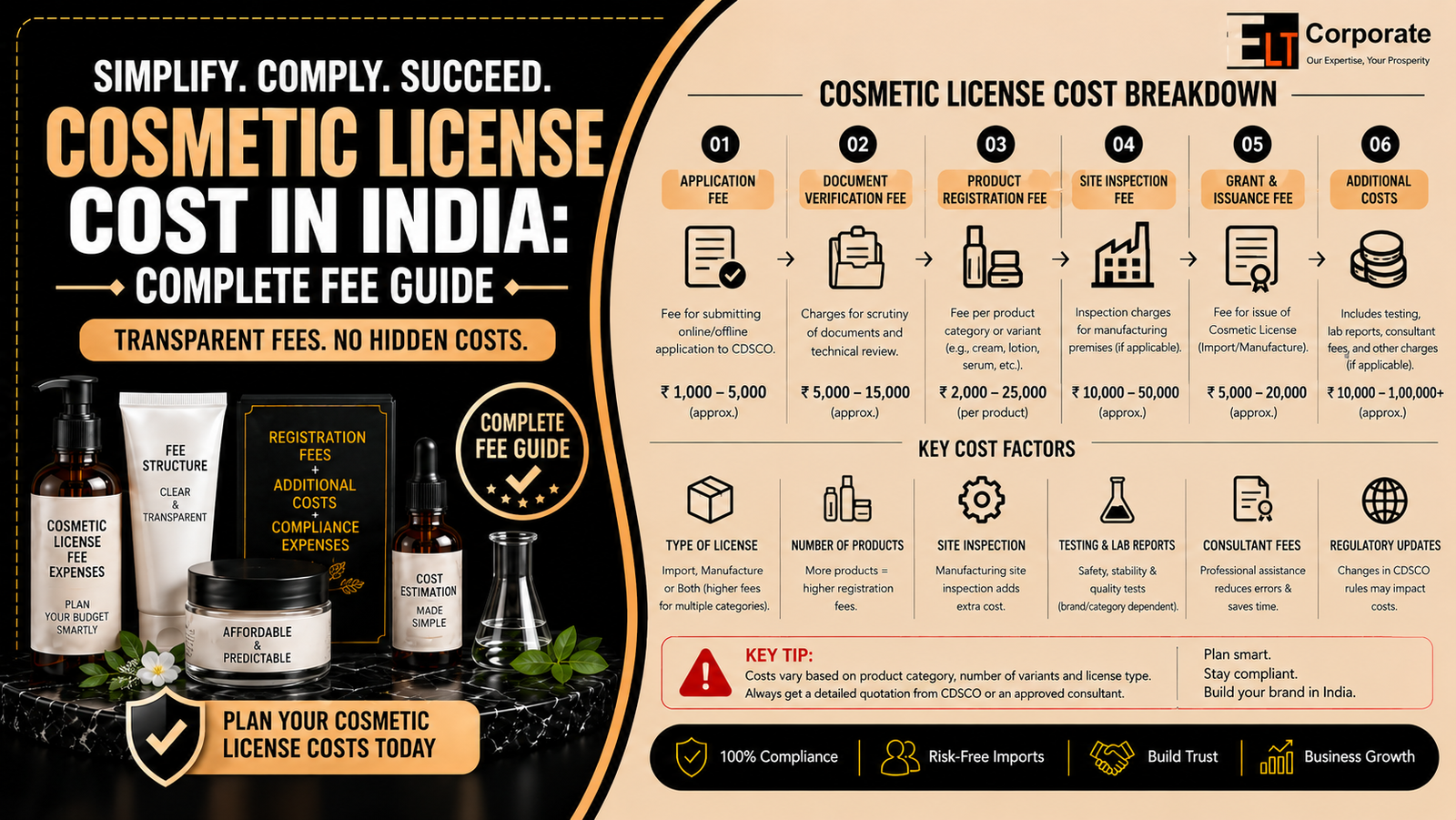
8. Understand the Cosmetic License Cost Before Launch
Budgeting is another important part of launching a cosmetic product.
The applicable cost can depend on:
- Manufacturing or import activity
- Number of products
- Product categories
- Variants
- Manufacturing sites
- Government fees
- Testing
- Documentation
- Packaging
- Technical staff
- Manufacturing infrastructure
- Professional regulatory support
There is therefore no single fixed cost that applies to every cosmetic business.
Before preparing your launch budget, check our detailed guide on cosmetic license costs in India.
This can help you understand the difference between statutory government fees and the broader cost of establishing a compliant cosmetic business.
9. Check Product Testing and Safety Requirements
Product safety should be considered before commercial launch.
Depending on the product and applicable requirements, businesses may need information relating to:
- Product specifications
- Ingredient safety
- Microbiological quality
- Stability
- Testing
- Quality standards
- Technical documentation
The applicable requirements should be determined according to the specific cosmetic product rather than assuming that every cosmetic follows exactly the same testing pathway.
Testing and supporting technical documentation can be particularly relevant when developing new formulations or importing products from overseas manufacturers.
10. Plan Cosmetic Compliance Before Manufacturing or Importing
Regulatory compliance should not be treated as the final step before selling a cosmetic product.
A practical launch sequence is
Product Concept → Formula Review → Regulatory Classification → Documentation → Label Review → Registration/Licensing → Manufacturing/Import → Marketing → Commercial Launch
Following this sequence can help businesses identify regulatory issues before spending heavily on:
- Packaging
- Manufacturing
- Inventory
- Advertising
- Influencer marketing
- E-commerce listings
Early compliance planning can be especially useful for startups and brands launching multiple products.
Cosmetic Product Launch Checklist
Before launching a cosmetic product in India, review the following:
| Compliance Area | What to Check |
| Product Classification | Confirm the applicable regulatory category. |
| Formula | Review ingredients and applicable requirements. |
| Manufacturing | Check applicable manufacturing license requirements. |
| Import | Check applicable cosmetic registration requirements. |
| Documents | Prepare product and manufacturer documents. |
| Labelling | Review mandatory label declarations. |
| Claims | Review product and advertising claims. |
| Testing | Check applicable testing and safety requirements. |
| SUGAM | Submit the applicable online application where required. |
| Launch | Confirm compliance before commercial marketing. |
Common Mistakes When Launching a Cosmetic Product in India
1. Launching Before Completing Applicable Compliance
Businesses sometimes focus on branding and sales before identifying the applicable regulatory requirements.
2. Printing Packaging Too Early
Printing packaging before regulatory review can lead to unnecessary reprinting costs.
3. Using Problematic Cosmetic Claims
Claims on packaging, websites, and advertisements should be reviewed before publication.
4. Submitting Incomplete Documents
Missing or inconsistent documents can result in regulatory queries and additional processing time.
5. Assuming Foreign Compliance Is Automatically Valid in India
A cosmetic product that is legally marketed in another country may still need to meet applicable Indian requirements before being imported or marketed in India.
6. Ignoring E-Commerce and Social Media Claims
Compliance should not be limited to the physical product label. Online product descriptions and promotional claims should also be reviewed.
How a Cosmetic Regulatory Consultant Can Help
For a new cosmetic brand, managing registration, documentation, labeling, and claims simultaneously can be challenging.
A cosmetic regulatory consultant can assist with areas such as
- Cosmetic registration
- Manufacturing license guidance
- Import registration
- Product documentation
- Ingredient compliance review
- Label review
- Claims review
- SUGAM application support
- Testing coordination
- Regulatory documentation
- Pre-launch compliance review
Professional regulatory assistance can be useful for startups, private-label brands, importers, manufacturers, and businesses launching multiple cosmetic products.
Who Needs Cosmetic Regulatory Support?
Regulatory support can be useful for:
- Cosmetic startups
- Skincare brands
- Haircare brands
- Makeup brands
- Private-label businesses
- Indian cosmetic manufacturers
- Foreign cosmetic manufacturers
- Cosmetic importers
- E-commerce cosmetic sellers
- Salon product suppliers
- Korean cosmetic brands
- International cosmetic brands
Whether you are launching one product or an entire cosmetic range, it is important to evaluate the applicable requirements before commercialization.
Frequently Asked Questions
Q1. Is CDSCO registration required for every cosmetic product?
The applicable regulatory requirement depends on factors such as whether the cosmetic is manufactured in India or imported and the specific regulatory route applicable to the product.
Q2. Do imported cosmetics require registration before import?
Imported cosmetics are subject to the applicable Indian regulatory requirements, including the relevant registration process where required.
Q3. Do cosmetic labels need regulatory review?
Yes. Businesses should review applicable mandatory declarations and other label requirements before finalizing packaging.
Q4. Are cosmetic claims regulated in India?
Yes. Cosmetic claims should not be false or misleading and should be reviewed according to the applicable regulatory requirements.
Q5. Can I use a third-party manufacturer for my cosmetic brand?
Yes. Businesses can work with third-party manufacturers, but the applicable manufacturing license and regulatory responsibilities should be established before production.
Q6. Can a regulatory consultant help with cosmetic registration?
Yes. Regulatory consultants can assist with classification, documentation, application preparation, label review, claims review, and other compliance activities.
Ready to Launch Your Cosmetic Product in India?
Launching a cosmetic product successfully requires more than just product development and marketing. From cosmetic registration and licensing to documentation, formulation, labeling, testing, and claims compliance, every requirement should be reviewed before commercial launch.
If you are planning to launch a skincare, haircare, makeup, or personal-care product in India, getting regulatory support at the planning stage can help you understand the applicable requirements and prepare your product for launch.
🚀 Talk to Our Cosmetic Regulatory Experts Today
Get professional assistance with your cosmetic registration, licensing, documentation, labelling, claims, and compliance requirements.
Launch your cosmetic product with the right regulatory guidance.
🚀 Get Free Consultation 💬 WhatsApp an Expert📞 Call: +91 85859 19582