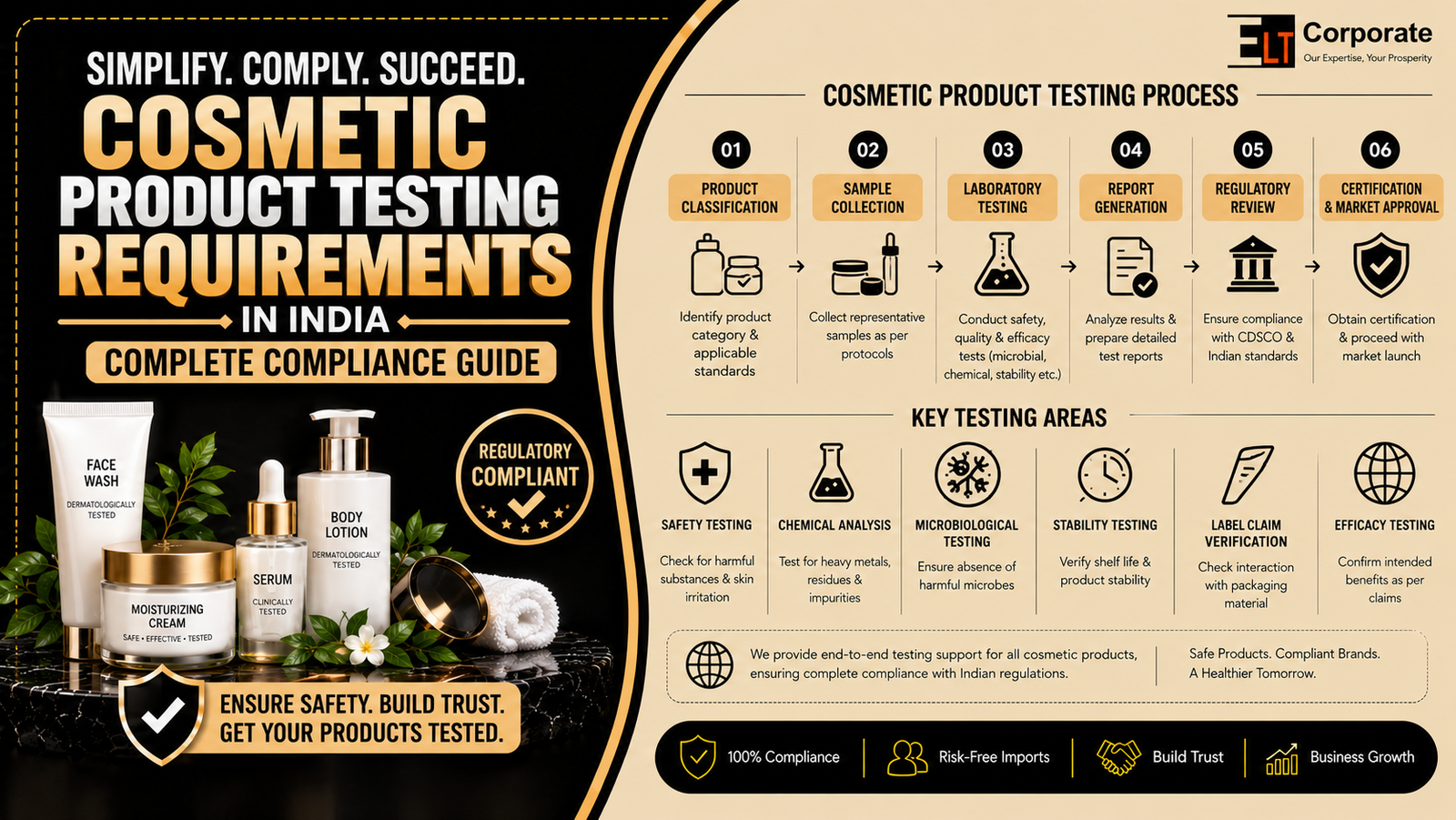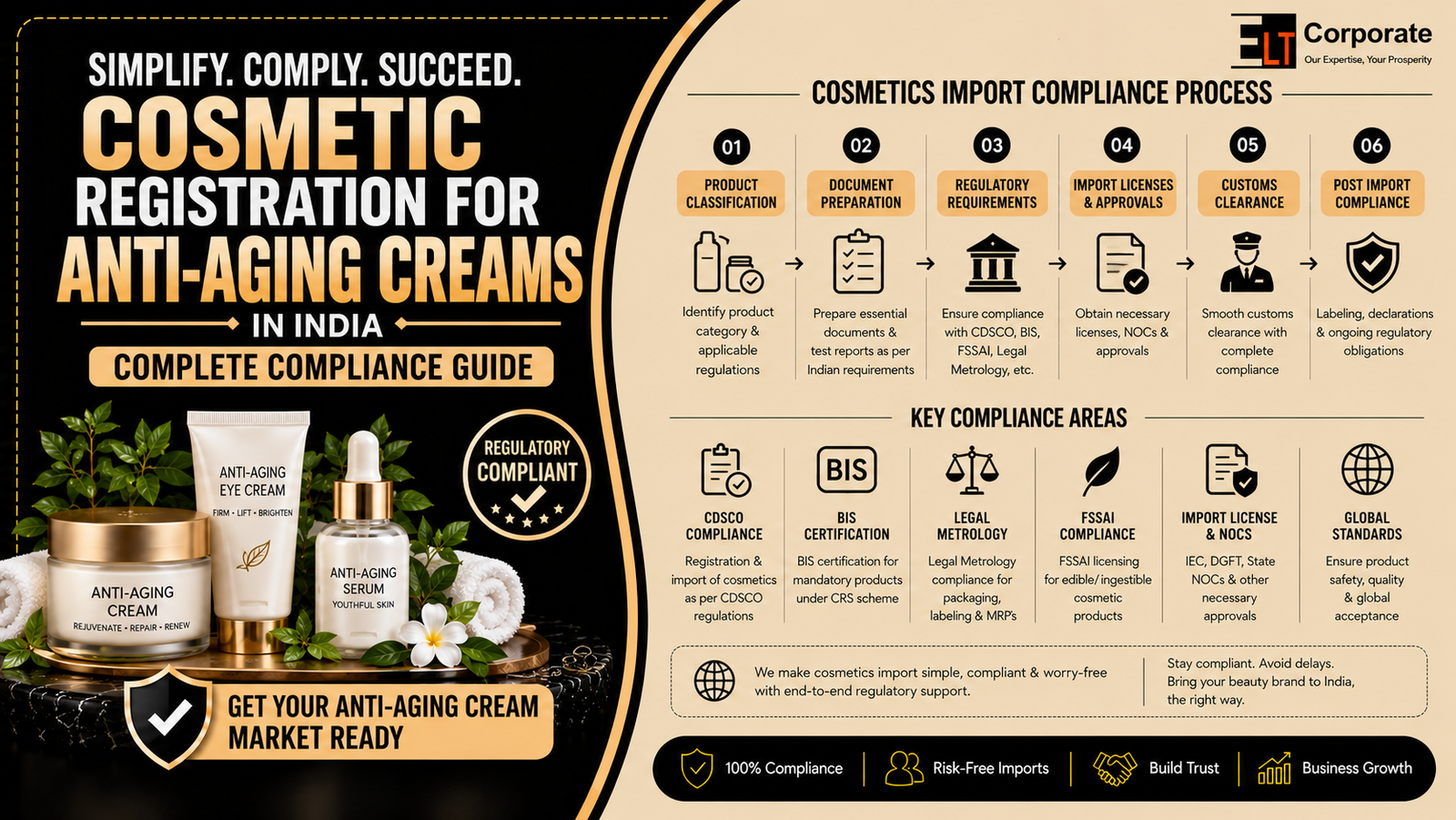
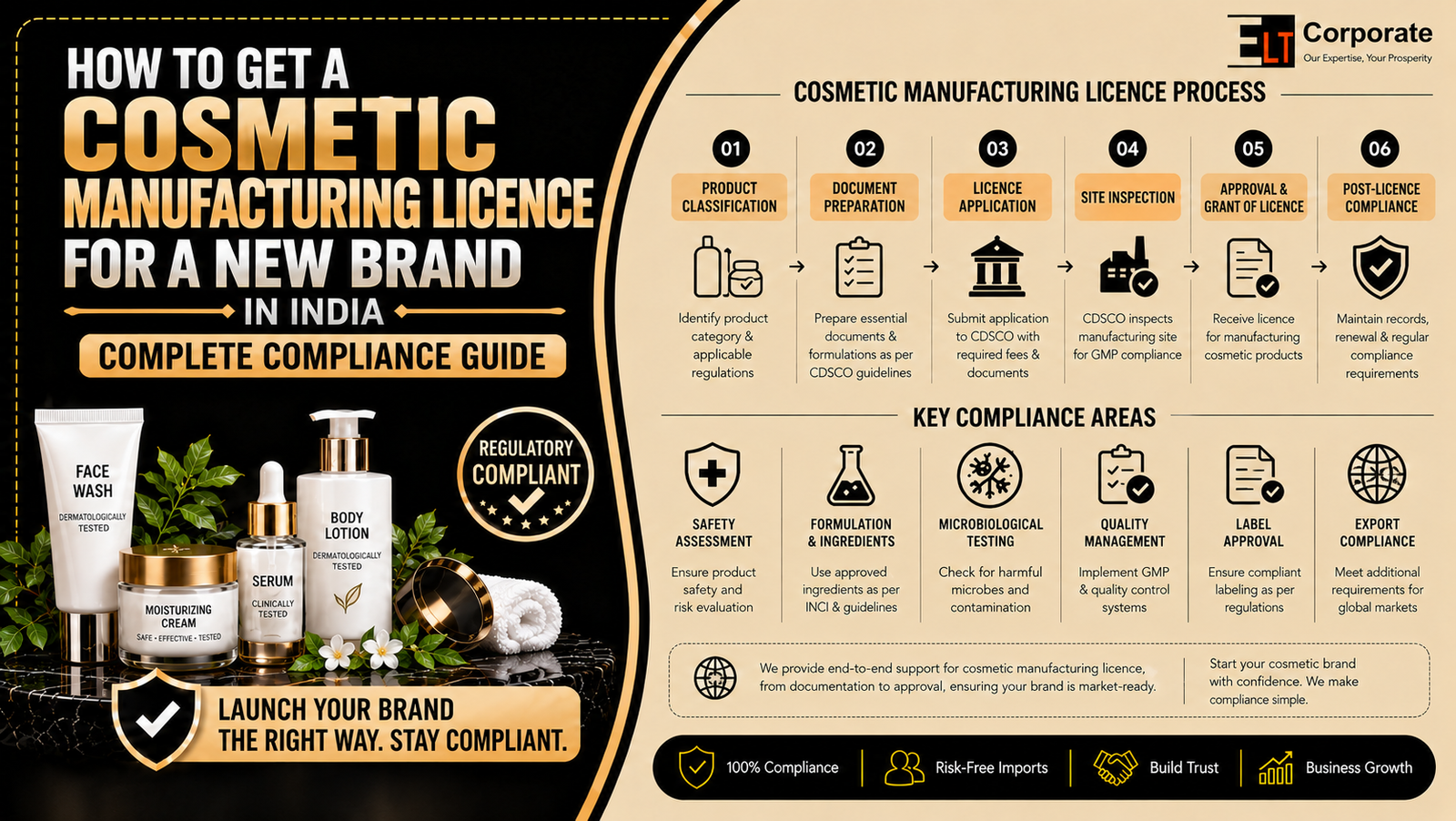

A cosmetic manufacturing licence for a new brand is an important requirement to understand before launching a skincare, haircare, or personal care brand in India. Whether you plan to manufacture face creams, body lotions, shampoos, serums, or other beauty products, choosing the correct licensing route is an essential first step.
The cosmetic manufacturing licence for the new brand process depends on how you plan to manufacture your products. You may establish your own manufacturing facility or work with an existing licensed cosmetic manufacturer. Each option has different documentation, infrastructure, and regulatory requirements.
Cosmetics Regulatory helps businesses understand cosmetic licensing, documentation, product compliance, and applicable regulatory procedures before launching their brands.
This guide explains the licensing process, required documents, applicable forms, common mistakes, and practical steps to help you plan your cosmetic business with greater confidence.
Building Your Own Cosmetic Brand?
Get guidance on manufacturing licences, documentation and compliance requirements before launching your products in India.
Explore Licence Services →What Is a Cosmetic Manufacturing License?
A cosmetic manufacturing licence is a regulatory authorization required for manufacturing cosmetics for sale or distribution in India. The process is governed by the Drugs and Cosmetics Act, 1940, and the Cosmetics Rules, 2020.
The application for a manufacturing licence is submitted to the relevant State Licensing Authority. Under the Cosmetics Rules, 2020, applicants generally use Form COS-5 for a manufacturing licence or Form COS-6 for a loan licence. The corresponding licenses are issued in Form COS-8 and Form COS-9, respectively.
You should understand the cosmetic manufacturing licence for new brand requirements before finalizing your manufacturing arrangement, product formulation, packaging, and launch budget.
For official information, refer to the CDSCO Cosmetics Rules, 2020.
Which Licensing Option Is Suitable for a New Cosmetic Brand?
A new brand does not necessarily need to build its own factory. Your licensing route depends on whether you manufacture products yourself or engage another manufacturer.
1. Establishing Your Own Manufacturing Facility
If you want to manufacture products at your own facility, you need to arrange suitable premises, manufacturing equipment, competent technical supervision, testing arrangements, and the required licence.
This option provides greater control over manufacturing operations, production planning, and quality procedures. However, it generally requires more investment, infrastructure, and ongoing compliance management.
2. Using a Third-Party Manufacturer
If you want to launch a brand without setting up a factory, you can explore manufacturing through an existing licensed cosmetic manufacturer.
Under this arrangement, the manufacturer produces your products according to the agreed formulation, specifications, and commercial terms. You should verify the manufacturer’s license, permitted products, manufacturing premises, quality systems, and labeling arrangements before placing an order.
The cosmetic manufacturing licence for new brand requirements should be assessed according to the actual manufacturing arrangement rather than assuming that every brand owner must own a factory.
3. Applying for a Loan Licence
A license may be appropriate when an applicant proposes to use another manufacturer’s licensed facilities, subject to the applicable regulatory conditions.
Form COS-6 is used to apply for a loan license, and the corresponding licence is issued in Form COS-9. Eligibility and documentation should be confirmed with the relevant state licensing authority before applying.
Cosmetics Regulatory can help you understand the differences between these routes and identify the documentation questions that need to be resolved before starting the application.
Step-by-Step Process to Get a Cosmetic Manufacturing Licence
Step 1: Finalize Your Product Category
First, identify the products you intend to launch. Your initial range may include moisturizers, face washes, body lotions, shampoos, conditioners, or other conventional cosmetics.
Prepare a list of products, formulations, intended uses, ingredients, and proposed claims. This helps determine the applicable product standards and whether any additional regulatory permission may be required.
If a product qualifies as a new cosmetic under the Cosmetics Rules, 2020, prior permission under Form COS-3 may be necessary. Do not assume that every newly launched brand or newly designed package automatically qualifies as a new cosmetic.
Step 2: Choose the Manufacturing Model
Decide whether you will manufacture products at your own facility, use a third-party manufacturer, or pursue a loan licence where applicable.
Your decision affects the premises documentation, manufacturing arrangements, technical supervision, and licence application.
Before spending money on equipment or production, review the cosmetic manufacturing licence for new brand requirements with reference to your proposed operating model.
Step 3: Arrange Compliant Manufacturing Premises
For an in-house manufacturing facility, the premises must meet the applicable requirements under the Seventh Schedule of the Cosmetics Rules, 2020.
Depending on the products and manufacturing operations, you may need appropriate production areas, equipment, storage arrangements, sanitation procedures, and quality-control facilities.
The exact requirements should be checked against the proposed product range and manufacturing activities. A residential or commercial address alone does not establish that the premises are suitable for licensed cosmetic manufacturing.
Step 4: Appoint Competent Technical Staff
Cosmetic manufacturing must take place under the direction and personal supervision of competent technical staff meeting the prescribed qualifications.
Rule 26 of the Cosmetics Rules, 2020, specifies qualifying educational or professional backgrounds, including certain pharmacy qualifications, chemistry qualifications, and a recognized degree in cosmetic technology.
Confirm the eligibility of the proposed technical person before submitting the application. Incorrect or incomplete qualification records can delay the review process.
Step 5: Prepare the Required Documents
Prepare the application and supporting records according to Part II of the Second Schedule of the Cosmetics Rules, 2020.
Commonly relevant documents and information may include:
- Applicant’s business constitution and identity details.
- Proof of the manufacturing premises and its legal possession.
- Details of the manufacturing activities and proposed products.
- Information about machinery, equipment, and testing arrangements.
- Details and qualification documents of competent technical staff.
- Required declarations and undertakings.
- Form COS-7 self-certification relating to compliance with applicable Good Manufacturing Practices and premises requirements.
- Prescribed application fee and any additional documents required by the State Licensing Authority.
The precise document list depends on the application type and circumstances. Verify the current requirements before filing.
Cosmetics Regulatory can assist businesses in organizing their documents and reviewing the proposed application for missing information.
Not Sure Which Documents You Need?
Get expert guidance for your cosmetic manufacturing licence application, documentation and compliance requirements.
Get Free Expert Consultation ↗Step 6: Submit the Application in the Correct Form
For a standard manufacturing license, the application is made in Form COS-5. For a loan license, the application is made in Form COS-6.
Applications are submitted through the identified online portal, which is operational, subject to the applicable procedure. The relevant State Licensing Authority is responsible for the manufacturing licence process.
The cosmetic manufacturing licence for new brand application should accurately reflect the applicant, premises, product range, manufacturing arrangement, and supporting documents.
COS-8 cosmetic manufacturing licence requirementsStep 7: Respond to Regulatory Queries and Inspection
The licensing authority examines the application and supporting records. It may identify missing information or require clarification.
The Cosmetics Rules, 2020, provide for scrutiny of applications and inspection to verify compliance. Applicants should therefore ensure that the premises, equipment, technical staffing, declarations, and actual manufacturing arrangements are consistent with the submitted information.
Once the required licence is granted, review its conditions and ensure the facility operates within the permitted scope.
Step 8: Check Labels and Product Compliance Before Launch
Obtaining a manufacturing licence does not remove the need to comply with product standards, labeling rules, packaging requirements, and applicable advertising restrictions.
Check the product name, manufacturer details, batch information, applicable dates, ingredient declaration, and other particulars required under Rule 34 and other applicable provisions.
Also review the proposed product claims. Claims suggesting medical treatment or making unsupported promises can create compliance concerns.
For additional guidance, visit the Cosmetics Regulatory contact page to discuss your proposed product and compliance requirements.
Documents Required for a Cosmetic Manufacturing Licence
The documentation for a cosmetic manufacturing licence for a new brand application should be prepared according to the selected licence route and applicable rules.
| Document or information | Why it matters |
| Business and applicant details | Identifies the applicant and legal entity |
| Premises documents | Establishes the location and legal possession of the facility |
| Product and manufacturing details | Explains the intended manufacturing activities |
| Machinery and equipment details | Supports assessment of manufacturing capability |
| Technical staff qualifications | Demonstrates eligibility for competent technical supervision |
| Testing arrangements | Shows how applicable quality and safety testing will be handled |
| Form COS-7 declaration | Addresses the prescribed GMP and premises compliance declaration |
| Application form and fee | Completes the prescribed filing requirements |
Additional records may be needed depending on the licence category, State Licensing Authority, and manufacturing model.
YOUR BRAND · OUR REGULATORY GUIDANCE
Start Your Cosmetic Brand with the Right Compliance Plan
Planning to launch your own skincare or beauty brand? Get guidance on licensing, documentation, product standards and labelling before you invest in your launch.
Connect with Cosmetics Regulatory to discuss your compliance requirements.

Build your brand on the right foundation.
How Much Does a Cosmetic Manufacturing Licence Cost?
The overall cost depends on the applicable government fee, manufacturing arrangement, premises, equipment, technical staffing, testing requirements, and professional assistance, if engaged.
A business setting up its own facility may have substantially higher initial costs than a brand using an established third-party manufacturer. However, third-party production still involves commercial manufacturing charges, product development, packaging, testing, and other business expenses.
Before estimating the cosmetic manufacturing licence for the new brand budget, distinguish between government licence fees and the total investment required to launch the products.
Check the current Third Schedule of the Cosmetics Rules, 2020, and confirm the applicable fee with the relevant State Licensing Authority. Avoid relying on an old fee estimate without checking whether it applies to your application.
How Long Does the Licensing Process Take?
The timeline depends on the application type, completeness of documents, applicable procedures, and any queries raised during scrutiny.
Rule 23 of the Cosmetics Rules, 2020, provides for the grant of a manufacturing or loan licence within 45 days after receipt of the prescribed application, fee, and documents where the authority is satisfied that the requirements have been fulfilled. This is a rule-based timeframe, not a guarantee that every application will be completed within 45 days.
Incomplete documents, premises-related issues, or questions about technical staff may affect the practical timeline. New cosmetics requiring prior permission may involve an additional regulatory step.
Cosmetics Regulatory recommends preparing the documentation and manufacturing arrangements before filing to help reduce avoidable delays.
Common Mistakes New Cosmetic Brands Should Avoid
Launching a cosmetic brand involves more than selecting a formula and designing attractive packaging. Avoid these common mistakes:
- Assuming that brand ownership automatically grants permission to manufacture.
- Selecting a manufacturer without verifying its licence and permitted manufacturing activities.
- Applying under the wrong licence category.
- Submitting incomplete premises or technical staff documents.
- Ignoring product standards and applicable testing requirements.
- Printing packaging before checking mandatory labelling particulars.
- Making exaggerated, misleading, or unsupported product claims.
- Treating a newly launched brand as a new cosmetic without assessing the legal definition.
A careful review of the cosmetic manufacturing licence for the new brand process can help you identify regulatory issues before they affect your launch schedule or budget.
Why Choose Cosmetics Regulatory for Licensing Guidance?
New cosmetic businesses often need help understanding which licence applies, what documents must be arranged, and whether their manufacturing model is suitable.
Cosmetics Regulatory provides regulatory guidance to businesses planning cosmetic product launches in India. Support can include understanding licensing routes, preparing document checklists, reviewing manufacturing arrangements, and identifying potential labeling or claims compliance concerns.
Before engaging a consultant, confirm the exact scope of assistance, professional fees, deliverables, and responsibility for filing with the relevant authority.
If you are planning a skincare or personal care brand, you can request assistance through the Cosmetics Regulatory contact page or the online inquiry form.
Ready to Launch Your Cosmetic Brand in India?
Let our regulatory team guide you through licensing, documentation and product compliance so you can plan your launch with confidence.
Personalised guidance for your cosmetic business requirements.
Conclusion
Getting a cosmetic manufacturing licence for new brand in India is an important step towards launching a compliant cosmetic business. Before starting production, you should understand the applicable licensing route, prepare the required documents, arrange suitable manufacturing facilities or a licensed third-party manufacturer, and review product labelling and compliance requirements.
Whether you are launching skincare, haircare, or personal care products, proper planning can help you avoid unnecessary delays and make informed business decisions.
Cosmetics Regulatory can help you understand the applicable licensing process, documentation, and compliance requirements for your proposed cosmetic brand.
Planning to launch your own cosmetic brand? Contact Cosmetics Regulatory to discuss your requiremen ts and request expert consultation.
Frequently Asked Questions
Quick answers to common questions about cosmetic manufacturing licences in India.
Need Help With Your Cosmetic Licence?
Discuss your licensing and documentation requirements with our regulatory team.