
The Indian perfume industry has started growing due to high consumer demand for perfumes and personal care products. As a result, many entrepreneurs have started showing interest in the manufacturing of perfumes. But setting up a perfume manufacturing unit involves obtaining certain approvals.
A perfume manufacturing license is mandatory in case one is planning to manufacture perfumes for sales and trade in India. It helps in maintaining the standards of quality, safety, and hygiene laid down.
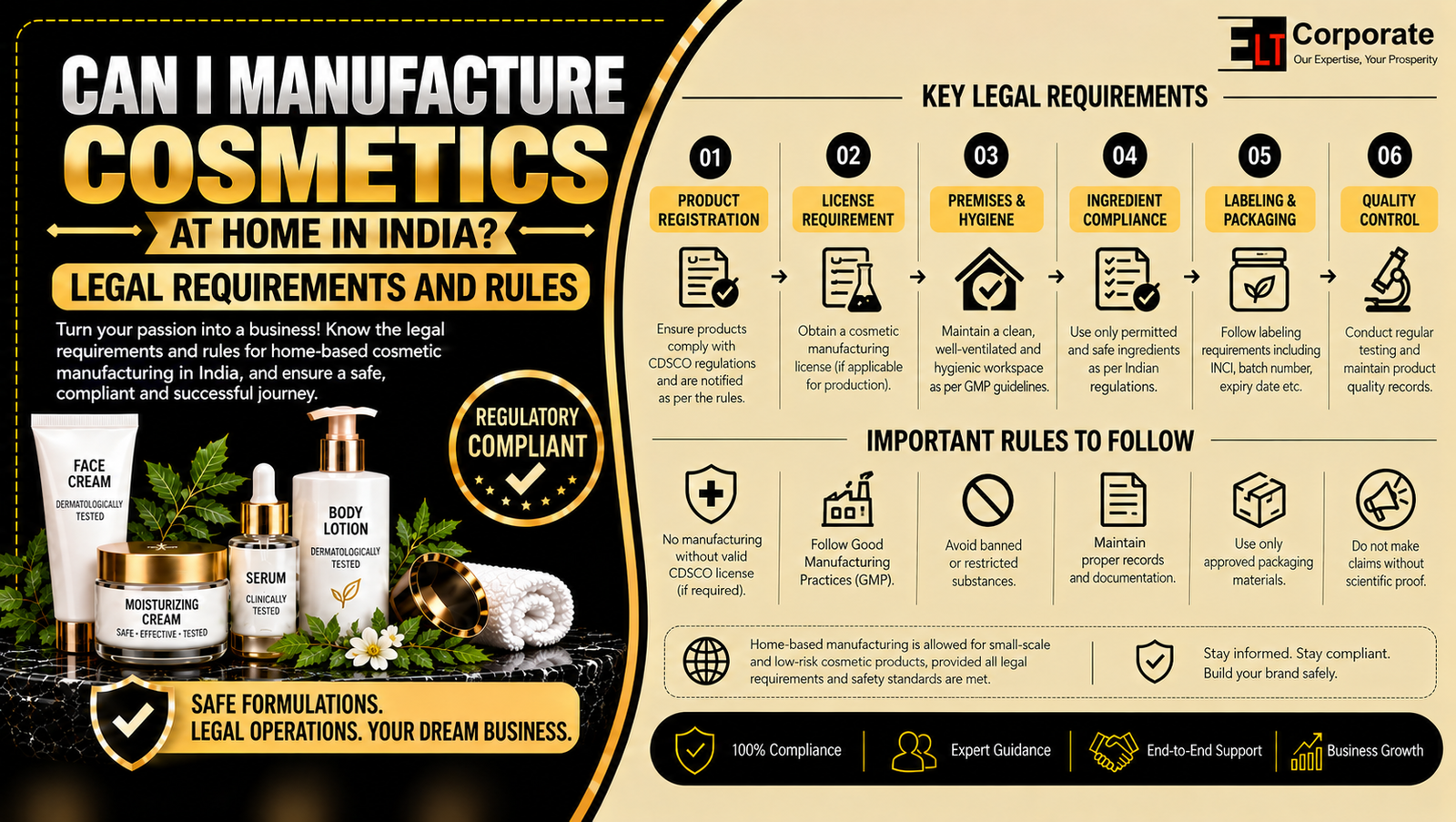
In terms of regulation, perfume manufacturing falls within the purview of the cosmetics regulatory regime. As such, manufacturers have to necessarily comply with the provisions of the Drugs and Cosmetics Act, 1940, and Cosmetics Rules, 2020.
Regulation of cosmetics helps its clients get proper guidance on the license procedure along with necessary documentation. The article highlights all relevant rules, requirements, documents to be filed, and procedures to file the application.
Need Help With Your Perfume Manufacturing License?
Get expert assistance with your perfume manufacturing license, COS-5 application, documentation and GMP compliance requirements in India.
Get Free Consultation Contact UsWhat Is a Perfume Manufacturing License?
A perfume manufacturing license is an approval issued by the concerned state licensing authority. It allows eligible businesses to manufacture cosmetic products for commercial sale or distribution.
Perfumes generally fall under the definition of cosmetics because they are applied to the human body to improve fragrance and attractiveness.
The licence confirms that the manufacturing unit meets applicable requirements. These include suitable premises, equipment, qualified technical staff, and quality control arrangements.
Businesses manufacturing products such as the following may require cosmetic manufacturing approval:
- Eau de Parfum (EDP)
- Eau de Toilette (EDT)
- Eau de Cologne
- Body perfumes and fragrance sprays
- Alcohol-based perfumes
- Non-alcoholic fragrance products
The applicable classification should be confirmed according to the product formulation and intended use.
Legal Rules Governing Perfume Manufacturing in India
The primary legislation governing cosmetic manufacturing is the Drugs and Cosmetics Act, 1940. The Cosmetics Rules, 2020, provide detailed requirements for manufacturing and selling cosmetics.
Manufacturers should understand these important provisions:
Need Help With Your Perfume Manufacturing License?
Get expert assistance with your perfume manufacturing license, COS-5 application, documentation and GMP compliance requirements in India.
Get Free Consultation WhatsApp an Expert Contact Us1. State Licensing Authority
Manufacturing licenses are issued by the respective state licensing authority. Applicants must approach the authority responsible for their manufacturing location.
2. Cosmetics Rules, 2020
Rule 23 explains the application procedure for manufacturing licenses and loan licenses. Applicants must submit the prescribed application and supporting documents.
3. Good Manufacturing Practices
Manufacturers must follow the applicable Good Manufacturing Practices (GMP) requirements. These cover premises, equipment, sanitation, production, and quality control.
4. Product Safety and Quality
Cosmetics must meet applicable quality and safety standards. Manufacturers must ensure that products are not unsafe or misleadingly presented.
5. Labelling Requirements
Product labels must follow applicable cosmetic labeling requirements. Important information includes product identity, manufacturer details, batch information, and other prescribed declarations.
Understanding these cosmetic manufacturing regulations in India helps businesses avoid compliance problems.
Eligibility Criteria for Obtaining a Perfume Manufacturing License
Before applying for a perfume manufacturing license, applicants should ensure that their business meets the prescribed eligibility requirements.
The main requirements include:
- Business Registration: The applicant should have a legally registered business entity.
- Manufacturing Premises: The unit must have suitable space for manufacturing, storage, and packaging activities.
- Technical Staff: A suitably qualified technical person must supervise manufacturing activities.
- Manufacturing Equipment: Appropriate machinery and equipment must be available.
- Quality Control: The manufacturer must arrange suitable product testing facilities.
- GMP Compliance: The premises and manufacturing operations must satisfy applicable GMP requirements.
Businesses can establish their own manufacturing facilities or explore the loan licence for the cosmetics manufacturing route.
Cosmetics Regulatory assists applicants in understanding these eligibility requirements before submitting applications.
Documents Required for Perfume Manufacturing License
Preparing accurate documents is essential for a successful application. Missing information can delay regulatory approval.
Applicants generally need the following documents:
| Document | Purpose |
| Business registration certificate | Establishes legal business identity |
| PAN card | Identifies the applicant or business |
| Identity and address proof | Verifies applicant details |
| Premises ownership or rental proof | Establishes manufacturing location |
| Site layout plan | Shows manufacturing area arrangements |
| Manufacturing process details | Explains production activities |
| Product list | Identifies proposed perfume products |
| Machinery list | Provides equipment details |
| Technical staff qualification documents | Establishes technical eligibility |
| Testing facility details | Explains quality control arrangements |
| Water analysis report, where applicable | Supports manufacturing hygiene |
| GMP self-declaration | Confirms compliance with manufacturing requirements |
Applicants must also provide the information and undertakings specified in Part II of the Second Schedule.
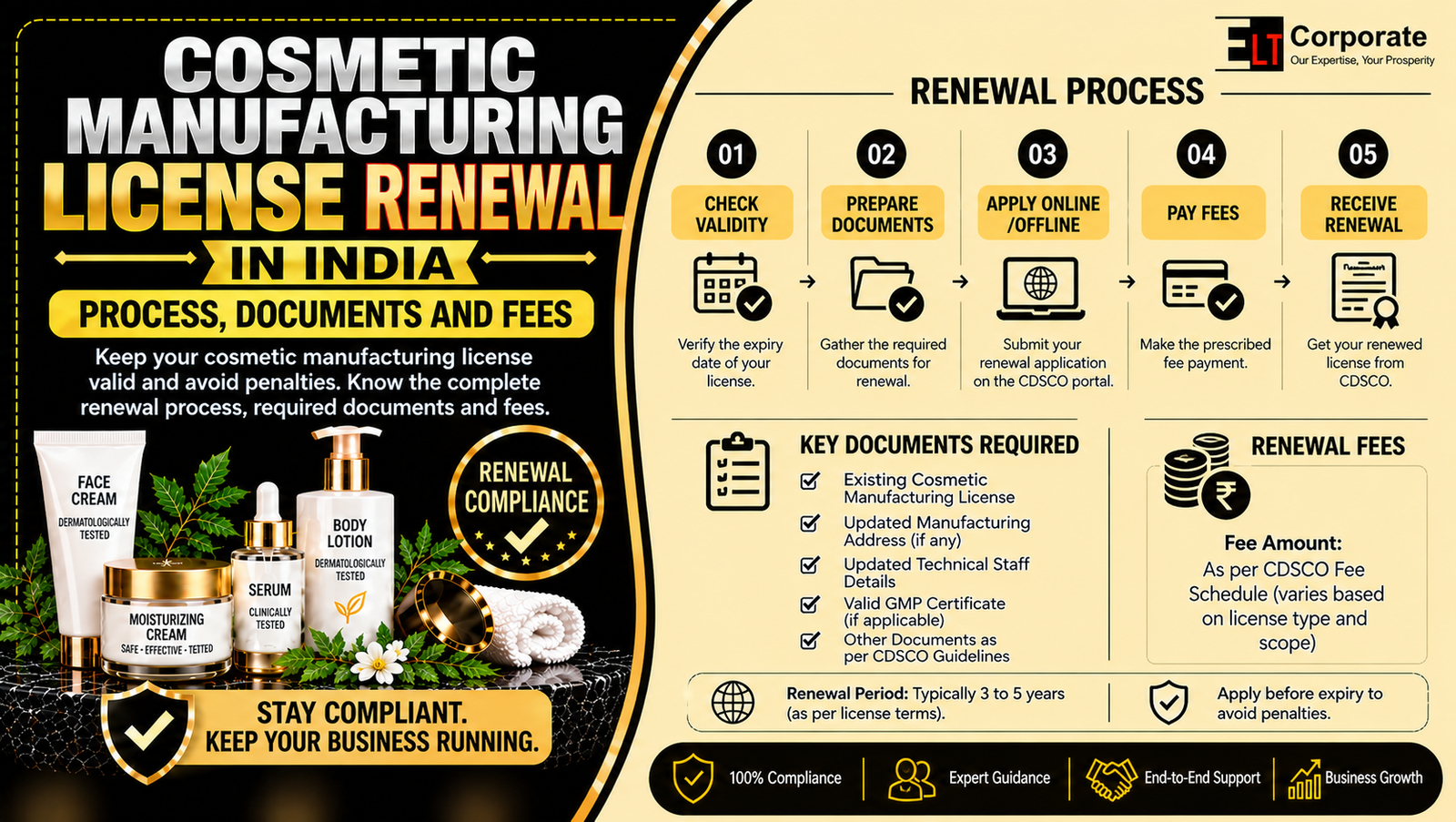
Form COS-7 is used for the GMP self-certification for cosmetic manufacturing. Additional documents may be requested by the concerned licensing authority.
Cosmetics Regulatory helps businesses organize documentation and identify potential gaps before filing.
Step-by-Step Perfume Manufacturing License Registration Process
Obtaining a Perfume Manufacturing License involves several regulatory steps. Following the correct procedure makes the application process easier.
Step 1: Register Your Business
First, establish a legally recognized business entity. You may choose a proprietorship, partnership, LLP, or private limited company.
Step 2: Arrange Manufacturing Premises
Select suitable premises for perfume production. Ensure adequate space for raw materials, mixing, filling, packaging, and finished goods.
Step 3: Appoint Qualified Technical Staff
Hire a technically qualified person who meets the applicable requirements. Keep educational certificates and experience documents ready.
Step 4: Prepare Manufacturing Details
Prepare product formulations, manufacturing procedures, machinery details, and quality control arrangements.
Step 5: Submit Form COS-5
For a regular manufacturing license, applicants must submit Form COS-5 to the State Licensing Authority.
Businesses using another licensed manufacturer’s facility may apply through Form COS-6 for a loan licence.
Step 6: Submit GMP Declaration
Applicants must submit Form COS-7 as the prescribed self-certification of GMP compliance.
Step 7: Pay Applicable Government Fees
Pay the prescribed application fee according to the relevant category and third schedule.
Step 8: Application Review and Approval
The licensing authority examines the application and supporting documents. Rule 23 provides a period of 45 days for grant or communication of deficiencies, subject to fulfillment of requirements.
Step 9: Receive the Manufacturing Licence
Once approved, the regular licence is issued in Form COS-8. A loan licence is issued in Form COS-9.
Cosmetics Regulatory supports businesses throughout the application and documentation process.
Government Fees and Processing Time
The government fee for a perfume manufacturing license depends on the applicable provisions and product categories.
Applicants should consult the Third Schedule of the Cosmetics Rules, 2020. They should also verify the latest state-specific filing requirements.
The rules provide a 45-day period for processing a complete application. This period is not a guarantee of approval. Incomplete documents or regulatory deficiencies may affect the timeline.
Important Compliance Requirements After Approval
Receiving a perfume manufacturing license does not end regulatory responsibilities. Manufacturers must maintain compliance throughout their business operations.
Important responsibilities include:
- Maintaining clean manufacturing premises.
- Following approved manufacturing procedures.
- Maintaining batch manufacturing records.
- Using suitable and safe raw materials.
- Conducting appropriate quality testing.
- Maintaining product traceability.
- Following applicable labelling requirements.
- Reporting and addressing quality complaints.
- Keeping required records available for inspection.
Perfume manufacturers should also pay attention to alcohol storage, fire safety, and applicable local permissions. These requirements may depend on the formulation, quantity, premises, and state regulations.
A valid cosmetic product manufacturing licence supports lawful operations and improves business credibility.
Common Mistakes to Avoid During Registration
Many applicants experience delays because of incomplete documentation or incorrect information.
Avoid these common mistakes:
- Selecting premises without checking applicable requirements.
- Providing incomplete manufacturing process details.
- Appointing technical staff without verifying qualifications.
- Ignoring GMP requirements.
- Submitting incorrect product information.
- Overlooking applicable safety and labeling standards.
Professional guidance from Cosmetics Regulatory can help applicants address these issues before filing their applications.
Why Choose Cosmetics Regulation?
Obtaining a Perfume Manufacturing License requires proper documentation and regulatory understanding.
Cosmetics Regulatory provides licensing assistance to businesses planning to enter the Indian cosmetics industry.
Its support includes:
- Understanding applicable licensing requirements.
- Preparing application documents.
- Reviewing manufacturing information.
- Assisting with GMP documentation.
- Supporting application submission.
- Helping address regulatory queries.
With professional assistance, businesses can better understand the cosmetic manufacturing licence registration process.
Conclusion
When setting up a perfume manufacturing firm, proper registration must be ensured. The firms must ensure the provision of suitable premises, proper technical manpower, manufacturing facilities, and quality control facilities.
The perfume manufacturing license will go a long way in helping you have a legally compliant manufacturing firm. You should ensure that you are aware of the guidelines so as to get registered properly./
If you plan to manufacture perfumes, Cosmetics Regulatory can help you with perfume manufacturing registration guidelines. Seek assistance from Cosmetics Regulatory for perfume manufacturing registration.
Planning to Start a Perfume Manufacturing Business in India?
Get expert assistance with your perfume manufacturing licence, COS-5 application, documentation, GMP compliance and regulatory requirements.
Get Free Consultation WhatsApp an Expert Call Now Contact UsFrequently Asked Questions
Q1. Is a licence mandatory for perfume manufacturing in India?
Yes. Businesses manufacturing perfumes for commercial sale or distribution generally require approval under the Cosmetics Rules, 2020.
Q2. Which form is required for perfume manufacturing registration?
Form COS-5 is used for a regular manufacturing licence. Form COS-6 is used for a loan licence.
Q3. Which authority issues the licence?
The respective State Licensing Authority issues the manufacturing licence.
Q4. How long does the application process take?
Rule 23 provides a 45-day period for processing applications. Approval depends on meeting all applicable requirements.
Q5. Can I manufacture perfumes using another company’s facility?
Yes. Eligible applicants can explore the loan licensing route, subject to applicable regulatory conditions.
Q6. What is the validity of the manufacturing licence?
The licence remains valid subject to payment of the prescribed retention fee and continued regulatory compliance.