
The personal care and beauty market is rapidly growing with new products coming onto the market each day. However, creating an innovative cosmetic product is just part of the process to create an effective beauty brand. Making sure that the product is in compliance with regulations is just as important. From product formulations and safety tests to review of labels as well as market acceptances, cosmetics companies must adhere to strict rules prior to their products being legally sold. Complete cosmetic compliance solutions help beauty companies navigate the complexities of regulations, reduce risk, and gain faster markets while still maintaining customer confidence.
Why Cosmetic Compliance Is Essential for Beauty Businesses
In today’s highly competitive market, the public is increasingly concerned about the safety of their products as well as ingredient transparency and the quality of products. The regulatory authorities have also stepped up the requirements for compliance to ensure that cosmetic products are safe to use and are accurately presented to consumers.
Failure to follow the cosmetic regulations could lead to recalls of products and import restrictions, as well as penalties, delays in launch dates, and reputational harm. With the help of cosmetic regulation compliance strategies, companies can safeguard their brand’s reputation while ensuring a smooth entry into the market.
What Are Cosmetic Compliance Solutions?
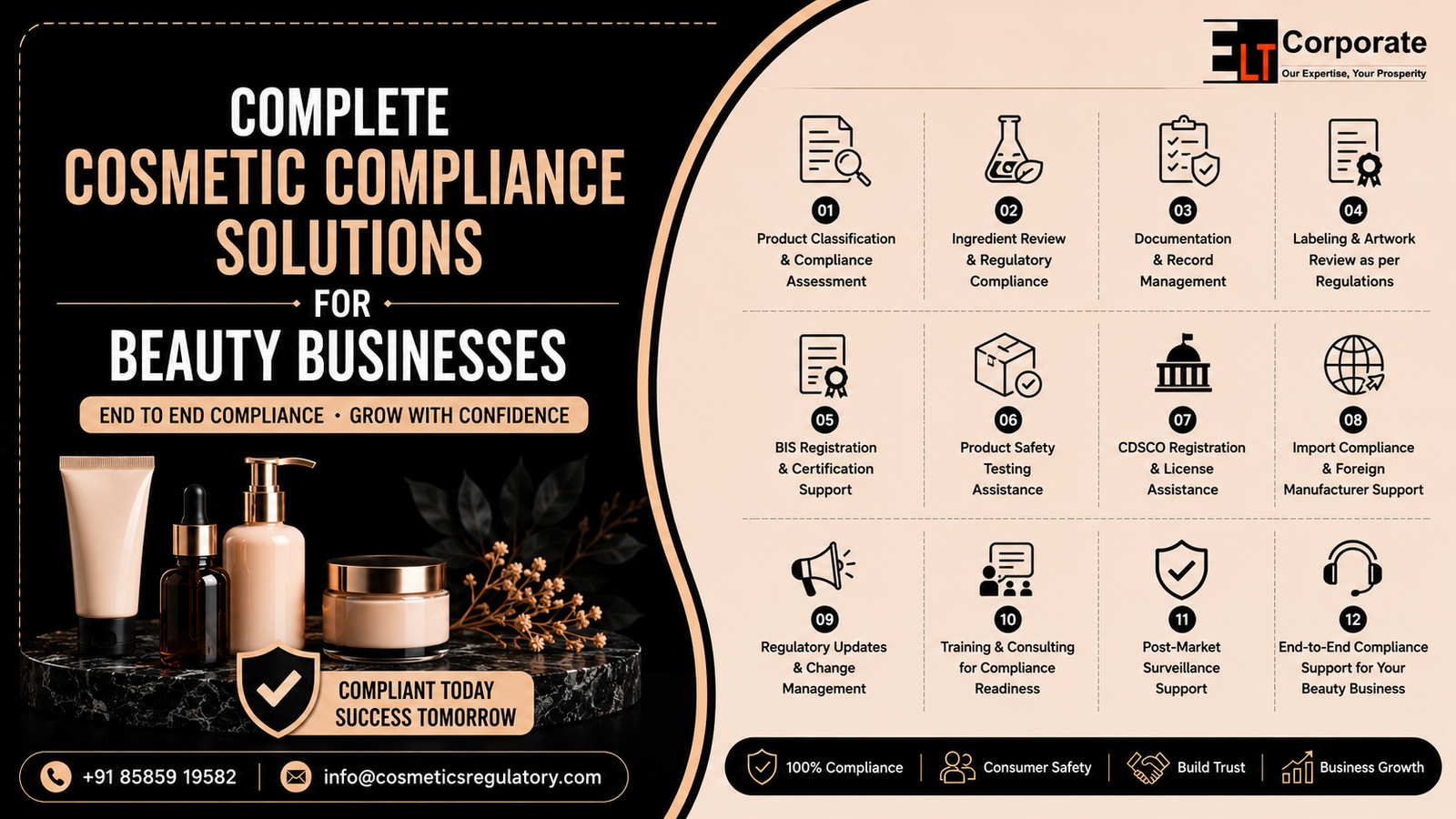
Cosmetic Compliance Solutions encompass an array of regulatory services created to make sure that cosmetics conform to the applicable safety and legal standards. They assist companies throughout the life cycle of a product, from manufacturing and development through the registration process and even commercialization.
Important compliance services include:
- CDSCO Cosmetic Registration
- Cosmetic Product Registration
- Cosmetic Import License Assistance
- Cosmetic Manufacturing License Support
- Ingredient and Formula Review
- Product Safety Assessment
- Cosmetic Labeling Compliance
- Claims Substantiation
- Regulatory Documentation Management
- Ongoing Regulatory Consultancy
Key Regulatory Requirements for Cosmetic Products
Product Registration and Market Authorization
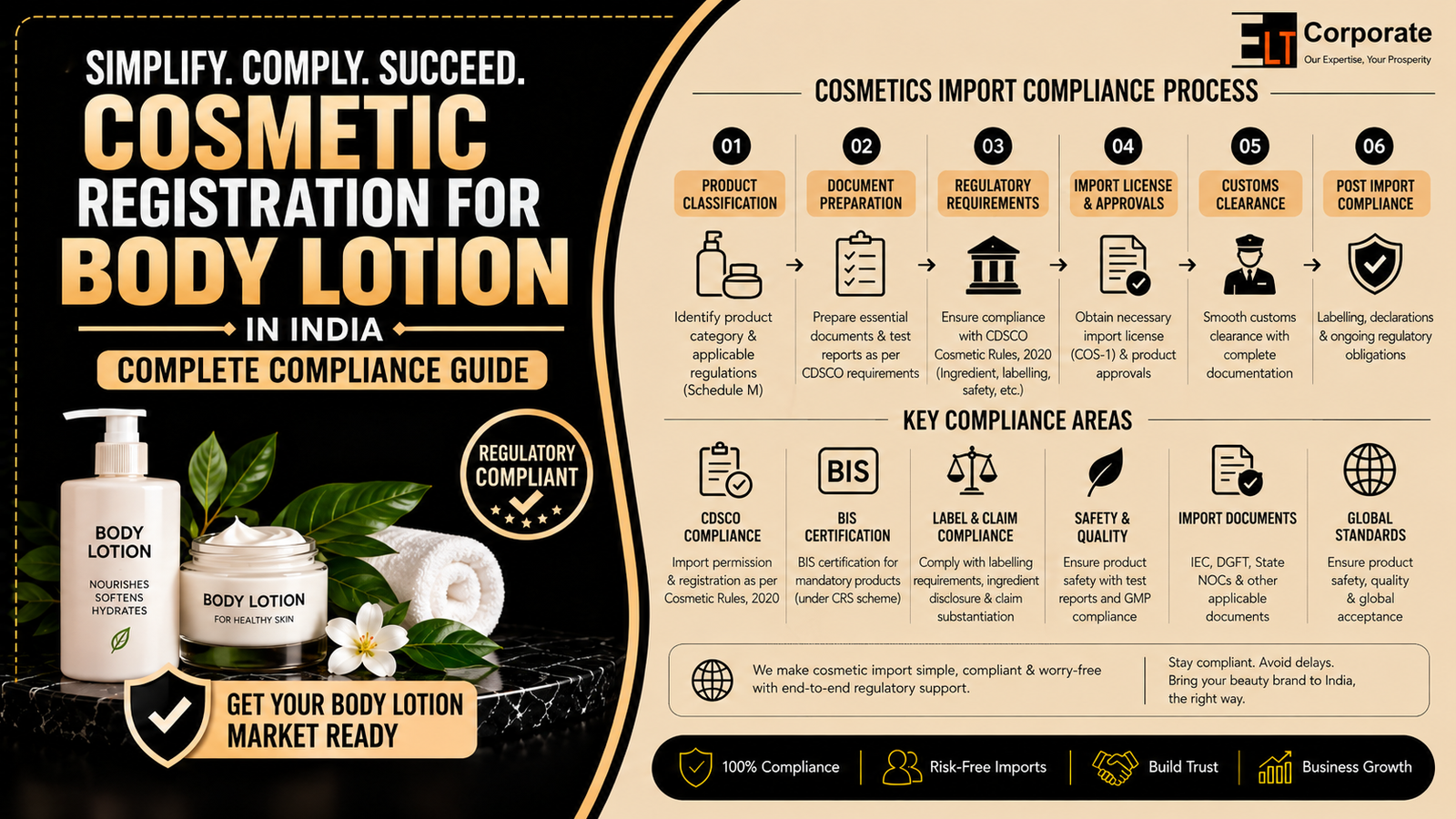
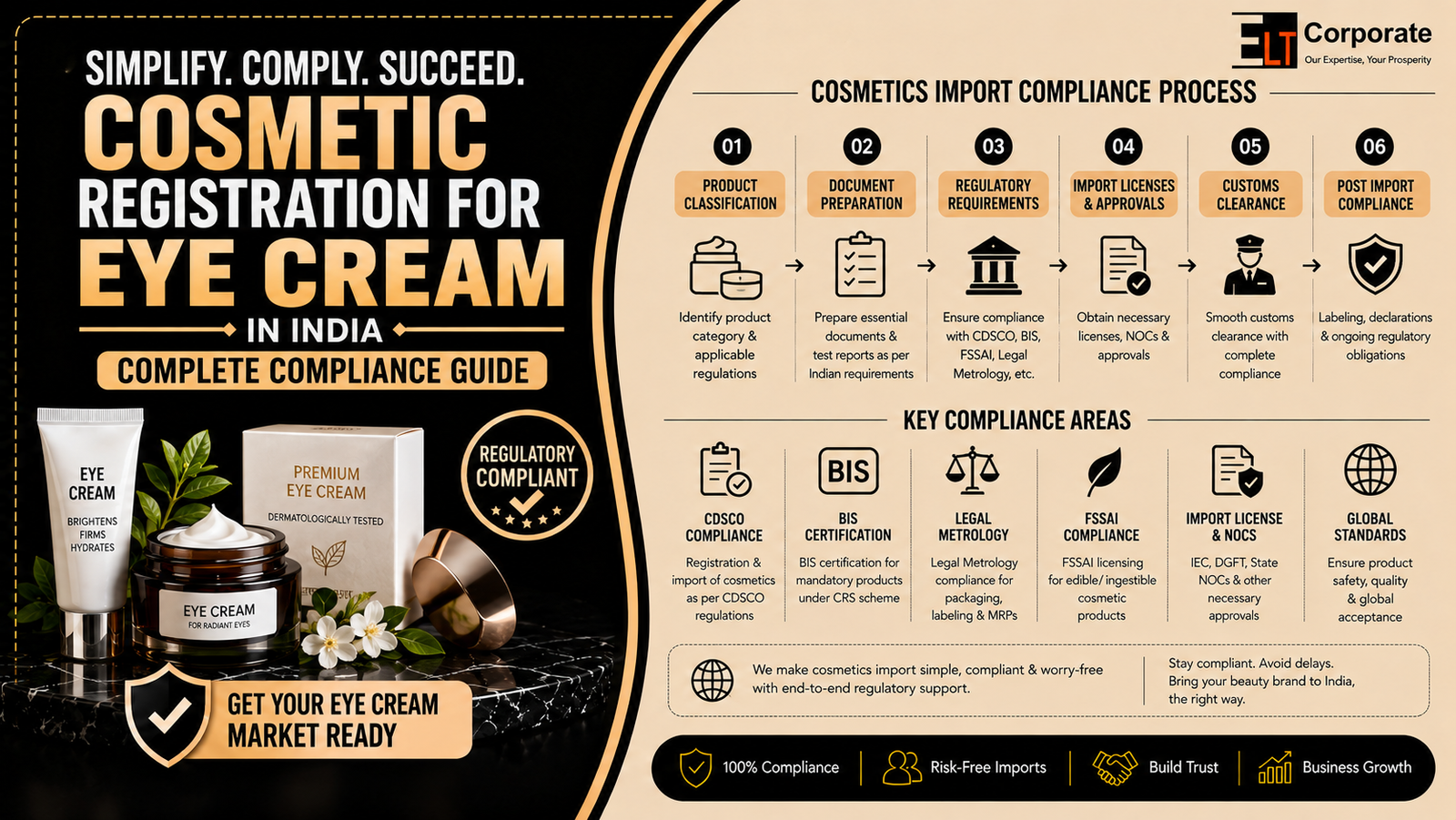
Before launching cosmetics, companies may require appropriate approvals, registrations, or notices based on the market they intend to target. In India, the import of cosmetics needs CDSCO cosmetic registration as well as compliance with applicable laws under the Cosmetics Rules, 2020.
A proper registration will ensure that the products are legal and are able to be advertised without regulatory hurdles.
Product Safety Assessment
An assessment of the safety of products is among the most important aspects of cosmetic conformity. This assessment evaluates the ingredients in the product and their intended use, as well as exposure levels and possible dangers to consumers.
Safety tests help prove that the products are safe in normal usage conditions and offer essential evidence to ensure regulatory compliance.
Ingredient Compliance Review
Cosmetic formulations need to be meticulously examined to make sure that the ingredients are in compliance with the regulations. Certain ingredients can be restricted or even subject to limits on concentration.
A review of ingredients can help detect compliance issues early in the development process, thus reducing the chance of costly modifications or registration delays.
Cosmetic Labeling Compliance
Labels are a crucial communication tool between brands as well as consumers. The regulatory authorities demand specific information to be included on labels for cosmetics, which include the following:
- Name of the product
- Ingredient declaration
- Net quantity
- Manufacturer or importer details
- Batch number
- The dates for manufacture and expiry are listed below.
- Directions for use
- Safety and warnings
The correct cosmetic labeling compliance helps prevent regulators from taking action and increases consumer confidence.
Claims Substantiation
Marketing claims like “anti-aging,” “dermatologically tested,” “natural,” or “long-lasting” must be supported with scientific proof and evidence.
The authorities of the regulatory authority closely scrutinize cosmetic marketing and labeling claims. Making sure claims are supported by evidence helps companies avoid false marketing practices as well as the scrutiny of regulators.
Cosmetic Import License and Manufacturing License Support
Companies involved in the importation or manufacturing of cosmetics must be granted the appropriate licenses prior to beginning operations.
Cosmetic Import License
Cosmetics companies that import cosmetics into India must meet regulations and obtain a necessary license for cosmetic imports. This usually requires documentation, including ingredient information, manufacturer information, and submissions to regulatory authorities.
Cosmetic Manufacturing License
Manufacturers must make sure that their manufacturing facilities adhere to the safety and quality standards. Possessing a cosmetic manufacturing license demonstrates adherence to regulations as well as Good Manufacturing Practices (GMP).
Benefits of Professional Cosmetic Regulatory Consultancy
It can be a challenge, particularly for companies that are entering new markets or creating innovative products. Utilizing skilled cosmetic regulatory experts offers numerous advantages.
- More rapid approvals and registrations for new products
- Risks of compliance reduced
- Quality and safety improvements to products. assurance
- The smooth import process and manufacturing processes
- Complete regulatory documents
- Increased trust in the consumer
- Better market expansion opportunities
Professional consulting services allow businesses to concentrate on product development and growth while also ensuring compliance with regulations.
How Complete Cosmetic Compliance Solutions Support Business Growth
A proactive compliance plan will not only help businesses comply with the requirements of regulatory agencies, but it also gives them an advantage in the market. Compliance-compliant products will be more likely to win customer acceptance, trust from retailers, and access to local as well as international markets.
Complete compliance services for beauty products assist in every phase of product development and commercialization. They help businesses to reduce delay, avoid regulatory setbacks, and attain long-term success.
Conclusion
As regulations are constantly evolving, cosmetic compliance is now a crucial task for brands in the beauty industry. If you’re launching your own skincare line, importing cosmetics from abroad, or expanding to new market segments, extensive cosmetic compliance solutions can assist you in achieving the regulatory goals with confidence.
With the help of skilled cosmetics regulatory services, companies can guarantee product safety and ensure compliance with the law, simplify registration procedures, and establish long-lasting trust with consumers. A robust compliance framework will not only shield your company from regulatory risk but also create the foundation for long-term growth in the highly competitive beauty industry.
Frequently Asked Questions (FAQs)
Q1. What is cosmetic compliance?
It refers to the procedure of ensuring that cosmetics as well as personal-care products comply with all applicable safety, regulatory, or labeling standards prior to being promoted and sold.
Q2. What is the reason CDSCO cosmetic registration is so important?
CDSCO cosmetic registration is mandatory for cosmetics imported from India and assists in ensuring that the products meet requirements for safety quality, product quality, and consumer protection.
Q3. What are the documents needed to register a cosmetic product?
Documents required for a product may include formulations and ingredient lists as well as labels, safety data, and manufacturing details Free sale certificates and other documents that regulate the product based on the type of product being sold.
Q4. What exactly is an import cosmetic license?
A cosmetic import license permits companies to legally import cosmetics into a country and ensure that they comply with the applicable regulations.
Q5. Why is compliance with cosmetic labels crucial?
A properly labeled product provides customers with the essential information about products and assists businesses in complying with the law, which reduces the chance of penalties and recalls of products.
Q6. What can cosmetic regulatory experts aid cosmetic brands?
The regulatory consultants help in the registration and licensing of products, assessment of safety, and review of labels and compliance documents, as well as strategies to regulate products and ensure a smooth entry into the market.