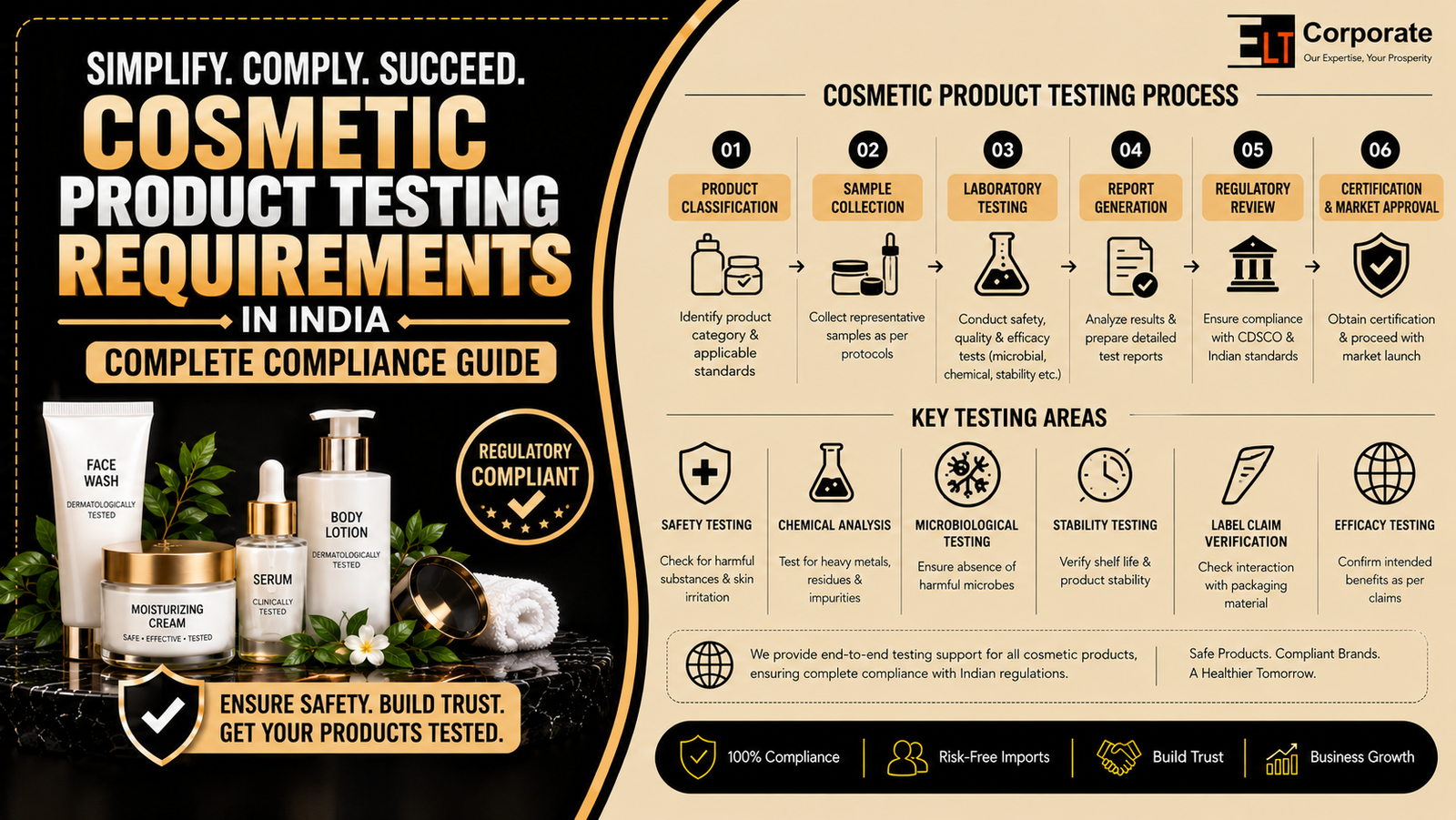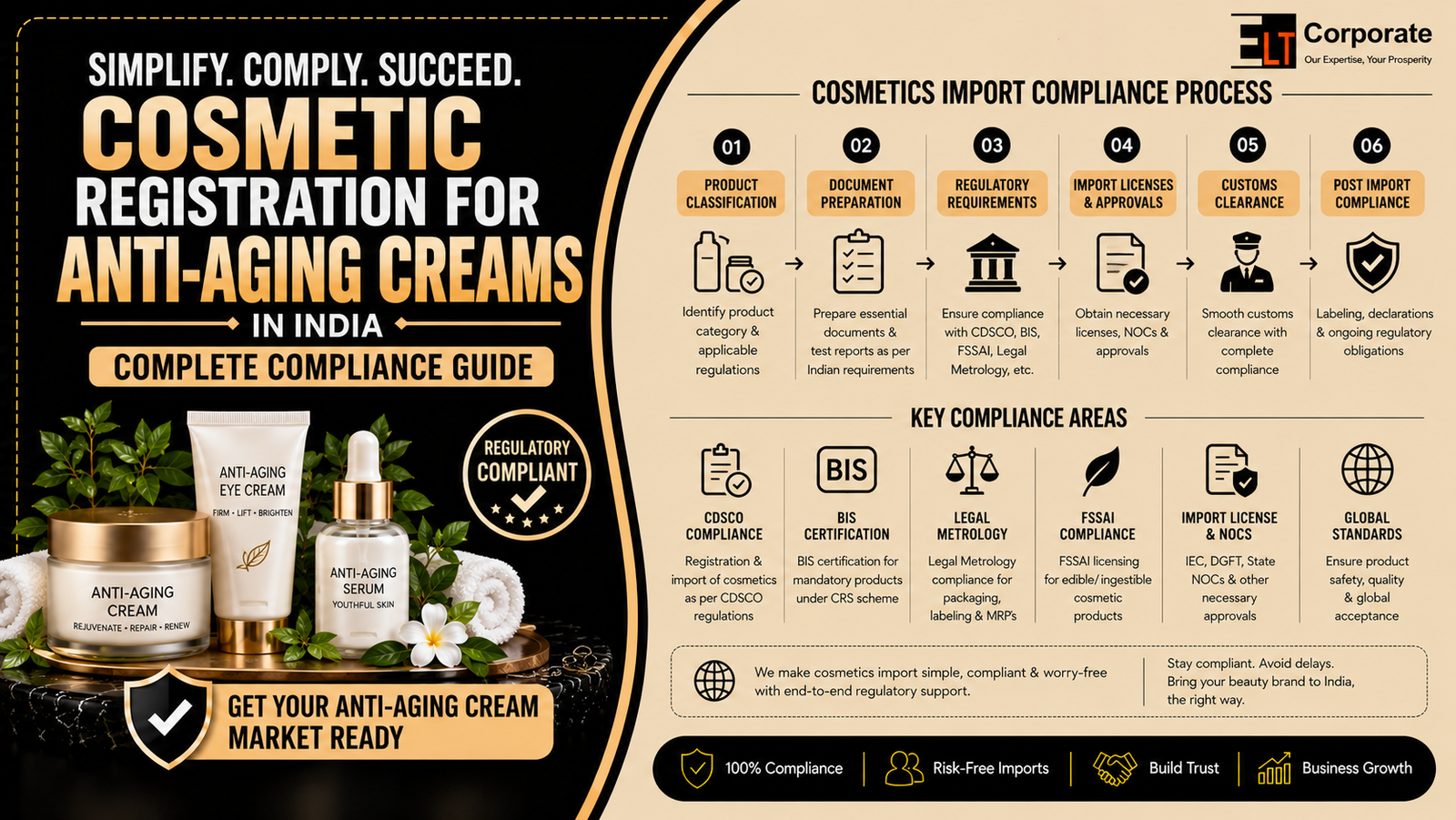

The global skincare industry has evolved into a highly competitive and innovation-driven sector, and India has emerged as one of the fastest-growing markets in 2026. With rising disposable income, awareness about personal grooming, and the influence of global beauty trends such as K-beauty and dermocosmetics, the demand for skincare products has significantly increased.
For manufacturers, importers, and private label brands, entering this market is not just about launching products—it requires a clear understanding of product classification, naming conventions, and regulatory compliance.
Many businesses face delays or rejections simply because they fail to correctly categorize their skincare products. This guide provides a comprehensive skincare products name list, along with regulatory insights, licensing requirements, and business strategies tailored for 2026.
Understanding Skincare Products (Legal Definition)
Under the Drugs and Cosmetics Act, 1940, a cosmetic is defined as any article intended to be applied to the human body for:
- Cleansing
- Beautifying
- Promoting attractiveness
- Altering appearance
However, the classification becomes critical when a product makes therapeutic or medical claims.
For example:
- “Hydrating face cream” → Cosmetic
- “Treats acne permanently” → Drug
If your product falls under the drug category, it will require entirely different approvals and clinical validation.
Regulatory Framework in India
All skincare products are governed under the Cosmetics Rules, 2020, which provide detailed guidelines on:
- Product classification
- Approved ingredients
- Labeling requirements
- Import procedures
The Fourth Schedule of these rules broadly categorizes skincare products into multiple segments, which directly impact licensing and compliance.
Complete Skincare Products Name List (2026)
Below is a detailed classification of skincare products used globally and accepted under Indian regulations:
1. Cleansers & Makeup Removal Products
These are the foundation of any skincare routine and are designed to remove impurities, dirt, oil, and makeup.
Types of Cleansers:
- Gel face wash
- Foam-based cleanser
- Cream cleanser
- Oil cleanser
- Cleansing balm
- Micellar water
- Cleansing milk
- Makeup remover wipes
These products are considered basic skincare essentials and have the highest demand across all demographics.
2. Toners, Essences & Skin Prep Products
These products prepare the skin for better absorption of active ingredients and restore skin balance.
Product Examples:
- Hydrating toner
- Alcohol-free toner
- AHA/BHA exfoliating toner
- Facial mist / face spray
- Essence (lightweight hydrating formula)
- Ampoule (highly concentrated treatment)
Essences and ampoules are rapidly growing segments due to Korean skincare trends.
3. Serums & Advanced Treatments
Serums are concentrated formulations designed to target specific skin concerns.
Popular Serum Categories:
- Vitamin C serum (brightening)
- Hyaluronic acid serum (hydration)
- Niacinamide serum (oil control)
- Retinol serum (anti-aging)
- Peptide serum (skin repair)
- Anti-acne serum
- Pigmentation correction serum
These products are high-margin and premium category offerings.
4. Moisturisers, Creams & Hydration Products
Moisturisers are essential for maintaining the skin barrier and preventing dryness.
Product Types:
- Day cream
- Night cream
- Gel moisturiser
- Oil-based moisturiser
- Face oils (argan, rosehip, squalane)
- Body lotion
- Body butter
- Sleeping masks
Every skincare brand must include this category in its product portfolio.
5. Exfoliants & Skin Renewal Solutions
Exfoliation helps remove dead skin cells and improves skin texture.
Types:
- Physical scrubs (walnut, sugar-based)
- Chemical exfoliants (AHA, BHA, PHA)
- Enzyme exfoliators
- Chemical peels
- Peeling solutions
Improper formulation in this category can lead to regulatory issues or consumer complaints.
6. Sunscreen & Sun Protection Products
Sun protection is one of the most important steps in skincare.
Product Types:
- SPF cream
- Gel sunscreen
- Matte sunscreen
- Spray sunscreen
- Sunscreen stick
- After-sun soothing gel
Sunscreen products are subject to strict safety and efficacy standards.
7. Face Masks & Intensive Treatments
These products provide deep nourishment or detoxification.
Types:
- Sheet masks
- Clay masks
- Peel-off masks
- Cream masks
- Overnight masks
Popular among urban consumers and premium skincare users.
8. Eye Care Products
The under-eye area requires specialized care due to its sensitivity.
Examples:
- Eye cream
- Eye gel
- Under-eye patches
- Dark circle treatment
- Anti-wrinkle eye serum
9. Lip Care Products
Lip care is an essential yet often overlooked category.
Examples:
- Lip balm
- Lip scrub
- Lip mask
- Lip sunscreen
10. Body Care & Specialized Skincare
This category goes beyond facial skincare.
Product Examples:
- Body wash
- Body scrub
- Intimate hygiene wash
- Stretch mark cream
- Anti-cellulite cream
- Hand cream
- Foot care cream
Cosmetic vs Drug: Critical Compliance Factor
One of the biggest mistakes brands make is incorrect claims.
Allowed Cosmetic Claims:
- Hydrates skin
- Improves texture
- Enhances glow
- Softens skin
Restricted Drug Claims:
- Treats acne
- Removes pigmentation permanently
- Heals skin diseases
- Anti-fungal / antibacterial claims
Such claims can shift your product into the drug category, requiring additional approvals.
Import Registration Process in India
For foreign brands entering India, compliance with CDSCO is mandatory.
Key Requirement:
- Registration Certificate: COS-2
Documents Required:
- Ingredient composition
- Free Sale Certificate from origin country
- Product label artwork
- Manufacturer authorization letter
Without registration, selling imported skincare products in India is illegal.
Labeling Compliance (Mandatory for All Products)
Every skincare product must clearly display:
- Product name
- Manufacturer & importer details
- Batch number
- Manufacturing & expiry date
- Ingredient list
- Country of origin
Label non-compliance is one of the top reasons for rejection.
Restricted Ingredients in Skincare
Under Indian cosmetic regulations:
- Heavy metals like lead and mercury are restricted
- Steroids are not allowed in cosmetics
- Certain preservatives have concentration limits
Always verify ingredients before manufacturing or importing.
Skincare Trends in 2026
The skincare industry is evolving with new consumer demands:
- Clean beauty and organic skincare
- Dermatologist-recommended products
- Korean skincare innovations
- Multi-functional products (e.g., SPF + moisturizer)
- Skin barrier repair formulations
Business Strategy for Skincare Brands
Basic Product Line (Mass Market)
- Cleanser
- Moisturiser
- Sunscreen
Intermediate Line
- Toner
- Serum
- Exfoliant
Premium Line
- Anti-aging creams
- Clinical skincare
- Advanced serums
A well-balanced portfolio increases brand credibility and revenue.
Frequently Asked Questions
1. Do all skincare products require CDSCO approval?
Yes, imported products must be registered before sale.
2. Can natural or herbal products skip compliance?
No, all cosmetics must follow regulatory guidelines.
3. Can one license cover multiple products?
Yes, but each product must be individually listed.
4. What is the most common compliance mistake?
Incorrect product claims and labeling errors.
Conclusion
The skincare market in India offers immense opportunities for both domestic and international players. However, success in this industry depends on more than just product quality.