
India’s skincare market is booming. Valued at over USD 3 billion in 2026 and growing at nearly 18% annually, it is one of the most attractive consumer segments for both domestic brands and international importers. Korean beauty, European luxury skincare, US-origin dermocosmetics, and homegrown ayurvedic brands are all competing for the same shelf — and increasingly, the same CDSCO approval pipeline.
But here is what most brand founders and importers miss: not all skincare products are treated equally by Indian regulations. Whether your product needs a COS-2 import license, whether it qualifies as a cosmetic or crosses into drug territory, and which Schedule of the Cosmetics Rules, 2020 governs its standards — all of this depends on what the product actually is and what claims you make about it.
This guide gives you a comprehensive name list of skincare product categories, explains how each is classified under CDSCO and the Cosmetics Rules, 2020, and clarifies what regulatory requirements apply to brands and importers for each category.
Under Section 3(aaa) of the Drugs and Cosmetics Act, 1940, a cosmetic is any article intended to be rubbed, poured, sprinkled, sprayed on, applied to the human body for cleansing, beautifying, promoting attractiveness, or altering appearance. If your skincare product fits this definition — it is a cosmetic and needs CDSCO registration for import.
How CDSCO Classifies Skincare Products
Before going into the product list, it is important to understand how CDSCO and the Cosmetics Rules, 2020 categorise skincare products. This framework determines which regulatory pathway applies to your specific product.
The Fourth Schedule — Product Categories
The Fourth Schedule of the Cosmetics Rules, 2020 is the definitive list of cosmetic product categories recognised by CDSCO. Skincare products fall primarily under the following Fourth Schedule categories:
• Category 1: Skin care products — creams, emulsions, lotions, gels, oils for skin
• Category 2: Face masks, make-up removers, anti-wrinkle products
• Category 3: Tinted bases, make-up powders, after-bath powders — where skin treatment claims are present
• Category 4: Sun care products — sunscreen, sun protection, after-sun products
• Category 5: Lip care products — lip balms, lip moisturisers
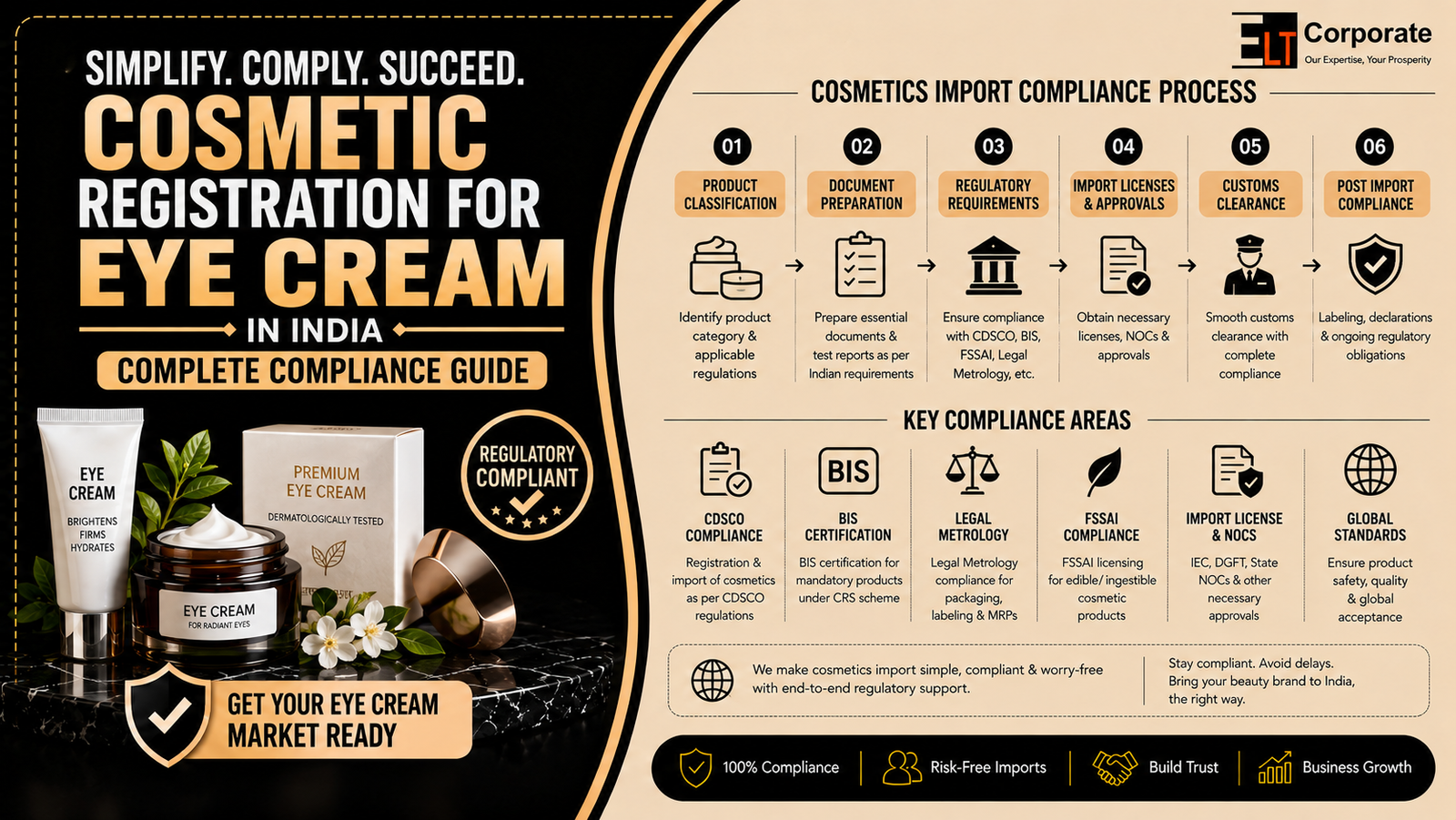
• Category 6: Eye care products — eye creams, eye serums, dark circle treatments
• Category 7: External intimate care products — specific treatment products
When you apply for cosmetic import registration using Form COS-1, you must categorise your product correctly under the Fourth Schedule. Incorrect categorisation is one of the most common reasons for CDSCO queries and application delays.
The Cosmetic vs Drug Boundary — The Most Important Distinction
This is one of the most important regulatory questions for any skincare brand or importer: is your product a cosmetic or a drug?
The answer depends not on the product ingredients, but on the claims you make. The same ingredient — say, salicylic acid — can be in a cosmetic (“helps keep skin looking clear”) or a drug (“treats acne”) depending on how it is positioned on the label and in marketing.
| Product Type | Cosmetic — CDSCO Route | Drug — CDSCO Drug Route |
| Salicylic acid face wash | “Cleanses skin, reduces excess oil” | “Treats acne, medicated” |
| Niacinamide serum | “Helps even skin tone, brightening” | “Treats hyperpigmentation disorder” |
| Sunscreen SPF 50 | “Protects skin from UV rays” | “Treats sun damage, therapeutic” |
| Retinol cream | “Reduces appearance of fine lines” | “Anti-ageing treatment, clinical use” |
| Anti-dandruff shampoo | “Leaves scalp looking healthy” | “Treats dandruff fungal infection” |
| Kojic acid cream | “Brightens skin appearance” | “Treats melasma, skin disorder” |
Making therapeutic or drug claims on a cosmetic product — even in online marketing, social media, or influencer content — can reclassify your product as a drug under CDSCO rules. This requires a separate drug license which is far more complex and expensive to obtain. Review all claims carefully before launch.
Skincare Products Name List — Complete Category Guide
Below is a comprehensive name list of skincare product types commonly imported into or sold in India, along with their regulatory classification and import license status.
| 1. Moisturisers and Hydrating Products |
| • Face moisturiser cream (day and night) |
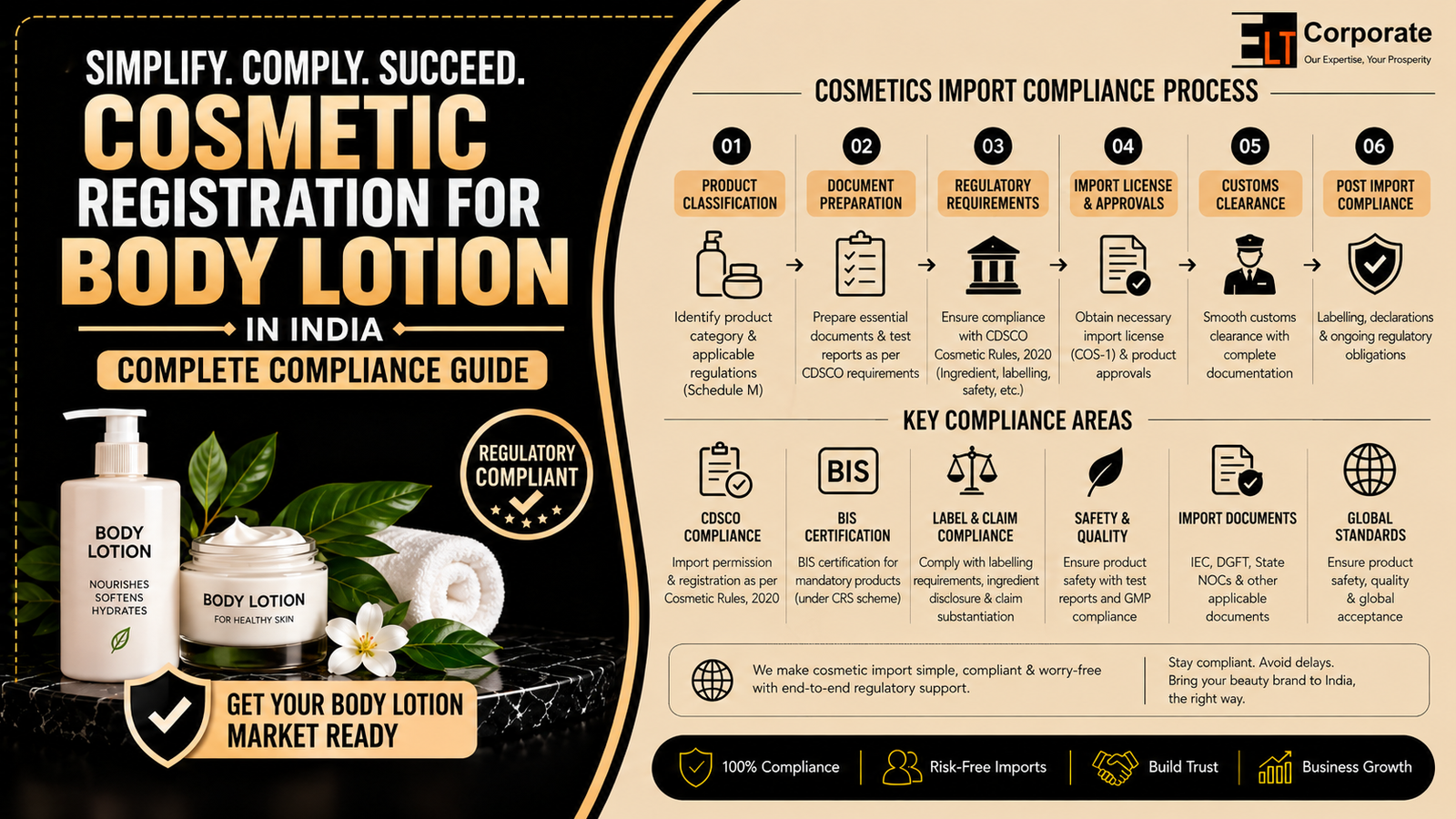
| • Body lotion and body butter |
| • Hand cream and hand lotion |
| • Foot cream and heel balm |
| • Neck and décolletage cream |
| • Gel moisturiser (oil-free, for oily skin) |
| • Face oil (rosehip, argan, jojoba, squalane) |
| • Hyaluronic acid serum and moisturiser |
| • Ceramide repair cream |
| • Overnight sleeping mask / sleeping pack |
| • Multi-purpose skin balm |
| • Hydrating facial mist and toner spray |
Regulatory status: All moisturisers making purely cosmetic claims (hydration, softness, appearance) are classified as cosmetics under CDSCO. COS-2 import license required. Fourth Schedule Category 1.
| 2. Serums and Treatment Products |
| • Vitamin C serum (ascorbic acid, ascorbyl glucoside) |
| • Niacinamide serum (brightening, pore-minimising claims) |
| • Retinol serum (anti-ageing, wrinkle reduction claims) |
| • Peptide serum (firming, lifting claims) |
| • AHA/BHA exfoliating serum (glycolic acid, lactic acid, salicylic acid) |
| • Hyaluronic acid serum (plumping, dewy skin claims) |
| • Azelaic acid serum (brightening claims) |
| • Ferulic acid serum (antioxidant protection) |
| • Bakuchiol serum (plant-based retinol alternative) |
| • Growth factor serum (anti-ageing, skin renewal claims) |
| • Snail mucin essence (Korean beauty) |
| • Tranexamic acid serum (brightening, tone-evening) |
Regulatory status: Serums with cosmetic claims (brightening, anti-ageing appearance, hydrating) = cosmetics, COS-2 required. Serums claiming to treat skin disorders (acne treatment, melasma treatment, prescription-level use) = drug, separate drug license required. Classification depends entirely on label claims.
| 3. Sun Care and UV Protection Products |
| • Sunscreen cream SPF 15, 30, 50, 50+ |
| • Sunscreen lotion (mineral — zinc oxide, titanium dioxide) |
| • Sunscreen lotion (chemical — avobenzone, octinoxate, oxybenzone) |
| • Tinted sunscreen / sunscreen with colour correction |
| • Sunscreen spray / mist |
| • Sunscreen stick (face and lips) |
| • After-sun lotion and aloe vera gel |
| • Self-tanning cream and bronzing lotion |
| • Outdoor sport sunscreen (water-resistant) |
| • Baby and children sunscreen |
| • Sunscreen primer (with SPF claim) |
Regulatory status: Sunscreens with protective claims (UV protection, SPF) are cosmetics under Indian regulations. COS-2 import license required. However, CDSCO requires specific data substantiation for SPF claims — test reports must accompany the application. Fourth Schedule Category 4.
CDSCO expects SPF substantiation aligned with BIS standard IS 16178 or equivalent validated methods. Your technical dossier for CDSCO registration should include SPF testing data from an accredited laboratory and align with IS 16178 methodology where applicable.
| 4. Facial Cleansers and Exfoliants |
| • Face wash (foaming, gel, cream, oil-based) |
| • Micellar water and cleansing water |
| • Cleansing oil and cleansing balm |
| • Cleansing milk and cleansing lotion |
| • Double cleanse first step cleanser |
| • Exfoliating face scrub (physical — sugar, walnut, beads) |
| • Chemical exfoliant toner (AHA, BHA, PHA) |
| • Enzyme powder cleanser |
| • Cleansing brush compatibility gel |
| • Makeup remover — liquid, balm, wipes |
| • Eye makeup remover |
| • Micellar cleansing gel |
Regulatory status: All cleansers making cosmetic claims (cleansing, removing makeup, exfoliating for smooth skin) are classified as cosmetics. COS-2 import license required. Fourth Schedule Category 1. Cleansers claiming to treat active skin conditions (medicated acne cleanser, anti-fungal face wash) require drug classification.
| 5. Toners, Essences, and Mists |
| • Hydrating facial toner (alcohol-free) |
| • Exfoliating toner (AHA, BHA, PHA actives) |
| • Balancing toner (for oily or combination skin) |
| • Essence (Korean beauty — watery, fermented) |
| • Ampoule (concentrated treatment serum) |
| • Facial mist (mineral water, rosewater, thermal water) |
| • Setting mist and finishing spray |
| • Centella asiatica toner (CICA toner) |
| • Glycerin-based hydrating toner |
| • Multi-tasking toner-essence (toner) |
Regulatory status: Toners and essences with hydrating, brightening, or balancing cosmetic claims are classified as cosmetics. COS-2 required. Toners containing prescription-level actives (tretinoin, hydroquinone above 2%) may require drug classification — verify with a regulatory consultant before importing.
| 6. Face Masks and Intensive Treatments |
| • Sheet mask (Korean beauty — single-use fabric mask with serum) |
| • Clay mask and kaolin mask (pore cleansing claims) |
| • Charcoal mask (detoxifying, pore-cleansing claims) |
| • Hydrogel mask (intensive hydration) |
| • Sleeping mask / overnight pack |
| • Wash-off cream mask |
| • Peel-off mask |
| • Eye mask / eye patch (under-eye area) |
| • Neck mask and neck patch |
| • Lip mask |
| • Brightening mask (vitamin C, glutathione) |
| • Exfoliating mask (enzyme-based, AHA-based) |
Regulatory status: Face masks making cosmetic claims (purifying, hydrating, brightening, smoothing) = cosmetics, COS-2 required. Fourth Schedule Category 2. Masks claiming to treat skin conditions (anti-inflammatory treatment, acne treatment) require drug classification.
| 7. Eye Care Products |
| • Eye cream (hydrating, firming claims) |
| • Eye gel (cooling, de-puffing claims) |
| • Eye serum (brightening, anti-ageing claims) |
| • Dark circle treatment cream (cosmetic brightening claims) |
| • Under-eye patch / eye mask |
| • Eyelid cream |
| • Brow serum and brow growth serum (conditioning claims) |
| • Eyelash serum (conditioning, strengthening claims) |
| • Anti-puffiness eye gel |
Regulatory status: Eye care products with cosmetic claims (hydration, appearance improvement) are classified as cosmetics under CDSCO. Fourth Schedule Category 6. COS-2 import license required. Note: Products applied directly inside the eye (ophthalmic products) are NOT cosmetics and require separate drug/medical device registration.
| 8. Lip Care and Treatment Products |
| • Lip balm (moisturising, SPF-containing) |
| • Lip serum (plumping, hydrating claims) |
| • Lip oil (conditioning, glossy finish) |
| • Lip scrub (exfoliating) |
| • Lip mask (overnight treatment) |
| • Tinted lip balm (colour + care) |
| • Lip primer |
Regulatory status: Lip care products with cosmetic claims = cosmetics, COS-2 required. Fourth Schedule Category 5. SPF-containing lip balms require SPF data in the technical dossier, similar to sunscreen products.
| 9. Body Skincare Products |
| • Body moisturiser and body lotion |
| • Body butter (shea, cocoa, mango butter) |
| • Body oil (dry oil spray, glow oil) |
| • Body scrub (sugar, salt, coffee scrub) |
| • Body serum (firming, brightening claims) |
| • Stretch mark cream (cosmetic appearance claims) |
| • Cellulite cream (cosmetic appearance claims) |
| • Brightening / whitening body lotion (cosmetic claims) |
| • Body exfoliating lotion (AHA-based) |
| • Dry skin intensive treatment cream |
| • Eczema soothing cream (only if no therapeutic claim is made) |
Regulatory status: All body skincare products making cosmetic claims = cosmetics, COS-2 required. Products claiming to treat skin conditions (eczema treatment, psoriasis management, medicated) = drug classification. The cosmetic/drug boundary is especially important for body products that target sensitive skin concerns.
| 10. Specialty and Active Skincare Products |
| • Anti-ageing cream and serum (wrinkle reduction, firmness — cosmetic claims) |
| • Brightening / pigmentation serum (cosmetic tone-evening claims) |
| • Pore-minimising serum and primer |
| • Acne-prone skin care (non-medicated — salicylic acid as cosmetic) |
| • Sensitive skin care range (soothing, calming cosmetic claims) |
| • Barrier repair cream (ceramide, fatty acid-based) |
| • Post-procedure skin care (recovery cream — cosmetic claims) |
| • Microbiome-friendly skincare (probiotic claims — cosmetic) |
| • Blue light protection cream |
| • Pollution protection serum |
| • Collagen-boosting serum (cosmetic claims) |
| • Glutathione skin cream (brightening claims — cosmetic only) |
Regulatory status: This is the most complex category — many specialty products walk the cosmetic-drug boundary. As a rule: if the claim is about improving appearance or condition, it is cosmetic. If the claim is about treating, preventing, or curing a condition, it is a drug. When in doubt, consult a regulatory expert before finalising label claims.
CDSCO Import License Requirements for Skincare Products
Every skincare product classified as a cosmetic must have a valid COS-2 Registration Certificate from CDSCO before it can be imported and sold in India. This applies to all imported cosmetic products as per CDSCO requirements, regardless of approvals in other countries — regardless of whether they are already approved by the EU, FDA, or any other regulatory authority.
| Requirement | Details for Skincare Products |
| License Form | Form COS-1 (application) — Certificate issued as COS-2 |
| Who Can Apply | Foreign manufacturer, authorised Indian agent, Indian importer, or India subsidiary of manufacturer |
| Free Sale Certificate | Mandatory — from the regulatory authority of the country of manufacture. Must cover exact product names, variants, and manufacturing site. |
| Product Categorisation | Must categorise product under the correct Fourth Schedule category at time of application |
| Variants | Each variant (shade, fragrance, formulation) must be listed. Different pack sizes of the same variant can be covered under one registration. |
| INCI Ingredient List | Full INCI ingredient list with quantitative composition required for the dossier |
| Stability Data | Shelf-life data and stability testing results required |
| Labeling Sample | Draft label in English (and any regional language if applicable) compliant with Cosmetics Rules 2020 Chapter VI |
| Approval Timeline | 60–120 days depending on query and documentation |
| License Validity | COS-2 valid for 5 years — renewal required before expiry |
Label Compliance for Skincare Products — Key Requirements
Every skincare product imported into India must carry a label compliant with the Cosmetics Rules, 2020. Non-compliant labels are one of the most common reasons for shipment held at customs. Here are the mandatory label elements:
• Name of the cosmetic product — as registered with CDSCO
• Name and full address of the manufacturer
• Name and full address of the importer / authorised Indian agent
• Country of origin (country of manufacture)
• Complete INCI ingredient list in descending order of concentration
• Net content — in metric system (grams or millilitres)
• Batch number / Lot number
• Manufacturing date and expiry date / best before date
• Directions for use (if not obvious from product type)
• Precautions and warnings — including any mandatory warnings under CDSCO guidelines
• Registration certificate number (COS-2 number)
• MRP — Maximum Retail Price (as per Legal Metrology rules)
Products with SPF claims must display the SPF value and the protection type (UVA/UVB) on the label. Products containing certain restricted ingredients must carry specific warnings mandated by CDSCO. Always have your final label reviewed against the Cosmetics Rules 2020 before printing.
Prohibited and Restricted Ingredients in Skincare — What Brands Must Know
India maintains its own list of prohibited and restricted cosmetic ingredients under the Ninth Schedule of the Cosmetics Rules, 2020. Several ingredients that are freely available in EU or US markets are prohibited or restricted in India. Importing a skincare product containing a prohibited ingredient — even if it is CE-marked or FDA-registered — will result in immediate CDSCO rejection.
Key categories of prohibited / restricted ingredients:
• Mercury and mercury compounds — prohibited entirely. Some skin-lightening products from Southeast Asia contain mercury — these cannot be imported.
• Hydroquinone is restricted in cosmetics and higher concentrations may fall under drug classification.
• Lead compounds — prohibited in cosmetics. Certain ayurvedic-origin formulations may contain lead — banned under Cosmetics Rules.
• Hexachlorophene — prohibited entirely.
• Certain UV filters not on India’s approved list — even if approved by EU or USA, check against India’s permitted UV filter list before importing sunscreens.
• Certain preservatives above specified concentrations — e.g., formaldehyde above 0.2% (leave-on products), certain parabens combinations.
• Import of cosmetics tested on animals is restricted/prohibited in India, and a non-animal testing declaration is required
Before applying for a COS-2 license, ELT Corporate conducts a mandatory ingredient compliance review against CDSCO's Ninth Schedule. This step catches prohibited ingredients before your application is filed — saving you from rejection, wasted fees, and months of delay.
New Cosmetics — Special Registration Rules
The Cosmetics Rules, 2020 introduced the concept of a ‘new cosmetic’ for the first time in Indian regulations. A new cosmetic is defined as a cosmetic product that contains a new ingredient — meaning an ingredient that has not been previously used in a cosmetic product registered in India, or one for which no established safety profile exists.
Skincare brands importing products with novel active ingredients — new peptide complexes, novel fermented ingredients, cutting-edge biotechnology-derived actives — should be aware that these may be classified as ‘new cosmetics’ and require additional safety data in the registration dossier.
• New cosmetics require a detailed safety assessment report with toxicological data
• Clinical data demonstrating safety and non-sensitisation on human subjects may be required
• CDSCO may refer new cosmetic applications to its expert committee, adding to the approval timeline
• Approval timeline for new cosmetics can extend to 6–9 months
Frequently Asked Questions
Do I need a separate COS-2 license for every skincare product I import?
Yes and no. You need a COS-2 registration for each distinct product. However, different variants of the same product (different shades, fragrances, or pack sizes) can be covered under a single COS-2 registration. Different products from the same manufacturer and manufacturing site can be covered in a single COS-1 application, with individual registration entries for each product — reducing administrative burden and fees.
Is a separate license needed for skincare products sold online vs offline?
No — the COS-2 import license covers both online and offline distribution channels. You do not need a separate registration for e-commerce sales. However, your product label, pricing (MRP), and all marketing materials must remain compliant with Cosmetics Rules 2020 and Legal Metrology requirements regardless of the sales channel.
My sunscreen product is FDA-approved. Does it still need CDSCO registration?
Yes. CDSCO does not accept FDA or CE approval as a substitute for Indian registration. Every cosmetic imported into India — including FDA-registered sunscreens, CE-compliant skincare, and TGA-approved products — must obtain a separate COS-2 Registration Certificate from CDSCO before it can be legally imported or sold in India.
Can I sell Korean skincare products in India without a license?
No. Korean skincare products — including K-beauty serums, sheet masks, essences, and creams — are classified as cosmetics under Indian regulations and require a valid COS-2 import license from CDSCO before they can be sold in India. Selling without a license is illegal under the Drugs and Cosmetics Act, 1940 and can result in product seizure and penalties.
How do I know if my skincare product is a cosmetic or a drug?
The key test is the claim on your label and in your marketing. If the claim is about appearance, cleaning, beautifying, or protecting — it is a cosmetic. If the claim is about treating, curing, preventing, or managing a medical condition or skin disorder — it is a drug. When in doubt, consult a regulatory expert before printing labels or importing stock. Reclassification of a cosmetic as a drug after import results in serious compliance and commercial complications.
Building Your Skincare Brand in India — Start With Compliance
India’s skincare market rewards brands that understand its regulatory landscape. Getting your COS-2 import license right the first time — with the correct product categorisation, compliant ingredient list, and proper label — ensures you can sell freely across all channels without compliance interruptions.
Whether you are a first-time importer of Korean beauty products, a D2C brand launching an imported skincare range, or an established distributor expanding your portfolio, the regulatory pathway is clear. Classify correctly, document completely, and engage an expert team to manage your CDSCO application.
| Need Help Registering Your Skincare Products With CDSCO? ELT Corporate has registered 1,000+ cosmetic products across all skincare categories — moisturisers, serums, sunscreens, toners, masks, and speciality activities. We handle ingredient compliance review, COS-1 filing, CDSCO queries, and label review — so your products reach Indian consumers as fast as legally possible. |